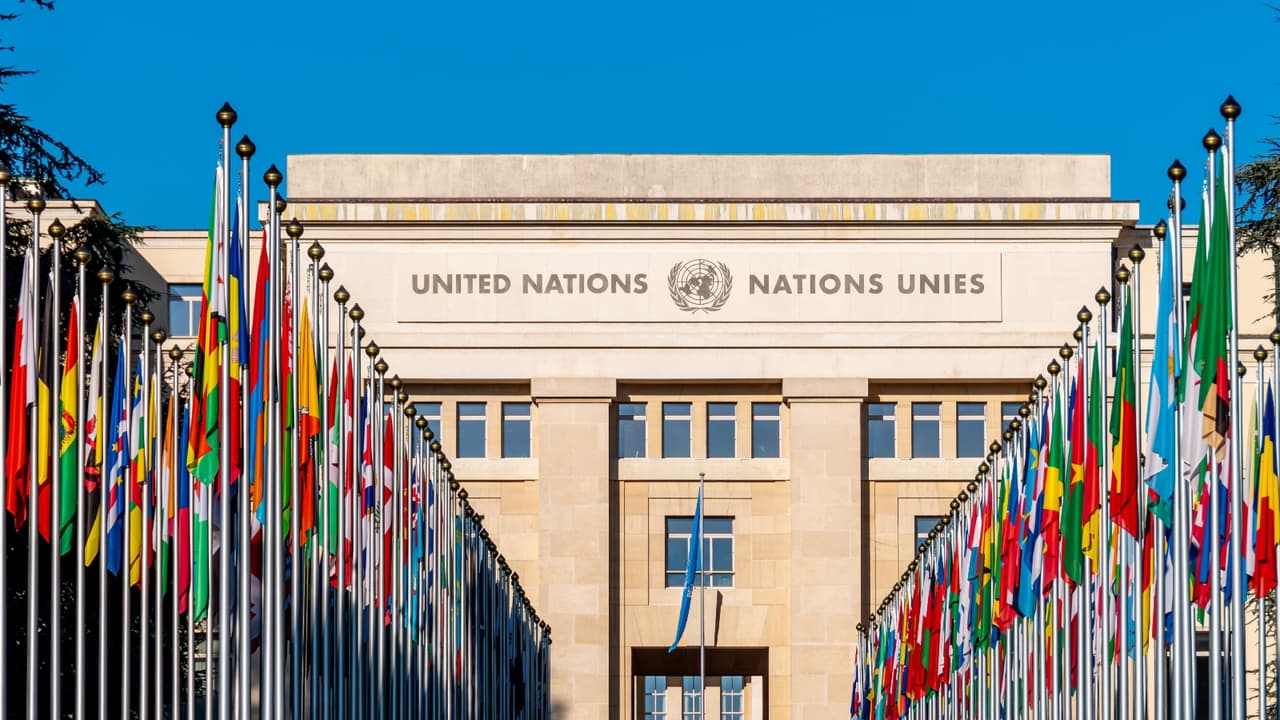
India has served eight times on the UN Security Council and first sought a permanent seat in 1994. With a 2028–29 non‑permanent bid underway, New Delhi cites peacekeeping, reform urgency and growing support, while veto power and the Council’s 1945 origins frame the debate.
India has served eight terms on the United Nations Security Council and is again on the ballot, this time as a non‑permanent candidate for 2028–29—while renewing its long‑standing push for a permanent seat first tabled at the 49th General Assembly in 1994. New Delhi’s official campaign carries the slogan “Shanti: India for the United Nations Security Council 2028–29 – Norms, Trust, Integrity.”
It has been 81 years since the Security Council’s creation in 1945, and its permanent membership has never changed: China, France, Russia, the United Kingdom and the United States hold the five seats, each with veto power. India argues today’s world demands a broader Council.
New Delhi seeks expansion in both permanent and non‑permanent categories, warning that adding only elected seats would not alter a decision‑making structure that privileges the five permanent members. The Council has expanded just once, in 1965, from 11 to 15 by adding four non‑permanent seats.
India cites its size, democracy, growing economic and geopolitical weight, and a major peacekeeping record, alongside its advocacy of dialogue, diplomacy and the concerns of the Global South. It says reform can no longer be delayed.
Why India Seeks a Permanent Seat
At the UN Millennium Summit in New York in September 2000, then Prime Minister Atal Bihari Vajpayee reiterated India’s case, saying the country had “let it be known for some years” that it considered itself qualified for the responsibilities of permanent membership. External affairs minister S Jaishankar has noted that India has contributed nearly 300,000 personnel to about 50 UN peacekeeping missions and currently has over 4,300 personnel in 10 missions.
“Think of all countries in the world, there is no country other than India that has such a strong claim as the sixth permanent member of the UN Security Council,” said American economist Jeffrey Sachs.
Among the five permanent members, four have long supported India’s bid. China has not explicitly backed it, though it has said it was in favour during the recent BRICS Summit and on other occasions.
At the BRICS Summit in New Delhi, China and Russia reiterated support for the aspirations of Brazil and India to play a greater role in the UN, including its Security Council, and leaders reaffirmed a commitment to reform to make it more democratic, representative, effective and efficient, with greater representation for developing countries.
How the Council Works and Why the Veto Matters
All 15 members have one vote, but the five permanent members wield a veto over substantive decisions; under the UN Charter, all member states must comply with Council decisions. A single veto can block a substantive resolution, regardless of wider support. If India secured a permanent seat, it would also gain the veto, enlarging its say on major issues.
The UN Charter was signed on June 26, 1945, and entered into force on October 24, 1945. The Council held its first meeting on January 17, 1946, at Church House, Westminster, London. The presidency rotates monthly. The Council determines threats to peace, urges peaceful settlement, and can impose sanctions or authorise the use of force to maintain or restore international peace and security.
Elections, India’s Record and Global Backers
Non‑permanent members are elected by the General Assembly for two‑year terms. India’s eight non‑permanent terms were in 1950–51, 1967–68, 1972–73, 1977–78, 1984–85, 1991–92, 2011–12 and 2021–22, participating across conflicts, peacekeeping, sanctions and cooperation. New Delhi has now officially launched its campaign for 2028–29.
The current two‑year cohorts are: 2026 — Denmark, Greece, Pakistan, Panama, Somalia; 2027 – Bahrain, Colombia, Democratic Republic of the Congo, Latvia, Liberia. Australia will bid for a 2029 seat, Prime Minister Anthony Albanese said, launching a campaign to secure one of the two non‑permanent slots available to its bloc.
The first formal review of Council restructuring was initiated at the 47th General Assembly in 1992, leading to the Open Ended Working Group in 1993. Talks since then have not produced agreement on size, expansion models or candidate criteria. In 2002, nine countries – Mauritius, Bhutan, Cuba, Dominican Republic, Russia, Vietnam, Laos, Cyprus and Cambodia—expressed support for India’s candidature; Cyprus has recently reiterated firm support, and Palestine has also publicly backed New Delhi’s aspiration.