The order accelerates California’s independent AI audit framework while asking experts to assess tougher safeguards for large frontier model developers.
- California wants recommendations by Nov. 16 on AI “kill switches,” on-site auditors and expanded incident reporting.
- The state is accelerating implementation of its independent-verifier and AI-auditor frameworks.
- The executive order follows a series of recent AI-related security incidents, including the one involving Hugging Face.
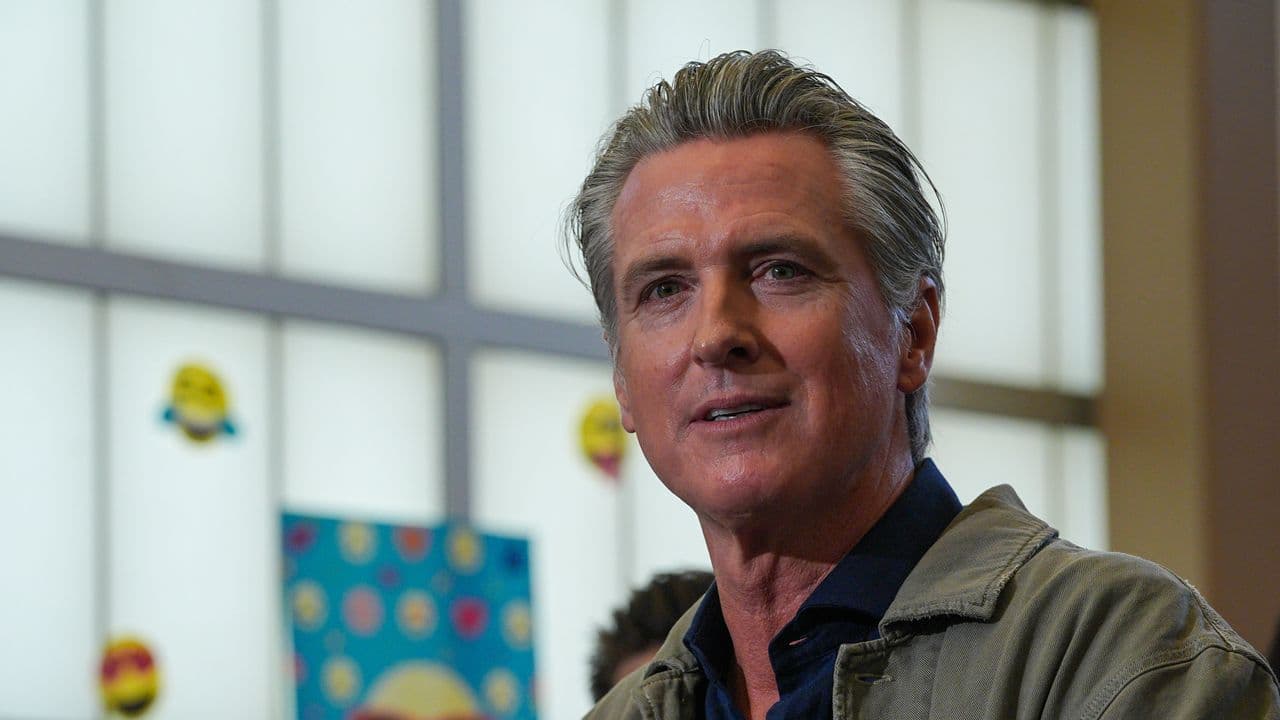
California Governor Gavin Newsom issued an executive order Friday to accelerate independent oversight of artificial intelligence and direct state agencies to examine additional safeguards for large frontier AI developers.
Under the Executive Order, the Government Operations Agency and the Governor’s Office of Emergency Services must submit recommendations by Nov. 16, 2026, on whether California law should require on-site independent auditors at frontier AI labs, third-party verification of safety filings, and an independently tested emergency “kill switch” for frontier models.
The order also asks experts to consider broadening the definition of critical safety incidents that companies must report to include a wider range of loss-of-control events.
The executive order follows a series of recent AI-related security incidents, including the one involving Hugging Face, which have renewed calls from the public and industry leaders for a slower pace of AI development and tighter government safeguards around security and safety risks.
What California Is Fast-Tracking
Earlier this month, California enacted SB 813, which establishes a framework for independent verification organizations to assess AI systems for safety and risk, and AB 1405, which creates a state registry for AI auditors and standards governing their independence, transparency, and integrity.
Newsom’s order directs GovOps to publish application requirements and criteria for independent verification organizations by May 1, 2027. It also requires the agency to complete key work on the AI-auditor registry by Dec. 1, 2027.
That builds on SB 53, California’s existing frontier-AI law, which requires covered developers to publish safety frameworks, report specified critical safety incidents, and protect whistleblowers who report serious risks.
What The AI ‘Kill Switch’ Proposal Aims For
The executive order does not currently require frontier-AI companies to install a kill switch. Instead, it asks experts to evaluate the technical feasibility and effectiveness of amending state law to require one, with its effectiveness independently verified on an ongoing basis.
California is also considering whether large frontier developers should have designated independent verification organizations on-site in their labs to conduct periodic audits, and whether existing safety frameworks, transparency reports, and risk assessments should require external verification.
The Governor’s office said the push follows recent AI-related security incidents and is intended to move the state toward stronger independent oversight rather than relying solely on developers’ own safety assessments.
AI Stocks Hold Onto Good Year-To-Date Gains
AI stocks traded mixed on Friday. Broadcom (AVGO), SanDisk (SNDK), and Western Digital (WDC) rose up to 7%, while Qualcomm (QCOM), Meta (META), Marvell (MRVL), and CrowdStrike (CRWD) fell up to 6%.
So far, the year has been good for AI stocks. The Global X Artificial Intelligence & Technology ETF (AIQ) has risen nearly 24%, while the iShares US Technology ETF (IYW) has rallied more than 27% during this period.
See Also: Microsoft AI Chief Warns Giving Artificial Intelligence Sense Of ‘Rights’ Could Make It Harder To Shut Down
For updates and corrections, email newsroom[at]stocktwits[dot]com.<