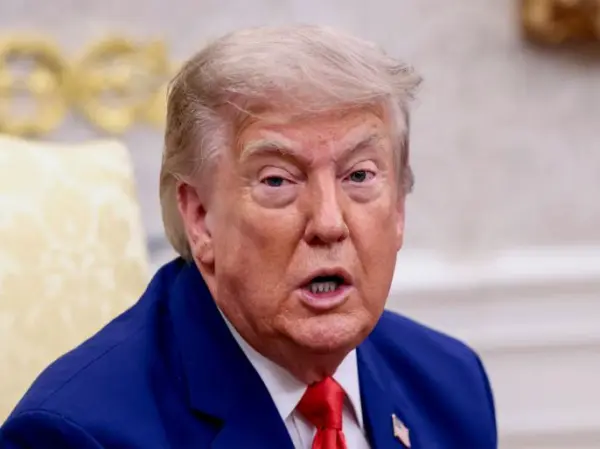
The trade dispute between the United States and Canada continues to intensify after US President Donald Trump signed a Presidential Memorandum directing his administration to identify and take steps to remove Canadian-origin goods from the US federal civil procurement system.
The White House said the move was in response to what it described as Canada’s measures that have denied US firms equal access to Canadian federal and provincial procurement markets.
The memorandum directs the Director of the Office of Management and Budget and the US Trade Representative, in coordination with the Federal Acquisition Regulatory Council, to identify and take steps toward removing or otherwise making Canadian-origin items unavailable for purchase through the federal civil procurement system.
“The Memorandum also directs the United States Trade Representative to monitor Canada’s continued treatment of U.S. origin goods in Canadian government procurement,” the White House said in a fact sheet.
The latest action marks another escalation in a broader trade dispute between the two North American neighbours, with procurement access emerging as another point of contention alongside tariffs and market access.
The White House accused Canada of maintaining preferential treatment for domestic producers while restricting opportunities for American companies.
“Despite Canada’s procurement commitments to the United States, Canadian provinces have disadvantaged American small businesses and companies by, among other things, establishing preferences for Canadian products and content under the “Buy Canadian” policy,” the fact sheet said.
The administration also claimed that Canadian companies have preferential access to more than USD 280 billion of the US government procurement system, while American companies “no longer receive equal treatment in the Canadian government procurement system.”
Trump’s latest move comes amid continued tensions over the terms of trade between the two countries and the future of the United States-Mexico-Canada Agreement (USMCA).
The White House said the administration had not agreed to renew the USMCA in its current form, arguing that the agreement does not provide sufficient benefits to US manufacturers, farmers, ranchers, workers, service suppliers and businesses.
“The United States, under President Trump’s leadership, did not agree to renew the United States-Mexico-Canada Agreement (USMCA) in its current form, because the deal is not sufficiently beneficial for U.S. manufacturers, farmers, ranchers, workers, service suppliers, and businesses of all sizes,” the White House said.
The administration has increasingly relied on tariffs and other trade measures as part of its broader “America First Trade Policy”, which it says is intended to protect US workers and businesses and expand market access for American exports.
According to the White House, Trump has also used negotiations with trading partners and tariffs to encourage investment and manufacturing in the United States and diversify supply chains.
The dispute has also extended to specific sectors.
The procurement exclusion marks the latest in a series of punitive economic measures taken by Washington against Ottawa.
On September 8, 2026, Trump enacted targeted trade actions by banning and increasing tariffs on specific items.
That decision was aimed at addressing “Canada’s continued discrimination against American exporters and to offset the disadvantage or burden on U.S. commerce from Canada’s discriminatory treatment against U.S. exports of alcoholic beverages, dairy, and motor vehicles.”
The trade dispute intensified in recent weeks after the two countries failed to reach a new trade agreement in August.
On August 22, the US imposed 50 per cent tariffs on a broad range of Canadian goods, following through on an earlier threat.
Canada responded with retaliatory tariffs covering nearly 700 categories of US products, which took effect on September 8.
The White House linked Ottawa’s measures directly to broader trade renegotiations, framing the latest procurement measure as part of its broader effort to secure reciprocal treatment for US companies.
“President Trump is continuing to deliver on his promise to keep American workers, farmers, and businesses first by ending other countries’ unfair and unreasonable trade practices against the United States,” the statement read.
The latest memorandum adds government purchasing to the list of areas where Washington is seeking changes in Canada’s treatment of US goods.