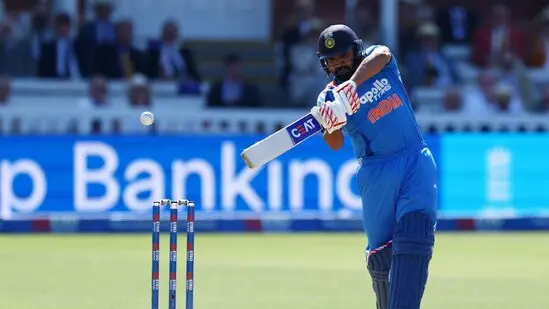
There was a time, not very long ago, when every Rohit Sharma innings seemed to arrive carrying an uncomfortable question. He was no longer India’s ODI captain, he had retired from Tests and T20Is, younger openers were crowding the queue, and the 2027 World Cup was still distant enough for the selectors to contemplate a future without him.
Now, Rohit is back in India’s ODI squad for the home series against West Indies. Nothing about that selection guarantees him a place at the 2027 World Cup, nor should it. But it does underline how dramatically the conversation around him has changed in the space of two months.
At Lord’s in July, there was serious discussion over whether Rohit’s international career might be approaching its end. By September, he was again being spoken of as a live part of India’s ODI plans. Between those two positions sits one innings: 138 from 110 balls.
When the captaincy went, the scrutiny intensified
The first major sign of transition arrived when India moved the ODI captaincy to Shubman Gill. Rohit remained in the side, but the nature of his place had changed. He was no longer the leader around whom the team was being constructed; he was an opening batter who, like everyone else, had to justify his inclusion through performance. That is a particularly unforgiving position for a player in the final stage of his career. Rohit is now an ODI-only international cricketer, which means every innings carries greater weight because there are fewer opportunities to correct a lean run.
He responded initially in Australia. After beginning the series quietly, Rohit made 73 in Adelaide before producing an unbeaten 121 in Sydney. It was the kind of innings that has repeatedly extended his career whenever the noise around him has threatened to become overwhelming. But Sydney did not develop into another sustained period of domination. Across his next 11 ODI innings, Rohit made 57, 14, 75, 26, 24, 11, 16, 48, 79, 11 and 26.
Those numbers were hardly catastrophic. There were meaningful scores in between, particularly the 75 and 79, but the larger problem was that the defining innings was missing. For a younger batter, such a sequence might simply constitute ordinary fluctuation in form. For a 39-year-old aiming at a World Cup more than a year away, it inevitably becomes evidence in a selection debate.
The pressure increased during the England series. Rohit managed 11 in Birmingham before labouring to 26 from 47 balls in Cardiff. Suddenly, the discussion was no longer centred merely on whether he could survive until the 2027 World Cup. There were reports suggesting Lord’s could conceivably become his final ODI, even as the BCCI publicly pushed back against the idea. That was the atmosphere in which Rohit walked out to chase 388.
Lord’s changed the language around his future
What followed was not merely another hundred added to an extraordinary career. Rohit made 138 from 110 deliveries, striking 17 fours and five sixes, and for long periods gave India a chase that had appeared implausible when England piled up 387. India eventually lost by 27 runs, but Rohit had done something perhaps more important for his own future. He had reminded the selectors that the ceiling of his ODI batting remained extraordinarily high.
One innings could not erase legitimate questions about age, fitness or succession planning. Yashasvi Jaiswal remains a compelling long-term opening option, while Ruturaj Gaikwad offers another alternative and Gill is already established at the top of the order. What the 138 did, however, was make the simplest argument against Rohit considerably harder to sustain. It showed that he was still capable of producing a major ODI innings against elite opposition, away from home, in a daunting chase and under the kind of personal pressure few players ever experience.
That distinction matters. India do not need to select Rohit in 2027 because of what he achieved in 2019, 2023 or even at Lord’s in 2026. They need to select him only if, when the World Cup arrives, he remains one of their best ODI openers. But before Lord’s, the possibility of reaching that point looked increasingly fragile. After Lord’s, it became plausible again.
The World Cup door is open again
His inclusion for the West Indies series now carries genuine significance. India are not preserving Rohit in isolation from the younger generation; they have selected him alongside the very batters who could eventually replace him. That makes the coming months an audition rather than a coronation. Rohit still needs runs, consistency and fitness, and India still need to determine what combination gives them the strongest opening partnership in 2027.
Yet the direction of travel has unmistakably changed. Two months ago, Rohit appeared to be fighting simply to prolong his international career. Now, he enters India’s next ODI assignment as part of the group from which their World Cup plans will increasingly be shaped. The 138 at Lord’s did not book Rohit Sharma a ticket to 2027. It did something more valuable: it ensured that the selectors could not yet plan the journey without him.