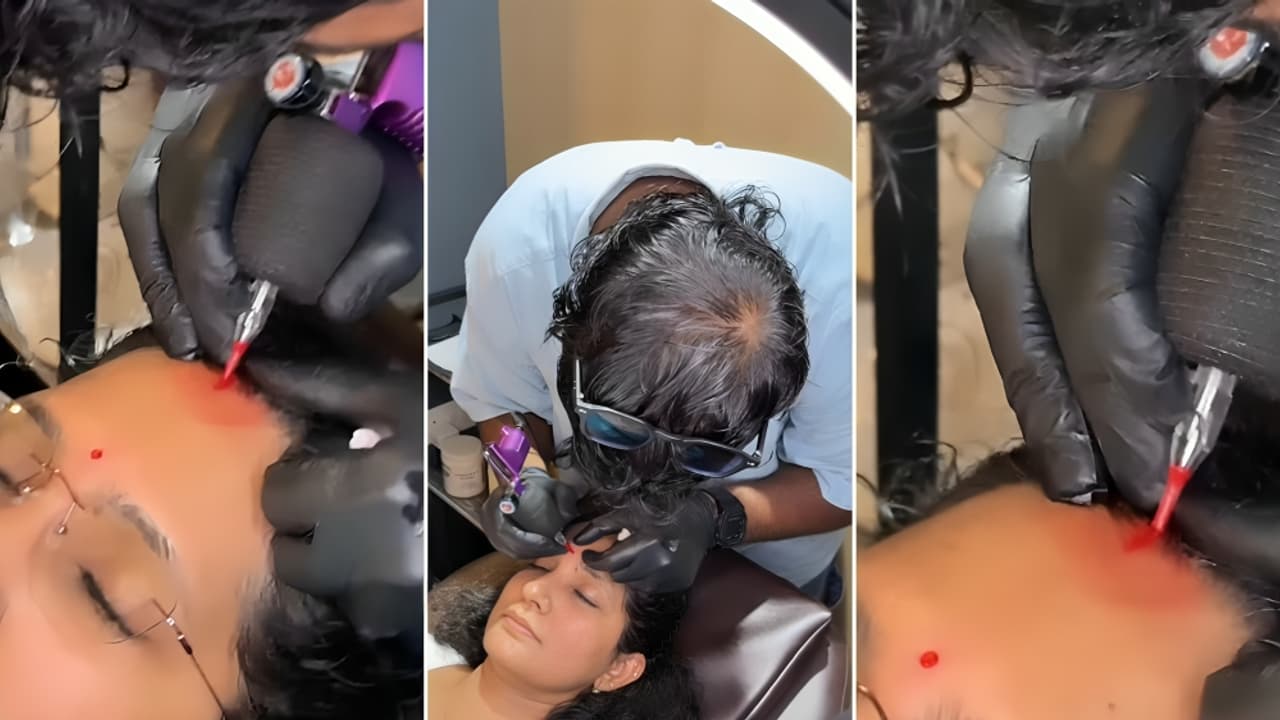
A viral video of a woman getting a permanent red sindoor tattoo on her forehead has sparked intense debate across social media. Married for over 25 years, she described it as a lifelong symbol of love for her husband. While some netizens made lighthearted jokes and others criticised it as patriarchal. Some defended her right to personal choice.
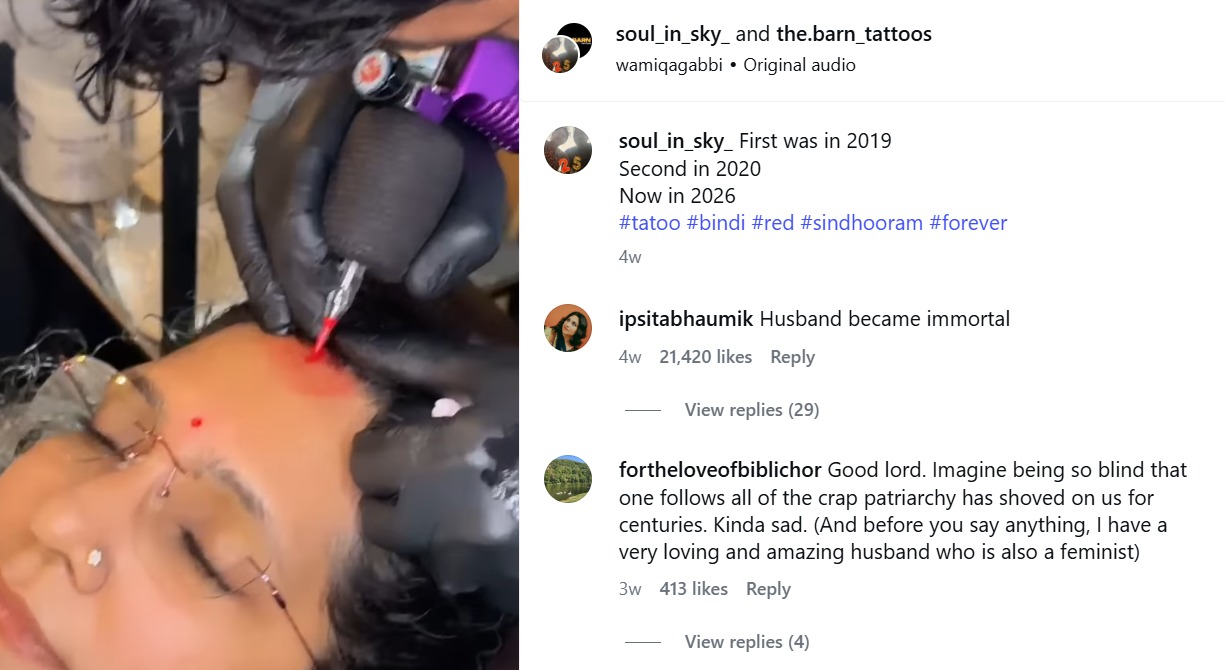
A woman’s decision to get a vermillion tattoo has caught the attention of social media users, with her video of the tattooing process going viral online. The woman shared the video with a caption that appeared to document her tattooing journey over several years. “First was in 2019, second in 2020, now in 2026,” she wrote, mentioning tattoo, bindi and sindhooram in the caption.
The video shows a tattoo artist creating a red vermillion-style mark on her forehead, turning a traditional symbol associated with married women into a permanent tattoo.
Watch the post here.
While the woman did not mention the exact reason for choosing the tattoo in the post, her responses to netizens comments suggested that as a lasting symbol of her relationship, she intended to keep it for life.
‘Husband became immortal’: Internet reacts
The unusual tattoo quickly became the subject of jokes, questions and some criticism in the comments. One Instagram user joked, ‘Husband became immortal,’ to which the woman replied that she wished and prayed for that, adding that she had come this far because of him.
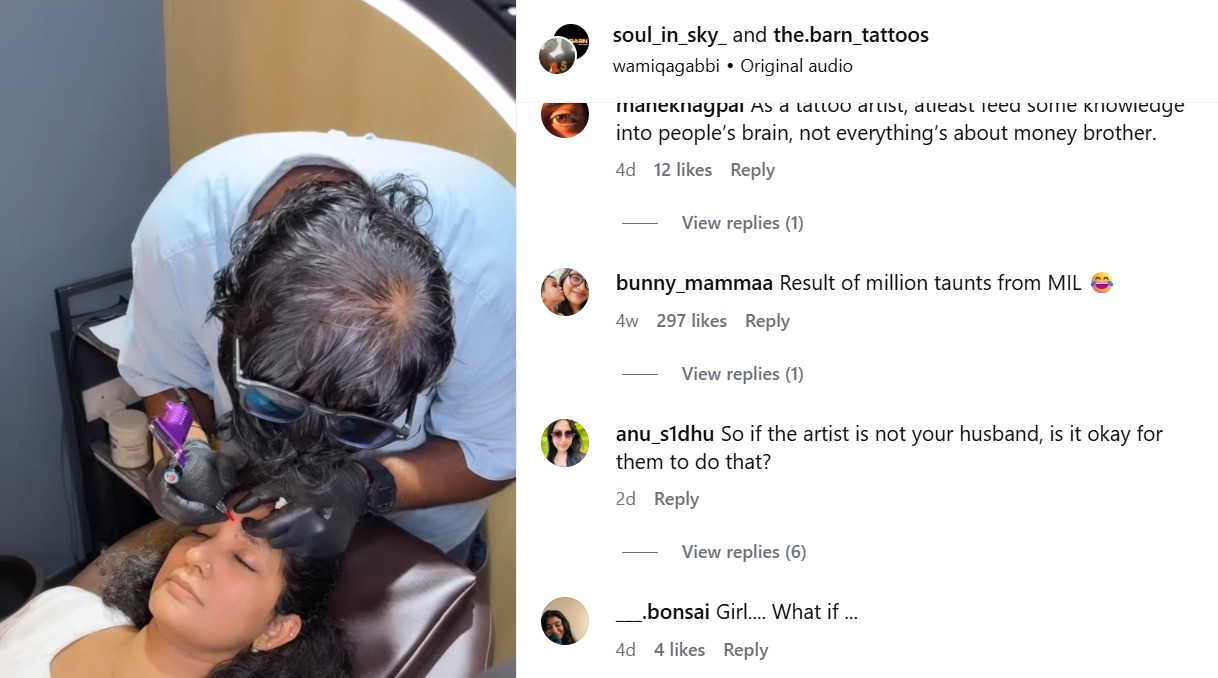
Another person jokingly asked whether getting the tattoo meant she had technically ‘married’ the tattoo artist. The woman responded by pointing out that applying sindhoor did not make someone a husband.
Others questioned what would happen if her husband died, cheated or if the couple eventually divorced. In response to one such comment, she said she would ‘carry’ the tattoo to her grave and later mentioned that she had been married for 25.5 years.
Reactions divided over permanent sindhoor tattoo
Not everyone found the tattoo amusing. One commenter criticised the idea as following patriarchal traditions, while another defended the woman and said she should be free to choose what she likes.
Some users also joked about whether she would get a mangalsutra tattoo next, while another asked what men could wear or do for their partners in a similar way.
Jokes and criticism aside, the comments on the woman’s post highlight how a personal choice involving a familiar symbol of marriage quickly turned into a wider social-media discussion on love, tradition, permanence and individual choice.