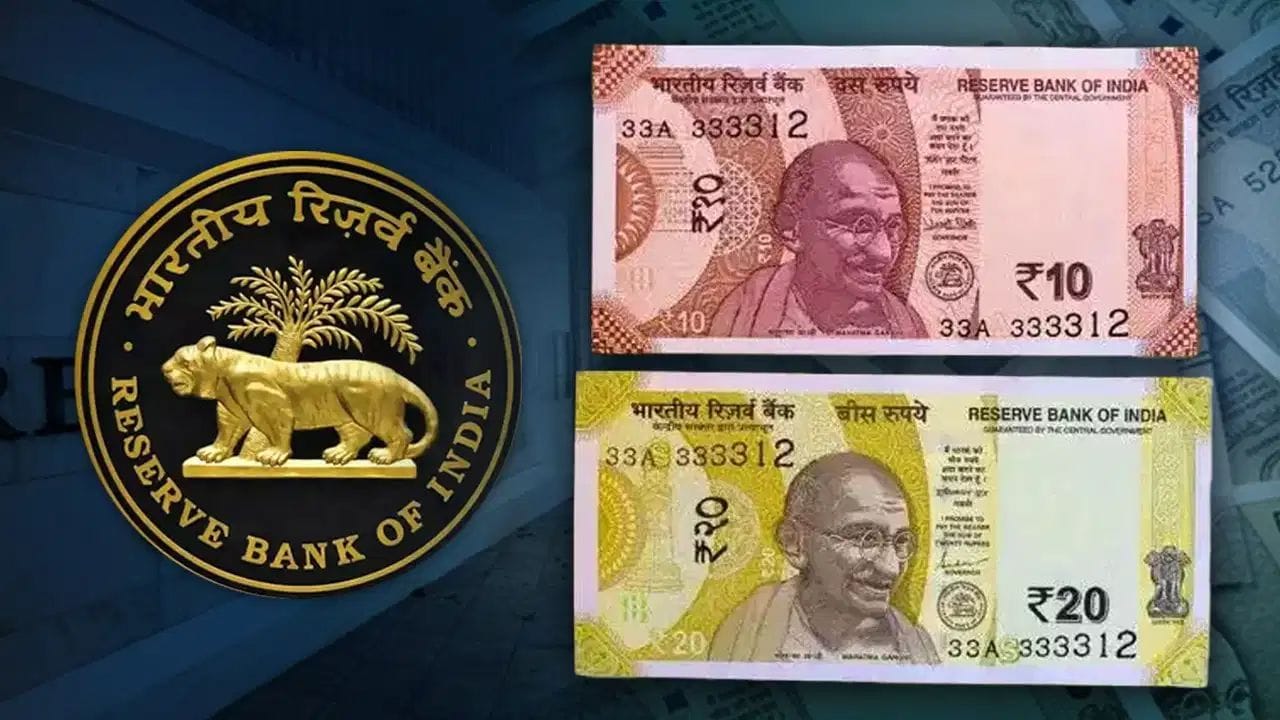
plastic notes
After the news of Reserve Bank of India (RBI) considering plastic currency, its discussion has intensified across the country. RBI Governor Sanjay Malhotra has given this information on Friday. He told that the proposal of polymer note is still in the initial stage and it is being considered further. However, if reports are to be believed, a pilot project in this regard can be announced soon. In the initial phase, notes of Rs 10 and Rs 20 can be chosen, because these are the most used and get spoiled quickly.
Plastic currency is already in use in about 60 countries of the world. These include countries like Australia, Canada, United Kingdom, Singapore, New Zealand, Malaysia and Thailand.
Australia started first
Australia was the first to introduce plastic notes. Australia issued polymer based notes in 1988. These notes were considered more secure, durable and effective against counterfeit notes. Australia’s plastic currency is counted among the strongest currencies in the world, whose lifespan can last for many years.
After this, gradually other countries also adopted this technology. Canada made its banknotes polymer-based in 2011, while many countries in Europe also took steps in this direction from time to time.
What are the benefits of plastic notes?
According to experts, plastic notes are better than paper notes in many respects. The biggest advantage is their longevity. While normal paper notes can spoil in 2 to 3 years, plastic notes can last for 5 to 10 years or more.
Apart from this, these notes are less affected by water, moisture and dust. Despite repeated use, there is less possibility of them bursting or getting damaged. This also reduces the need to print new notes.
Fake notes may be banned
RBI’s recent report has expressed concern over the increasing number of fake ₹500 notes. In such a situation, plastic notes can also prove important from security point of view. It is easy to add special security features to polymer notes, making them very difficult to counterfeit.
Experts say that the implementation of plastic currency can cause a major blow to the business of fake currency and the cash system can become more secure.
Note printing cost will also reduce
Thousands of crores of rupees are spent every year in India on printing and maintaining notes. Withdrawal, destruction and printing of new notes is an expensive process. Due to the long life of plastic notes, this expense can be reduced to a great extent.
In the financial year 2024-25, a large number of bad notes had to be taken out of circulation. In such a situation, plastic notes can also become a big means of cost saving for RBI.
no need to panic
Experts say that if plastic notes are implemented in India in future, this process will be done in a phased manner. Paper notes will not be discontinued suddenly. Both types of currencies can exist together for some time. At present RBI is considering only this option. But if this plan goes ahead, then a major technological change can be seen in India’s monetary system, as has already happened in many developed countries of the world.