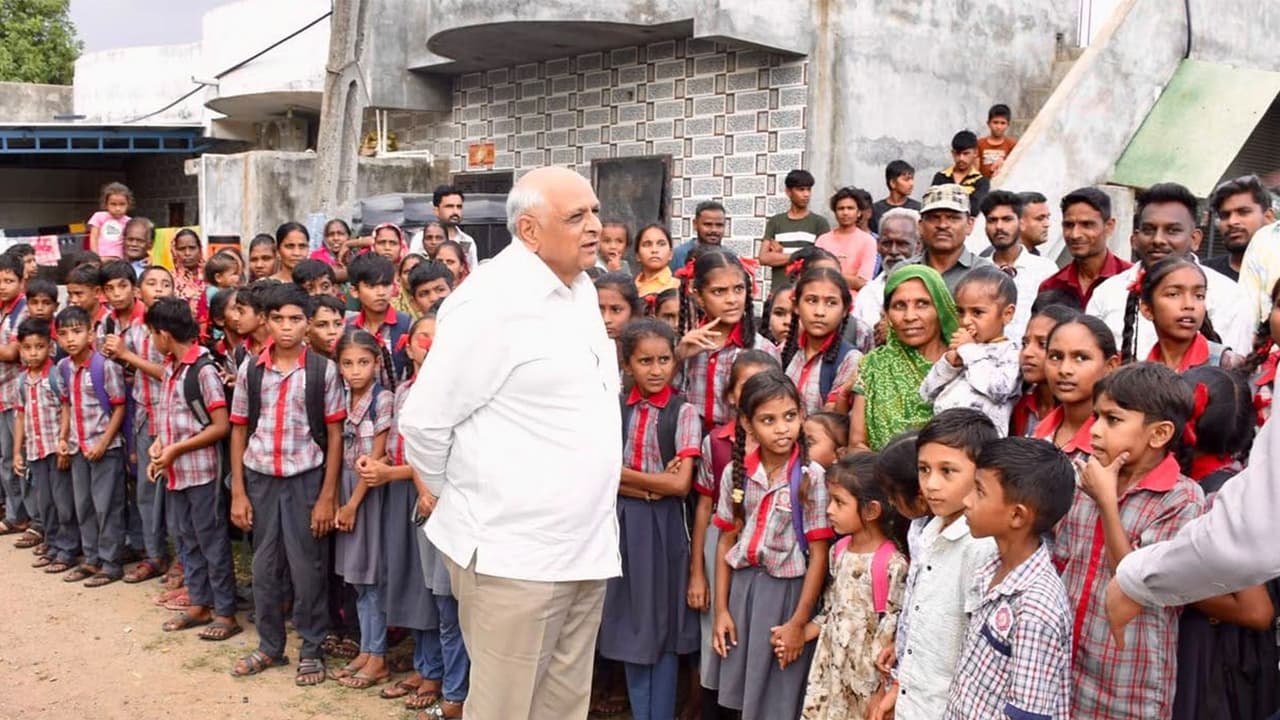
The Gujarat government has announced the ‘Gujarat State Child Protection Policy-2026’, a comprehensive initiative aiming to create a safe, dignified, and rights-based environment for every child, free from violence, exploitation, and abuse.
The Gujarat government has taken another important step towards ensuring a safe, dignified and rights-based childhood for children in Gujarat by announcing the ‘Gujarat State Child Protection Policy-2026’. Under the guidance of Justice and Empowerment Minister Pradyuman Vaja and Minister of State Manisha Vakil, the State Government has officially announced this policy. Its main objective is to create a safe and equal environment where every child can grow to their full potential, free from violence, exploitation, abuse, neglect and discrimination, as per the release.
According to a recent notification issued by the concerned department, the policy has come into effect from the date of its publication in the Gazette. Before finalising the policy, the Government also considered the objections and suggestions received on its draft. At the same time, various legal and policy frameworks, including the POCSO Rules, Juvenile Justice Act, Prohibition of Child Marriage Act, laws related to child labour, school safety guidelines and the National Child Policy, were also studied.
A Holistic and Proactive System
The new policy goes beyond taking action after an incident and aims to create a holistic child protection system covering prevention, timely identification, immediate response, rehabilitation and reintegration. The Government’s clear objective is to build a society where every child is safe, respected, protected and aware of their rights.
The policy also ensures that children have access to education, healthcare, holistic development and the right to express their views, while giving special importance to providing equal child protection services to all children without discrimination based on religion, caste, gender, socio-economic status, political or cultural background, or geographical area, the release said.
A Shared Societal Responsibility
The most important feature of this policy is that child protection is seen as a collective responsibility of the entire society. The policy covers not only government departments and agencies but also local bodies, NGOs, civil society, corporate and business houses, industries, media organisations, religious institutions, child care institutions, and individuals who come into direct or indirect contact with children. This will make child protection a shared social responsibility and strengthen coordination among various institutions working with children.
Special Focus on Vulnerable Children
The policy gives special attention to children from vulnerable sections of society, with priority given to those in need of care and protection, in conflict with the law, Divyang, migrant, orphaned, belonging to Scheduled Castes and Scheduled Tribes or disadvantaged communities, affected by human trafficking, living on the streets, or in institutional or alternative care. It also covers transgender and intersex children, those affected by HIV/AIDS or chronic illnesses, natural disasters, and those living in conflict-affected areas.
Guiding Principles and Safe Environments
The policy clearly defines key principles for child protection, including the best interests of the child, equality and equity, the right to life and development, respect for the child’s views, dignity, family empowerment, protection from violence, confidentiality, accountability, participation and coordination. It is also based on a ‘zero-tolerance’ approach towards child abuse and exploitation, the release said.
The state government will work to make all places where children live, study, receive treatment or access services safer by promoting child-safe schools, healthcare facilities, child care institutions, workplaces, digital environments and public places. The government’s approach is clear that child protection should not be limited to the home or school, but should ensure a safe environment wherever children go.
The policy emphasises an integrated and child-friendly response system to ensure that children receive timely and quality services whenever they need protection. Importance has also been given to early identification, counselling, child-sensitive justice, recovery, rehabilitation and reintegration, along with mental health and psychosocial support services. This system will not only provide immediate relief to children in distress but also help them return to normal life in the long term.
Addressing Online Safety and Cyber Risks
In the digital age, online safety is an important challenge for children. To address this, the policy strengthens measures to prevent and respond to cyber risks related to the internet, social media and digital technologies. This extends child protection beyond the physical environment to the digital world as well.
Implementation and Accountability Framework
A clear framework has been prepared for the effective implementation of the policy. The Social Justice and Empowerment Department, as the nodal department, will coordinate the implementation, issue guidelines, monitor progress and conduct annual reviews. Every government department will have to prepare an annual implementation plan as per the policy, while the concerned departments will have to prepare operational guidelines and protocols within one year of the notification.
Mandatory Reporting and Institutional Duties
Institutions working directly with children will have clear responsibilities for their safety and well-being. Teachers, doctors, healthcare workers, counsellors and other professionals will have to report concerns and take necessary action. Suspected cases of child abuse, sexual exploitation, child marriage, child labour, human trafficking, online abuse, discrimination, abandonment or neglect must be reported to CHILD HELPLINE 1098/112, the police or the Child Welfare Committee. The identity of the person reporting the case will be kept confidential.
Along with child protection, equal health rights have also been given importance under the policy. Hospitals, clinics, doctors and healthcare workers will not be allowed to refuse treatment or discriminate on the basis of gender, caste, disability, religion, language, tribal status, marital status or any other status, the release said.
Institutions having direct contact with children will have to provide their employees with training on child rights, the POCSO Act, the Juvenile Justice Act and other relevant laws. Provisions have been made to ensure strict background verification, including police verification, of regular and contractual employees, volunteers and other persons who come into contact with children.
The human-centred approach of the policy is also reflected in the provision that institutions with 50 or more employees will have to provide crèche or mobile crèche facilities for employees’ children. Alternatively, appropriate childcare spaces and facilities will have to be made available for mothers with infants. Provisions have also been made to develop child-friendly zones and safe infant-care spaces for mothers in public places.
Code of Conduct and Enforcement
A code of conduct will be prescribed for institutions and employees under the policy. A strict approach has been adopted towards humiliating, harassing, discriminatory or sexually inappropriate behaviour towards children. If a child is at risk of abuse or exploitation and appropriate action is not taken despite being aware of it, this will also be considered a serious matter.
Institutions or individuals failing to comply with the policy may face administrative, disciplinary, contractual or legal action as per service rules, departmental regulations, contractual conditions and applicable laws.
The implementation of the policy will be reviewed annually by the Chief Secretary of the State, while the Gujarat State Child Protection Society will oversee its implementation. Provisions have also been made to review the progress and outcomes of the policy every three years, or earlier if required.
The ‘Gujarat State Child Protection Policy-2026’ is not just a government policy but a comprehensive effort to bring the entire system together to ensure a safe future for children. (ANI)
(Except for the headline, this story has not been edited by Asianet Newsable English staff and is published from a syndicated feed.)