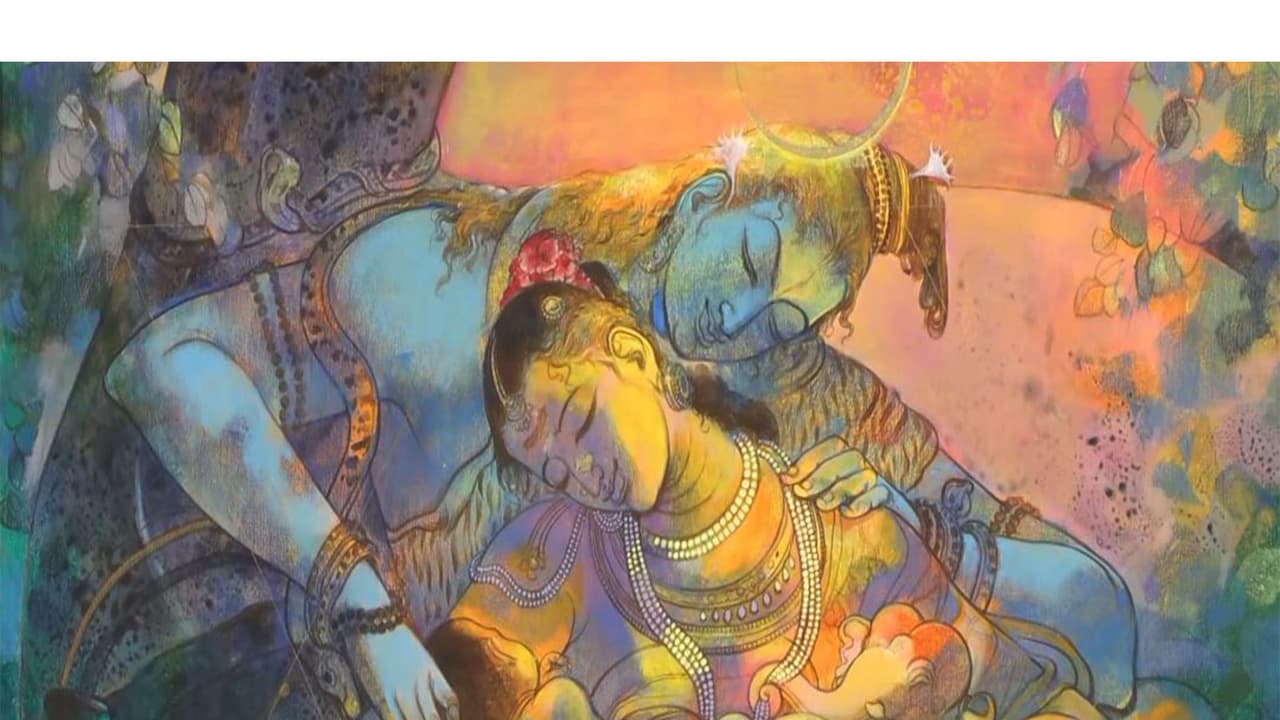
An art exhibition, ‘Standing on Sacred Ground,’ is being held at Kalakriti Art Gallery in New Delhi until Sep 21. It features seven artists who explore spirituality and the concept of ‘sacred’ through diverse materials, subjects, and narratives.
The exhibition ‘Standing on Sacred Ground’ brings together a group of artists exploring the many meanings of the sacred. Being held at the Kalakriti Art Gallery at Bikaner House in the national capital, the exhibition will remain open until September 21.
Rather than treating sacredness as something fixed or confined to a specific space, the exhibition has turned its gaze towards material, subject, roots, scenes and other familiar objects of everyday life. At the heart of the exhibition is a question: What do artists consider sacred? Is it the material they work with, the subjects they choose, the landscapes and communities they come from, or the stories and images that have shaped their imagination?
The exhibition seeks to build a bridge between the inner world of the artist and an external universe populated by myths, legends and fables. A striking aspect of ‘Standing on Sacred Ground’ is the way its participating artists engage with indigenous practices and traditional visual languages without simply reproducing them. Familiar motifs, symbols and ubiquitous objects are taken out of their conventional contexts and reimagined.
Seven Artists, Seven Narratives
Speaking about the exhibition, Rekha P Lahoti, co-founder and director of Kalakriti Art Gallery, shared how the participating artists look at spirituality through different materials. “This is “Standing on Sacred Ground.” There are seven artists, and all of them look at spirituality through different materials. For example, Mayadhar is using wood, and his interpretation of spirituality is through architecture. He comes from Odisha, so his themes revolve around the Konark Temple and its architecture, and that is how he depicts spirituality. For example, Bratin Khan is from Shantiniketan and is very much influenced by Suhas Roy. You can see that, for the first time, he has tried working in black and white. Then Keerti Pooja talks about what we offer to God, such as marigolds or jasmine, and the garlands that we make from them…I’m really happy with the way they have displayed. If anybody comes, they have so many choices: seven artists, seven materials, seven thought processes, seven perspectives, and seven narratives,” she told ANI.
The Artists’ Voices
Mayadhar Sahu: Inspired by Temple Architecture
Mayadhar Sahu spoke about his art inspiration from the temple architecture of Odisha. “My art is basically inspired by the temple architecture in Odisha—specifically Konark and Puri. I’ve taken their temple designs and presented them as a contemporary art form and a medium for dialogue. It takes time depending on the size because there’s a lot of detailed craftsmanship involved. It takes at least a year or two to do each piece, since the fine carving requires a lot of hard work and time,” he said.
Bratin Khan: Reflecting on Childhood Memories
Artist Bratin Khan from West Bengal spoke about his childhood memories that inspired his art. “I was born and raised in a village in West Bengal. I grew up in a village there. And all those childhood memories of us playing, jumping around by the pond, under the trees, watching how the monsoon clouds roll in, how everyone gets soaked in the rain, how the trees and plants bloom all over again – these feelings and details really stuck with me. Even living in the city, it’s the exact same thought that drives me to paint,” he said. (ANI)
(Except for the headline, this story has not been edited by Asianetnews Editorial staff and is published from a syndicated feed.)