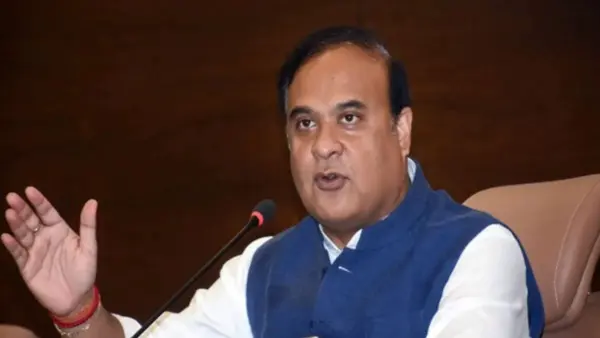
The Assam Cabinet on Friday approved the enhancement of Dearness Allowance (DA) and Dearness Relief (DR) from the existing rate of 58 per cent to 60 per cent, effective immediately, benefiting more than 8 lakh state government employees and pensioners.
Addressing a press conference after chairing the first cabinet meeting following the ministry expansion earlier in the day, the chief minister said that the enhanced rates will benefit serving state government employees, pensioners, family pensioners, extraordinary pensioners and compassionate family pensioners.
The cabinet also approved the enhancement of the MLA Local Area Development (MLALAD) fund allocation from Rs 1 crore to Rs 1.5 crore for each MLA during the year 2026-27, while from 2027-28, it will be further enhanced to Rs 2 crore, Sarma said.
The cabinet has also approved amendment of the MLALAD guidelines to permit utilisation of up to 10 per cent of the annual allocation for procurement and distribution of eligible community, educational, cultural, sports and disability-support equipment, Sarma said.
The cabinet also approved the proposal for the declaration of the second State Capital Region Area, Dibrugarh, and the constitution of the Second State Capital Region Development Authority, Dibrugarh (SCRDA-D).
The region will cover an area comprising a 20 km radius of the Dibrugarh Capital Complex within Dibrugarh district, Sarma said.
The Second State Capital Region Development Authority, Dibrugarh, will be responsible for the preparation of regional and sectoral development plans and identifying growth corridors and urban expansion areas related to the development of the second capital region.
A fund of Rs 500 crore would be provided in the budget of the concerned line departments to carry out all works related to the development of infrastructure related to the Second Capital Region.
The cabinet approved the amendment of the Assam Secondary Education (Provincialised Schools) Service (Amendment) Rules, 2026, to regulate the procedure for promotion of serving Grade IV employees to Grade III positions, he added.