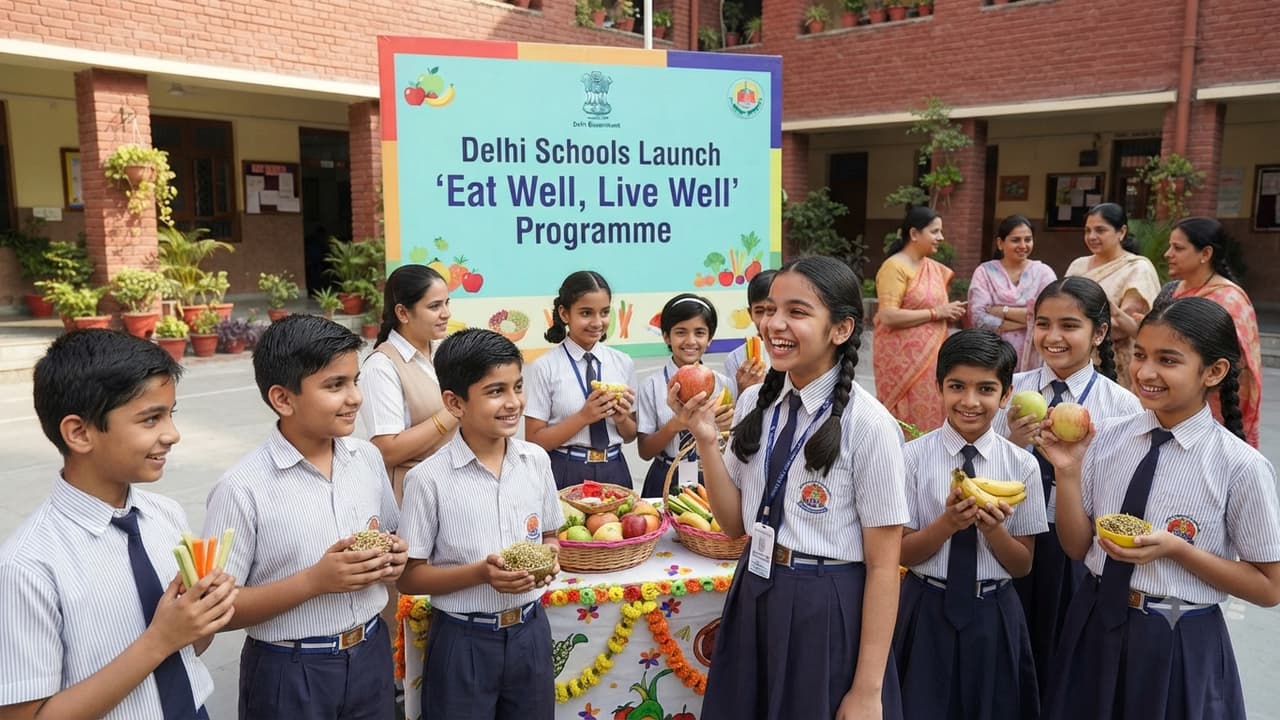
Delhi has launched the ‘Eat Well, Live Well’ programme across 75 CM SHRI Schools for around 30,000 children, focusing on wellbeing literacy, healthy habits, nutrition, hygiene, physical activity and environmental responsibility.
An effective education system goes far beyond the curriculum being taught to children. They also require the information and skills which would enable them to make better health decisions in their daily lives. Bearing this in mind, the Delhi government has initiated the ‘Eat Well, Live Well’ program for 75 CM SHRI schools with 30,000 children.
The program involves introducing the concept of Foundational Wellbeing Literacy (FWL) and helping students transform knowledge about health and well-being into regular habits.
What Is Foundational Wellbeing Literacy?
The program seeks to incorporate well-being as a routine practice in schools rather than introducing it as yet another academic subject. The lessons involve various topics such as nutrition, food and hygiene, drinking water, physical activity, meal times and the school environment.
The ultimate goal is to motivate children to understand the importance of healthy choices and, even more, to practice these choices regularly.
35 Skills Focused on Personal, Social and Environmental Wellbeing
A key feature of ‘Eat Well, Live Well’ is its skill-based framework. The programme covers 21 personal habits, seven social skills and seven planetary skills, taking the total to 35 areas of learning and practice.
Personal habits include healthier food choices, hydration, hygiene and physical activity. Social skills are intended to encourage responsible interaction and cooperation, while planetary skills help children become more conscious of their relationship with the environment.
Practical Activities Instead of Another Textbook
The initiative is not intended to add another conventional academic subject or examination. Instead, schools will use practical activities, short discussions, visual reminders and repeated practice to help students turn information into everyday behaviour.
Schools will also establish Wellbeing Committees and use a School Wellbeing Score to assess existing practices, identify areas that need improvement and monitor progress.
Building Healthier Habits Beyond the Classroom
The programme was launched during Poshan Maah and places teachers at the centre of helping children develop sustainable habits. Parents are also expected to be part of the effort so that practices introduced at school can continue at home.
By combining education with nutrition, hygiene, physical activity, social responsibility and environmental awareness, Delhi’s ‘Eat Well, Live Well’ initiative aims to give children a stronger foundation for healthy and responsible living.