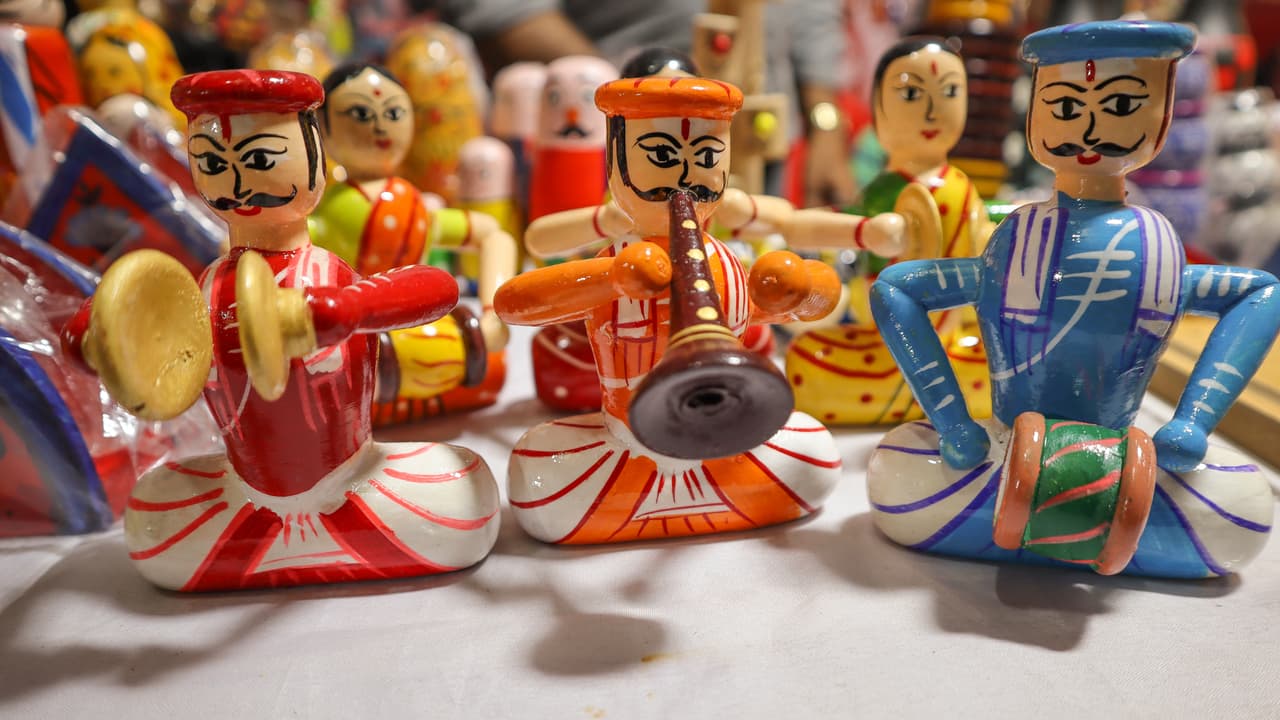
Several accounts trace the development of Channapatna’s toy-making tradition to the period of Tipu Sultan. According to Dastkari Haat Samiti, Tipu Sultan is believed to have encountered a lacquered Persian toy and taken an interest in the technique used to create it.
Persian craftsmen are said to have been brought to the region to introduce their skills to local artisans. Over time, craftsmen in Channapatna adapted these techniques and developed their own distinctive style.
Another significant chapter came in 1904, when the Maharaja of Mysore reportedly sent Mian Bavasmia, a local craftsman, to Japan to study lacquerware techniques. Following his return, he shared his knowledge with artisans in Channapatna, contributing to the development of the town’s craft industry.
The history of the craft is therefore shaped by a combination of local expertise, outside influences and innovations introduced over different periods.