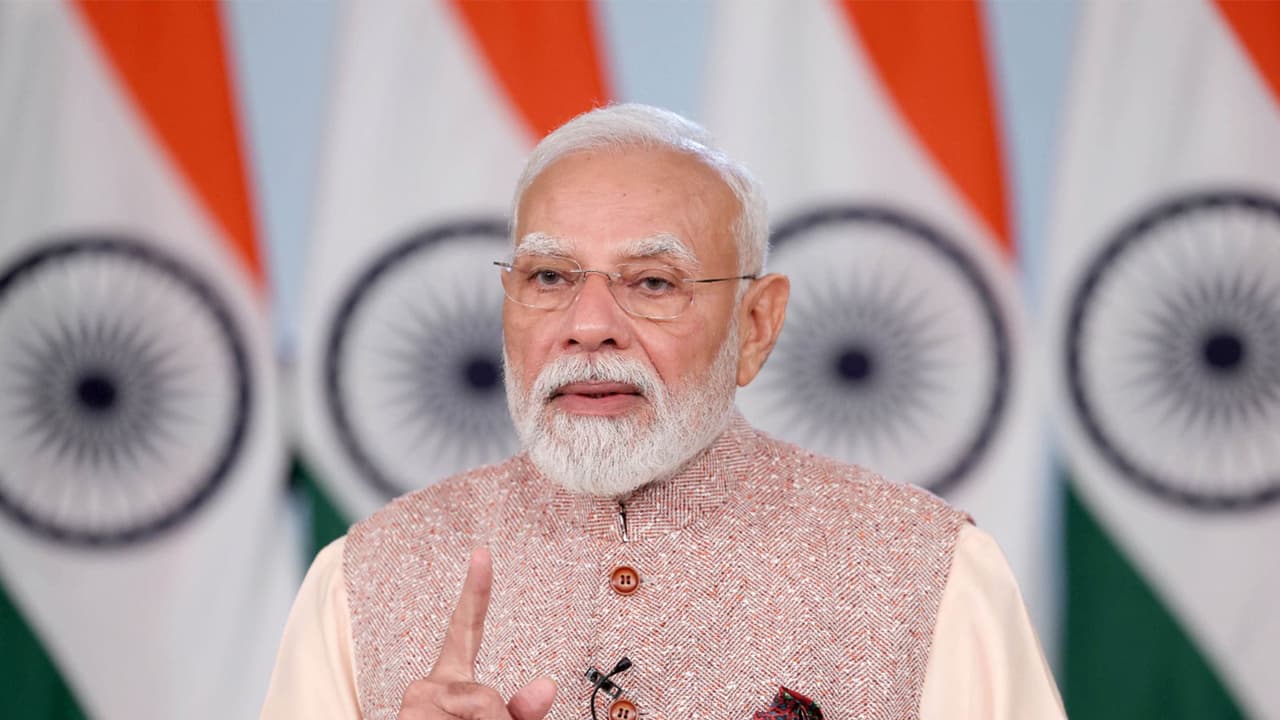
India will host the 18th BRICS Leaders’ Summit in New Delhi on Sept 12-13, 2026. The summit marks 20 years of the bloc and will focus on trade, tech, and global governance reform. PM Modi will host, with Putin and Xi expected to attend.
India is gearing up to host a major diplomatic gathering as leaders from the expanded BRICS grouping prepare to assemble in the national capital for the 18th Leaders’ Summit, marking two decades since the foundation of the bloc. With New Delhi taking on the chairship, discussions will focus on steering international cooperation across trade, digital technology, finance, energy security, and global governance reform.
The two-day summit will bring together heads of state and government from member nations, alongside invited international participants and senior officials, at Bharat Mandapam in Pragati Maidan on September 12 and 13. Preceding the main leaders’ gathering, the BRICS Business Forum will take place on September 11 at the same venue, alongside a session of the Women’s Business Alliance. Under its chairship, India has already organised over 350 BRICS-related meetings and high-level engagements across more than 25 cities nationwide.
Summit Agenda and Key Focus Areas
India’s chairship for 2026 is anchored in the central theme “Building for Resilience, Innovation, Cooperation and Sustainability”, reflecting the broader vision of “Humanity First.” The summit agenda focuses on strengthening internal cooperation among member states while driving tangible outcomes in economic growth, technology integration, sustainable development, and institutional governance. Discussions across various sessions are expected to address resilient global supply chains, cross-border payment integration, expanded use of national currencies, micro, small, and medium enterprise (MSME) development, digital trade, and artificial intelligence. Talks will also cover energy security, climate resilience, development finance, the expansion of the New Development Bank, and urgent reforms of multilateral financial and political institutions.
Expanded BRICS Membership
Operating across three foundational pillars of political and security matters, economic and financial cooperation, and cultural and people-to-people exchanges, the summit is expected to adopt a joint Leaders Declaration subject to bilateral consensus. The enlarged 11-member core grouping includes Brazil, China, Egypt, Ethiopia, India, Indonesia, Iran, Russia, Saudi Arabia, South Africa, and the United Arab Emirates, following Indonesia’s induction as a full member in 2025. Additionally, 10 partner nations, namely Belarus, Bolivia, Cuba, Kazakhstan, Malaysia, Nigeria, Thailand, Uganda, Uzbekistan, and Vietnam, participate within the broader BRICS framework while remaining distinct from full member states.
Key Dignitaries and Bilateral Prospects
Prime Minister Narendra Modi will host the summit, with confirmed attendance from Russian President Vladimir Putin and expected participation from Chinese President Xi Jinping. A visit by President Xi would mark his first trip to India since his 2019 informal meeting with PM Modi in Mamallapuram, positioning potential bilateral exchanges as a key diplomatic highlight. Other prominent leaders scheduled to participate include South African President Cyril Ramaphosa, Egyptian President Abdel Fattah el-Sisi, Indonesian President Prabowo Subianto, Iranian President Masoud Pezeshkian, Ethiopian Prime Minister Abiy Ahmed, Belarusian President Alexander Lukashenko, Kazakh President Kassym-Jomart Tokayev, Malaysian Prime Minister Anwar Ibrahim, and Thai Prime Minister Anutin Charnvirakul, alongside expected participation from United Nations Secretary-General António Guterres.
Diplomatic Significance of the 2026 Summit
The 2026 summit carries significant diplomatic weight as it marks 20 years of BRICS and represents the first major leaders’ meeting following the bloc’s historical expansion. New Delhi’s presidency places India at the helm of global discussions on trade, financial autonomy, technological architecture, and climate action, providing a platform for critical bilateral talks with key international partners, particularly Russia and China.
India’s Evolving Role as BRICS Chair
India’s four BRICS chairmanships in 2012, 2016, 2021, and 2026 mirror the evolving priorities of both the grouping and New Delhi’s diplomatic trajectory.
2012: Institutionalising the Bloc
During its first chairship in 2012, India sought to transform an informal dialogue forum into a structured institution, proposing a South-financed multilateral development bank that directly laid the groundwork for the establishment of the New Development Bank in 2014.
2016: Broadening the Security Agenda
By the 2016 Goa Summit, held under the theme “Building Responsive, Inclusive and Collective Solutions”, India broadened the bloc’s focus towards counter-terrorism, regional connectivity, and collective security, leveraging the platform to urge international action against terror networks and cross-border threat financing.
2021: Navigating the Pandemic
During its third chairship in 2021, conducted virtually amid the COVID-19 pandemic and complex military standoffs along the Line of Actual Control, India adopted the theme “BRICS@15: Intra-BRICS Cooperation for Continuity, Consolidation and Consensus.” New Delhi successfully preserved the functioning of the multilateral platform while prioritising public health, economic recovery, and diplomatic consensus.
2026: Championing the Global South
In 2026, as host to an expanded BRICS+ framework, India is deploying its chairship to champion Global South priorities, positioning the grouping as a leading voice for institutional reform, financial inclusivity, and sustainable development. (ANI)
(Except for the headline, this story has not been edited by Asianet Newsable English staff and is published from a syndicated feed.)