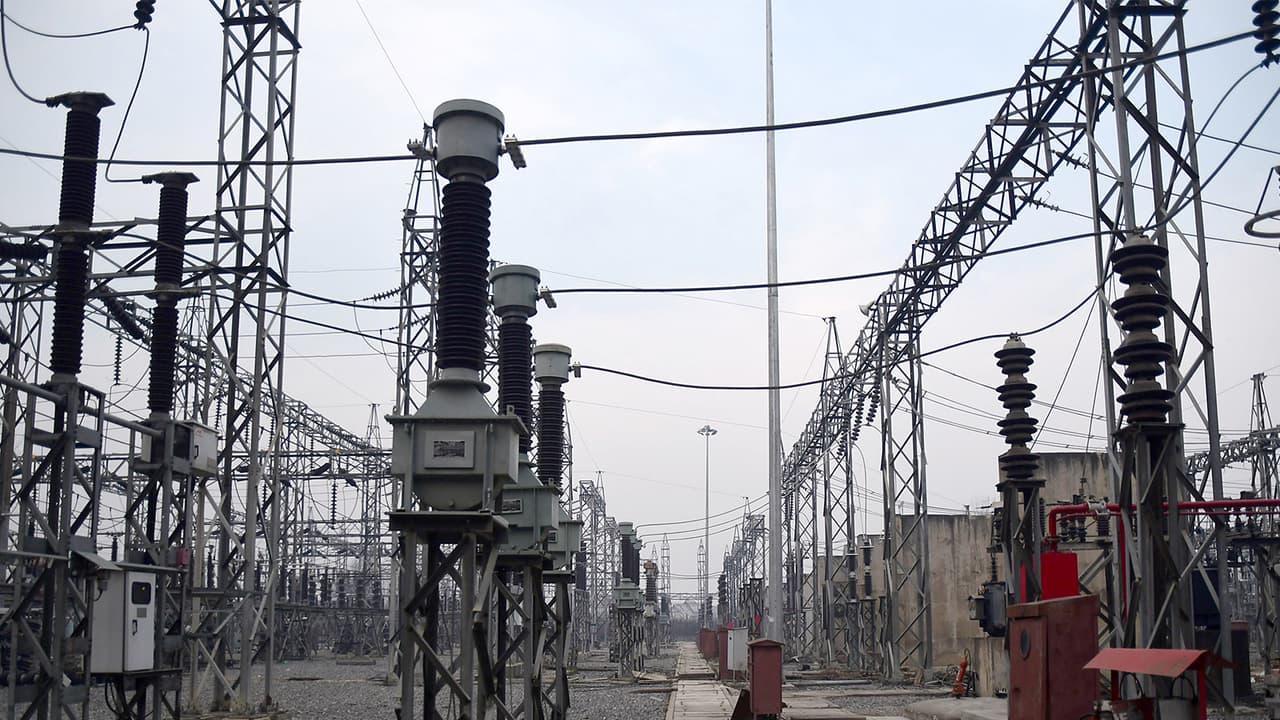
India’s power demand hit a record 258 GW in August, but evening shortages persist. A report highlights the strain on coal plants to balance renewables, suggesting retrofitting old plants as a cost-effective solution over battery storage.
Peak demand and peak supply both reached 258 GW in August, up 12 per cent year-on-year (YoY) on a 6 per cent base, even as non-solar shortages persisted during the evening, according to a report by Antique.
The report, citing findings from the Central Electricity Authority’s (CEA) August 2026 Wear and Tear Committee, indicated that the country’s power network faces rising operational strain from thermal adjustments rather than renewable expansion alone.
Power Demand and Generation Insights
Energy demand stood at 169 BU, rising 13 per cent, while the evening peak touched 245 GW, marking an 8 per cent increase. Around 1 to 2 GW of shortages occurred during non-solar hours, even while the monthly peak was met entirely.
Total installed capacity reached 552 GW, comprising 240 GW of renewables at 44 per cent and 224 GW of thermal coal. Total generation stood at 177.8 BU, up 11 per cent, where thermal power provided 116.8 BU and renewables supplied 35.3 BU. Within clean power, solar rose 36 per cent and wind grew 50 per cent, while power exchange volumes grew 20 per cent to 13.9 BU.
The Coal Fleet Flexibility Constraint
“India’s power system is becoming constrained less by renewable capacity additions and more by the flexibility of the existing coal fleet,” the Antique report stated. “On high-solar days, the gap between gross and net demand approaches 82 GW. Coal is instructed down to its technical minimum through midday, beyond which renewable curtailment becomes necessary,” it added.
The report noted that renewable generation expands rapidly enough to displace coal units during afternoon hours, but remains insufficient to cover peak evening loads.
Proposed Solution: Retrofitting Aged Plants
To address this mismatch, the committee assessed the feasibility of retrofitting aged thermal plants rather than relying solely on high-cost storage alternatives.
“Two-shifting 151 units aged 35 years or more, totalling 34.5 GW, would cost INR 30,200 to 37,750 crore and release about 24 GW of flexible power, against INR 1,75,500 crore for equivalent batteries,” the report observed.
“For a buyer, the extra tariff works out to about INR 1.46 per unit of renewable energy the shutdown makes room for, versus INR 3.61 for the same job with four-hour storage,” it stated. These plants, which are already fully connected and depreciated, could gain a lifespan extension of 12 to 15 years through two-shifting conversions. The primary impediment remains regulatory rather than financial, centered on cost absorption mechanisms.
NTPC’s Dissent and Report Rebuttal
State-run generator NTPC dissented against the proposal, registering 692 boiler tube leakages across facilities and citing studies showing deep cycling reduces plant life to between 14 and 20 years.
“Neither unit for which NTPC supplied data had ever run below 55% load, and roughly 70% of recorded failures trace to age, coal quality and operating practice,” the report noted.
“Damage accumulates through the frequency and magnitude of ramping rather than the depth of turndown,” the report stated, emphasizing that “flexibility in India is a settlement and control problem before it is a metallurgical one.” (ANI)
(Except for the headline, this story has not been edited by Asianet Newsable English staff and is published from a syndicated feed.)