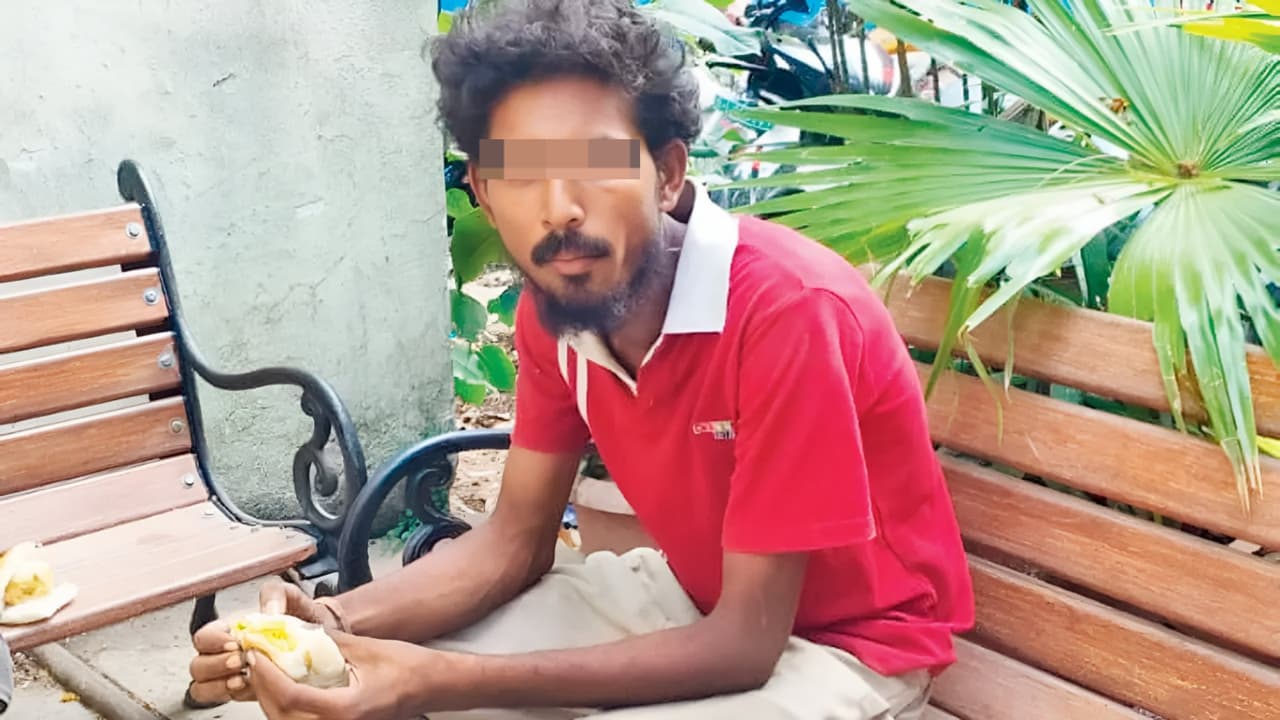
Mumbai Police reunited a missing homeopathy student from Nanded with his family after finding him begging on a Malad footpath during a rehabilitation drive. The youth had lost his bag and contact details during a train journey and struggled with a mental health condition. Police officers cared for him, traced his family and arranged a reunion.
What began as a routine police drive to remove beggars from the streets of Maharashtra’sMumbai ended in an emotional family reunion after officers discovered that a young pavement dweller was actually a missing medical student from Nanded district. The incident took place on Thursday when police teams from Malad were conducting a drive on SV Road to shift beggars for rehabilitation.
During the operation, constable Komalsingh Jadhav noticed a young man sitting on the pavement, according to a report by the Times of India. The man appeared confused, weak and unable to answer even simple questions properly.
Police later found that the youth was Abhay, a third-year homeopathy student from Tamsa in Nanded district who had gone missing nearly one-and-a-half months earlier.
Police noticed the man was in distress
According to police officials, the young man could not speak clearly and seemed mentally disturbed. Instead of treating him as just another routine case, the officers decided to help him patiently.
Constable Jadhav brought the youth to the Malad police station, where officers first made sure he was comfortable. They gave him a warm bath and served him hot food, added the TOI report.
After some time, when the young man became calmer, sub-inspector Manisha Kagalkar gently started speaking to him about his background and family.
Slowly, the man began sharing details about his life.
Youth reveals he was a medical student
During the conversation, Abhay told police that he was studying homeopathy and was in the third year of his course. He said he had travelled by train earlier this year when his bag was stolen. The bag reportedly contained his money and a paper carrying his family’s contact numbers.
Without any money or phone numbers, Abhay became stranded in Mumbai.
Police said Abhay was already undergoing treatment for a mental health condition before he went missing. Due to his condition, he could not remember his family’s contact details.
Unable to contact anyone and left without support, he eventually began begging on the streets just to survive.
Missing complaint had already been filed
After gathering these details, sub-inspector Kagalkar, working under senior inspector Dushyant Chavan and Deputy Commissioner of Police Sandip Ghuge, contacted the Tamsa police station in Nanded district.
The response came quickly.
Tamsa police confirmed that a missing person complaint had already been registered for a young man matching Abhay’s description.
Police then contacted Abhay’s father, who shared that his son had left home around one-and-a-half months ago without informing anyone.
The family had been desperately searching for him ever since.
Emotional reunion at Malad police station
Abhay’s father, who works as a teacher, and his elder brother, who is a doctor at a government hospital, immediately travelled to Mumbai after receiving the call.
Police exchanged photographs with the family to confirm the youth’s identity before the reunion.
The emotional meeting finally took place at around 11 pm at Malad police station.
As soon as Abhay’s father saw his son, he reportedly broke down in tears after weeks of worry and uncertainty.
The relieved family thanked the Mumbai police team for not only tracing Abhay but also for treating him with kindness and compassion during a difficult time.
Scroll to load tweet…
Scroll to load tweet…
The incident has touched many people online and highlighted the humane side of policing. Instead of ignoring the young man or treating him harshly, the officers took extra time to understand his condition and help reconnect him with his family.
For Abhay and his loved ones, what began as weeks of fear and hopelessness finally ended with relief, support and a second chance.