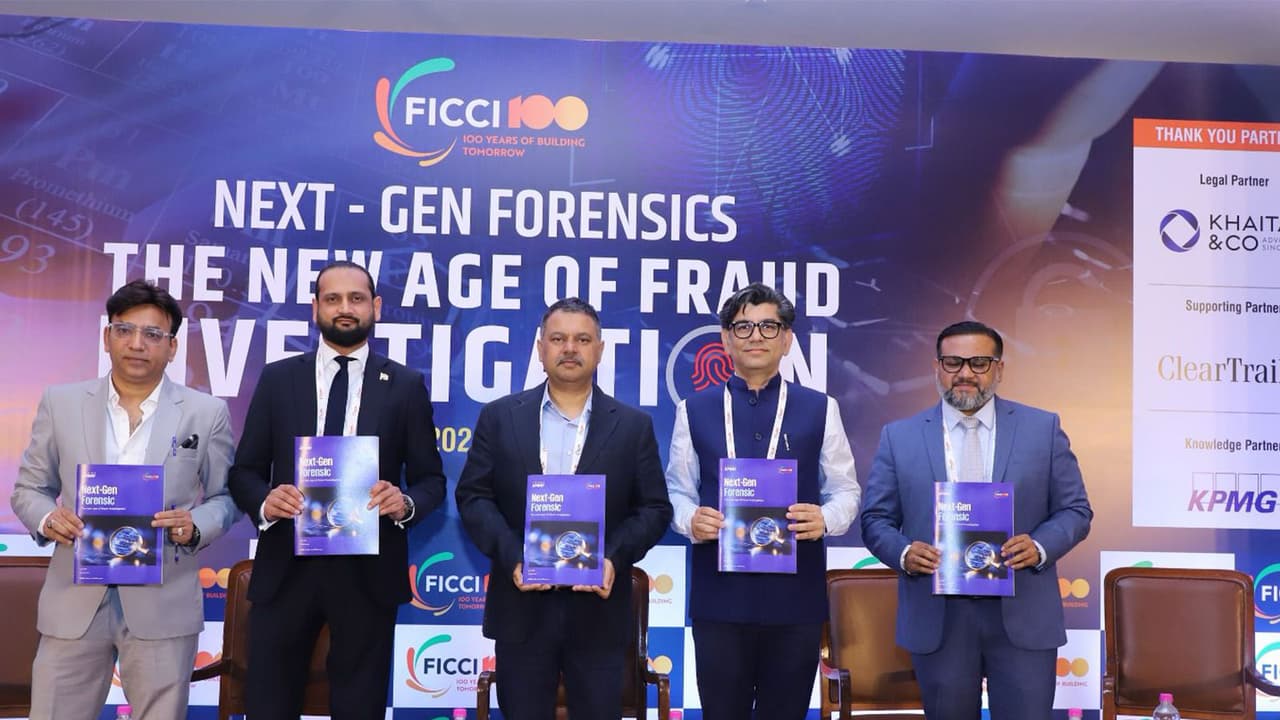
At the FICCI Conference on Next-Gen Forensics, experts called for a complete overhaul to fight industrial-scale cybercrime. They stressed the need for advanced forensic tech and real-time intelligence to tackle AI-driven deepfakes and crypto fraud.
AI world with AI-generated deepfakes, fake “digital arrests,” and crypto-linked fraud rings growing more complex by the day, traditional investigative methods are falling behind. At the FICCI Conference on Next-Gen Forensics: The New Age of Fraud Investigation, experts argued that tackling next-gen financial crime will require a complete overhaul embracing advanced forensic tech, real-time intelligence sharing, and tighter coordination between regulators, private firms, and police.
The conference underscored how cybercrime has scaled into an organised, industrial model, making stronger governance, digital trust, and live monitoring critical to protect investors, businesses, and citizens.
The Industrialisation of Cybercrime
Addressing the gathering, Brijesh Singh, Principal Secretary, Government of Maharashtra, said cybercrime now operates like a specialised supply chain. “Different groups handle data theft, fake identities, mule accounts, deepfake production, and crypto laundering. It’s no longer ad-hoc fraud, it’s industrial,” he said. “By the time a victim gets the first call, criminals often already know their personal data, habits, and psychological triggers. The full cycle from stealing data to moving money through crypto can finish in under 30 minutes, rendering old-school investigation too slow,” Singh added.
New Investigative Methods Needed
He stressed that AI, deepfakes, and digital evidence demand new investigative methods. “Trust itself is being weaponised. With voice cloning, deepfake tools, and fraud-as-a-service widely available, we need integrated forensic platforms, real-time intel exchange, and updated evidence rules to catch and prosecute offenders,” he said.
Regulatory Push for Investor Protection
Govindayapalli Ram Mohan Rao, Executive Director, Market Intermediaries Regulation and Supervision Department, SEBI, outlined the regulator’s push for tech-led investor protection and digital trust. “Investor confidence is the foundation of capital markets. SEBI’s initiatives like SEBI Check, App Check, and UPI verification help people spot genuine entities and avoid scams,” he said.
Rao added that regular cybersecurity audits and advanced surveillance are vital to keep India’s securities markets clean. “Stopping fraud before it happens is better than investigating after. Through proactive monitoring, tracking misleading content, coordinating with platforms, and using tech-based detection, we’re working to cut fraud risk and build digital trust,” he noted.
Expanding Digital Fraud Risk
Presenting the FICCI-KPMG Report, Suveer Khanna, Head & Partner, Forensic Services, KPMG India, said digital expansion has widened the fraud risk surface. “Internet access, data consumption, and digital payments have surged, but so has organised fraud. Companies must shift from isolated responses to intelligence-driven investigations, joint risk management, and institutional learning to stay resilient,” he said.
Legal and Compliance Hurdles
Amey Mirajkar, Partner, Khaitan & Co, said India’s fast-growing digital economy is also a playground for sophisticated fraud networks. “Today’s investigations involve virtual assets, encrypted chats, digital evidence, and cross-border links, creating hurdles for companies, regulators, and enforcement agencies. Our paper looks at how legal and compliance frameworks can adapt to these risks,” he explained.
A Call for Unified Action
Earlier, Ravindra Jain, Member, FICCI and Vice President & Head of India Business, ClearTrail Technologies, welcomed delegates and stressed that industry, regulators, law enforcement, and tech providers must work together. He said the real challenge now is connecting scattered digital footprints and intelligence to generate actionable insights for fraud prevention.
Two knowledge publications were released at the event: the FICCI-KPMG Report “Next Gen Forensics: The New Age of Fraud Investigation” and the FICCI Khaitan & Co Paper “Fraud in the Digital Age: Legal, Compliance and Enforcement Challenges.” Both reports map emerging fraud trends, AI-driven threats, digital investigation methods, regulatory changes, and the forensic capabilities needed to counter increasingly sophisticated financial and cybercrime.
(Except for the headline, this story has not been edited by Asianet Newsable English staff and is published from a syndicated feed.)