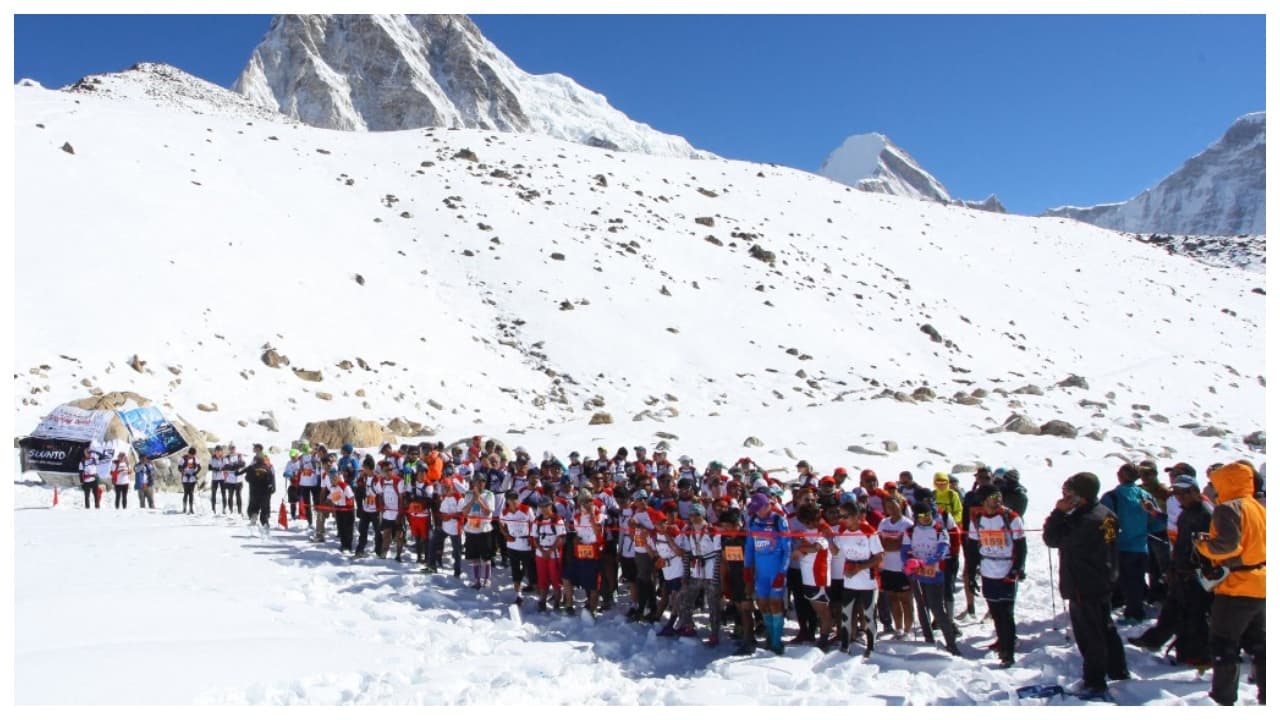
A new study has found that human activity at the Everest Base Camp is speeding up the melting of the Khumbu Glacier. Researchers warn that thousands of litres of urine dumped daily and fuel use are major local factors, along with climate change, posing a serious threat to Everest.
A new study has revealed a shocking fact: human activity at Mount Everest is having a direct and major impact on ice melt, right alongside climate change. The report highlights that over 6,000 litres of urine are being released at the Everest Base Camp every single day. The heat and salt from this waste are contributing to the melting of the Khumbu Glacier.
Why so much water?
The study was a joint effort by researchers from Nepal and the US, and it was published in the journal Regional Environmental Change. The Everest Base Camp is located on Nepal’s Khumbu Glacier. The report points out that mountaineers and guides drink large amounts of water to stay hydrated at high altitudes, which is why the volume of urine is so high. While there’s a system to collect solid waste and bring it down, a large amount of urine flows directly onto the glacier.
Researchers have calculated that in just one season, the heat from human urine alone could be responsible for melting about 154 tonnes of ice.
But it’s not just the urine. During the 2023 spring climbing season, a huge amount of fuel like LPG, kerosene, and petrol was used to run about 1,600 tents at the base camp. The study estimates that the combined heat from fuel use and urine created enough heat to melt approximately 2,492 tonnes of snow and ice in a single season.
Time to move the base camp?
After analysing satellite data from 1991 to 2023, the team found that the surface temperature at the base camp has been rising by an average of 0.28 degrees Celsius every year. The study notes that this is almost double the rate of temperature increase in the nearby snow-covered areas.
While climate change is the main reason for the glacier melting, researchers warn that having thousands of people camped on a melting glacier every year is not sustainable in the long run. The study suggests that authorities should consider moving the base camp to a more stable, ice-free area nearby.