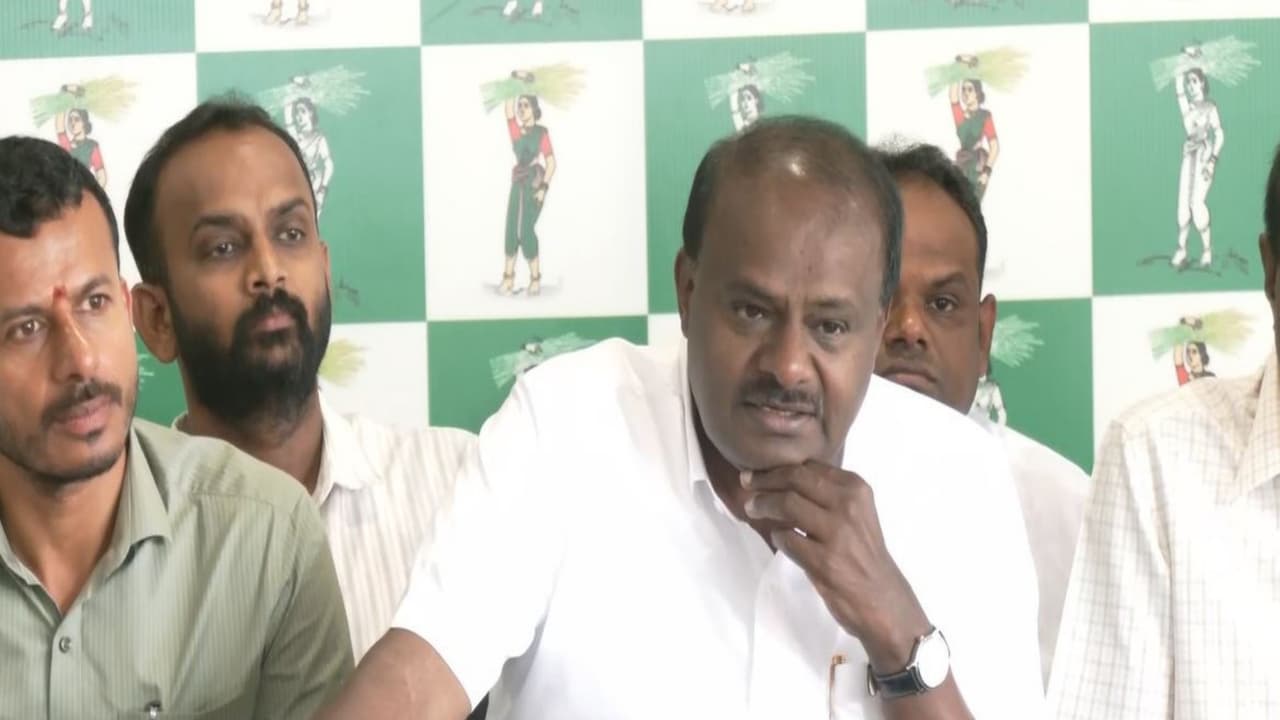
Union Minister HD Kumaraswamy urged the auto industry to make India a global hub for advanced and green mobility. Speaking at the ACMA session, he called for deeper localisation, innovation, and technological leadership beyond mere resilience.
Union Minister for Heavy Industries and Steel H D Kumaraswamy on Wednesday called upon India’s automobile and auto component industry to move beyond resilience and position the country as a global hub for advanced and green mobility technologies.
Addressing the 66th Annual Session of the Automotive Component Manufacturers Association of India (ACMA) in New Delhi, themed ‘Beyond Resilience’, the Union Minister said the next phase of India’s automotive growth must be driven by scale, deeper localisation, accelerated innovation and technological leadership.
“The next phase must be about leadership – building scale, deepening localisation, accelerating innovation and establishing India as a globally competitive hub for advanced and green mobility technologies,” Kumaraswamy said.
Government Support and Green Initiatives
The Minister said the automotive and auto component industry is central to India’s manufacturing ambitions, supporting millions of livelihoods, anchoring a vast MSME ecosystem and generating a multiplier effect across sectors including steel, electronics, engineering, chemicals, logistics and services.
Highlighting the impact of government interventions, Kumaraswamy said the Production Linked Incentive (PLI) Scheme for Automobile and Auto Components is delivering encouraging results. As of June 30, approved applicants under the scheme had reported investments of Rs 45,477 crore and generated more than 67,000 employment opportunities*, he said.
He said the objective of policy support was not merely to increase production, but to build genuine domestic capabilities, strengthen value addition and establish India as a competitive base for advanced automotive technologies.
The Minister also highlighted the progress made under the government’s green mobility initiatives. The enhanced PM E-DRIVE outlay now stands at Rs 11,900 crore, with the scheme intended to support 45.79 lakh electric two-wheelers. More than 25.66 lakh electric two-wheelers, 2.75 lakh three-wheelers and 53 electric trucks have already been supported, according to the figures shared by the Minister.
He further highlighted the allocation of Rs 4,391 crore for 14,028 electric buses, with 13,800 buses already allocated, as well as Rs 2,000 crore earmarked for public charging infrastructure. The PM e-Bus Sewa-Payment Security Mechanism, with an outlay of Rs 3,435 crore, is aimed at supporting the deployment of more than 38,000 electric buses.
Battery manufacturing is another key pillar of the transition. The PLI Scheme for Advanced Chemistry Cell Battery Storage, with an outlay of Rs 18,100 crore, aims to establish domestic battery capacity. The government is also strengthening domestic capabilities in sintered rare-earth permanent magnets, an important input for electric motors and advanced mobility applications, to reduce strategic import dependence and strengthen supply-chain security.
Defining Success and a Call to Action
Kumaraswamy stressed that India’s success in green mobility cannot be measured merely by the number of electric vehicles sold. He said the real measure of success must include how much technology is designed in India, how much value is added domestically, how many MSMEs participate in emerging supply chains and how effectively Indian products compete in global markets.
Calling for greater investment in cleaner and emerging technologies, the Minister urged the industry to move beyond manufacturing for the domestic market and develop products and technologies for global markets. “India should not merely participate in the global mobility transition; India should help lead it,” he said.
Industry Performance and Future Roadmap
The Minister’s call comes as India’s auto component industry continues to post strong growth. According to ACMA data, the sector recorded a turnover of Rs 7.60 lakh crore in FY 2025-26, registering 12.7% growth over the previous fiscal. Supplies to OEMs rose 16.3% to Rs 6.63 lakh crore, while exports increased to USD 24 billion. The industry’s strong performance underlines its growing role in India’s manufacturing ecosystem and its increasing integration with global value chains.
Speaking at the session, industry leaders also emphasised the need for deeper localisation, stronger Tier-2 and Tier-3 supplier capabilities and greater focus on technology and quality. Maruti Suzuki India MD and CEO Hisashi Takeuchi stressed that global supply-chain restructuring presents an opportunity for India to emerge as a trusted manufacturing hub.
Kumaraswamy said the Ministry of Heavy Industries will continue to work closely with ACMA, SIAM and other industry stakeholders to improve scheme implementation, address operational challenges and create an enabling environment for investment and innovation.
He called upon the industry to invest more boldly in electric powertrains, batteries, power electronics, lightweight materials, vehicle software, sensors and other emerging technologies while strengthening domestic value chains. As India advances towards Viksit Bharat 2047, the Minister said the ambition must extend beyond participation in the global mobility transition. (ANI)
(Except for the headline, this story has not been edited by Asianetnews Editorial staff and is published from a syndicated feed.)