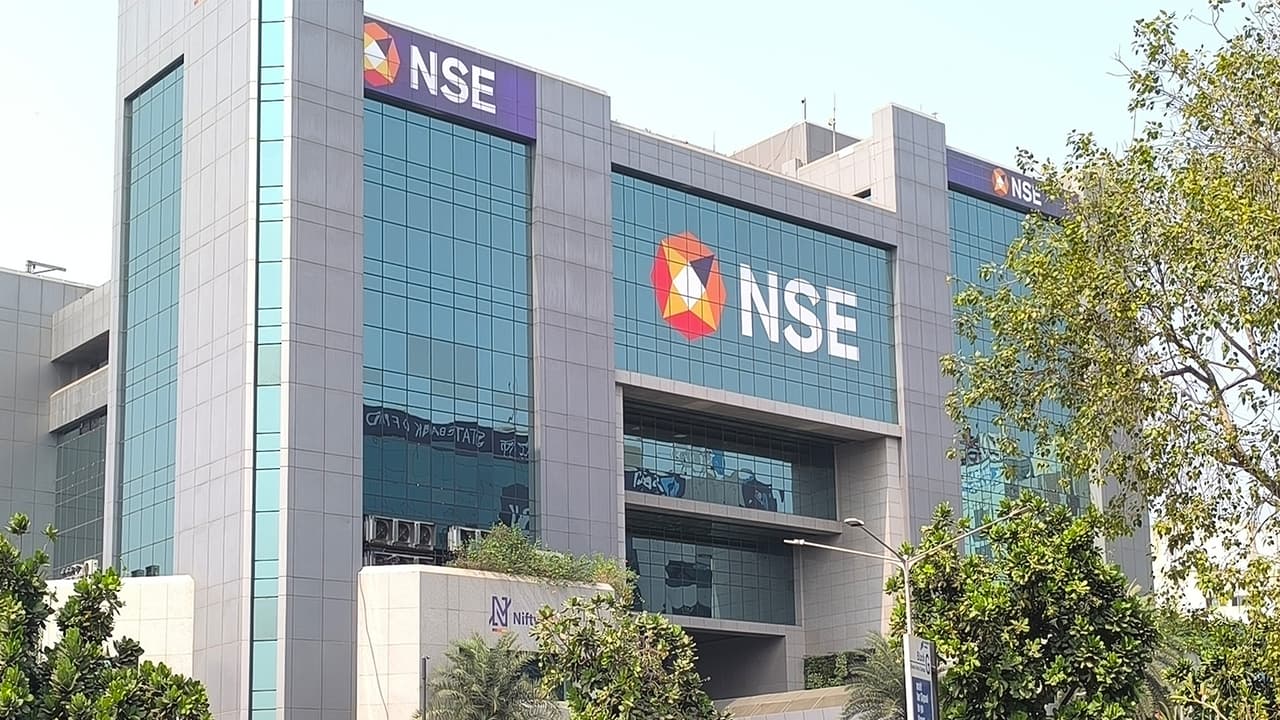
Indian equity benchmarks Sensex and Nifty ended lower on Monday. The decline was driven by escalating US-Iran tensions which pushed crude oil prices higher, and investor caution ahead of the release of India’s GDP growth numbers.
Domestic benchmark equity indices closed lower on Monday as fading hopes of a diplomatic breakthrough between the US and Iran kept investors cautious, while market participants also remained watchful ahead of the release of India’s GDP growth numbers. The Nifty 50 closed at 24,080.40, down 95.25 points or 0.39 per cent, while the BSE Sensex ended at 76,957.27, declining 307.24 points or 0.40 per cent.
Geopolitical Tensions and Market Impact
Escalating geopolitical tensions pushed crude oil prices higher, raising concerns over inflation and interest rates and weighing on investor sentiment. “Escalating tensions between the US and Iran have kept investors on edge, as fading prospects of a diplomatic breakthrough pushed crude oil prices and global bond yields higher,” said Vinod Nair, Head of Research, Geojit Investments Limited. He added that higher crude prices and bond yields have renewed concerns over energy-led inflation and a higher interest rate environment, which could put pressure on corporate earnings.
Conflict Escalation and Crude Oil Surge
Brent crude oil prices rose 3.34 per cent to USD 91 per barrel at the time of reporting, as renewed tensions between Washington and Tehran raised concerns around energy supplies and shipping through the Strait of Hormuz.
The US military on Sunday launched strikes on Iran’s Larak Island, targeting two Iranian missile launchers. Larak Island is located near the northern edge of the Strait of Hormuz, a key global shipping route.
The Iranian Army on Monday also said it had carried out drone strikes targeting helicopter and troop positions at the Al Minhad airbase in the UAE, in response to the recent US strikes.
The rise in crude prices added to concerns for markets such as India, where higher energy costs can increase inflationary pressure and affect corporate profitability.
Global Interest Rate Concerns
Nair also pointed to global interest rate concerns, saying the US Federal Reserve chair’s recent comments following the Jackson Hole address have increased expectations of a possible September rate hike. This has kept global bond yields elevated and contributed to volatility in emerging markets.
Domestic Market Details
However, the decline in the domestic benchmarks was limited by stock-specific buying in the broader market and expectations of healthy first-quarter FY27 GDP growth, stronger festive demand and better GST collections.
Top Gainers and Losers
Among Nifty 50 stocks, ICICI Bank, Grasim, Bajaj Auto, Mahindra & Mahindra, Reliance Industries and Maruti were among the top gainers. On the other hand, Adani Enterprises, Adani Ports, Eternal, Tata Steel and Hindalco were among the major losers.
Sectoral Performance
The broader sectoral picture remained weak, with most NSE sectoral indices ending in negative territory. Nifty Media fell 2.84 per cent, Nifty Metal declined 2.37 per cent, Nifty IT lost more than 1 per cent, Nifty Realty fell 1.26 per cent and Nifty PSU Bank declined 1.06 per cent. Nifty Oil & Gas fell 0.17 per cent, while Nifty Auto slipped 0.01 per cent.
Commodity and Asian Markets
Gold prices declined around 1 per cent to Rs 1,54,700 per 10 grams for 24-karat gold, while silver was marginally lower at Rs 2,35,789 per kg at the time of reporting.
In the other Asian markets, Japan’s Nikkei 225 index was down by 0.35 per cent to 66,173; Hong Kong’s Hang Seng index was down by 0.27 per cent to the 25,515 level; and Taiwan’s weighted index slipped by 0.44 per cent to close at the 46,128 level. In contrast, Singapore’s Straits Times is up by 0.97 per cent, and South Korea’s KOSPI index was up by 0.46 per cent to the 6,820 level. (ANI)
(Except for the headline, this story has not been edited by Asianet Newsable English staff and is published from a syndicated feed.)