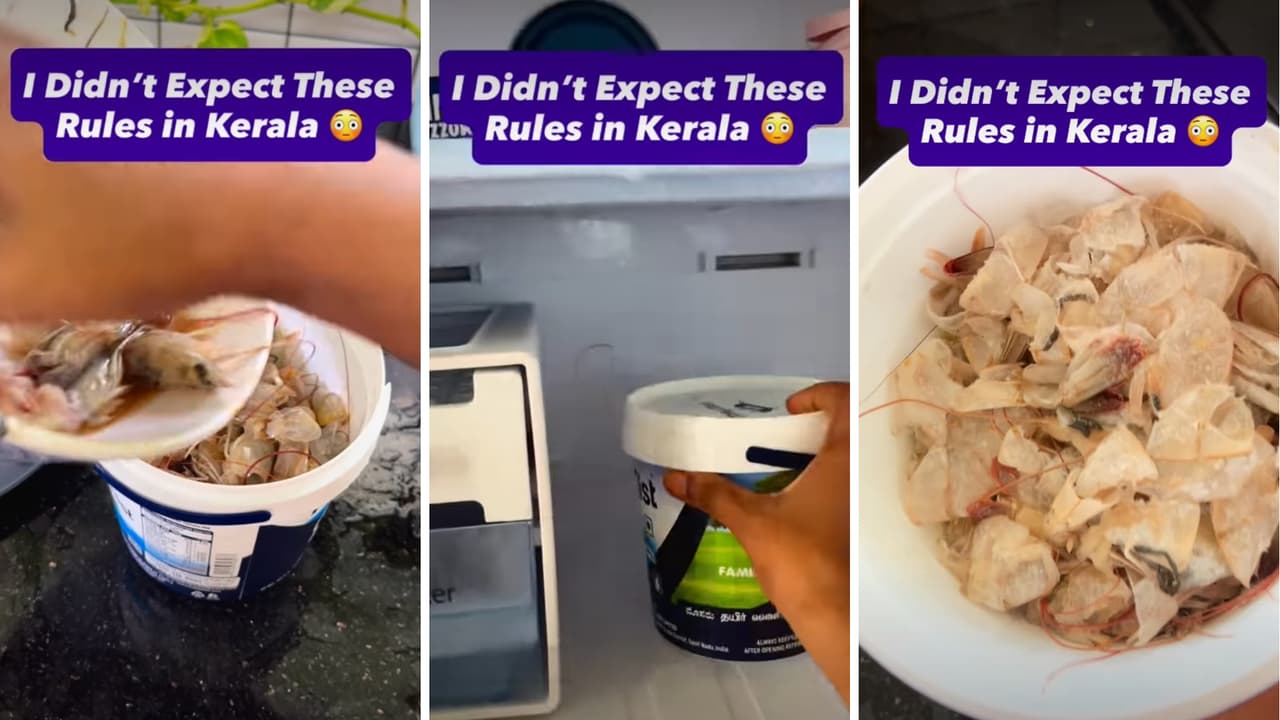
A Kerala woman’s viral Instagram video explaining strict seafood waste disposal rules has sparked praise and debate online. She said seafood waste in her area must be stored and frozen before collection. While many users applauded Kerala’s focus on cleanliness and waste segregation, others noted that facilities differ across locations.
A woman’s video explaining strict waste disposal practices in Kerala has gone viral on social media, with many users praising the system and saying similar rules should be adopted across India. The woman shared the video on Instagram with the caption: “At first, these rules felt too much… but now I get it.” She suggested that such practices could be one of the reasons Kerala is known for its clean surroundings and natural beauty.
Seafood waste must be stored before collection
In the video, the woman explained that seafood waste cannot simply be handed over for collection like ordinary household rubbish.
According to her, leftover seafood and similar organic waste must first be properly stored and frozen. Only then do local waste collection authorities accept it.
The woman initially found the rule inconvenient but said she gradually understood the reason behind it. Freezing such waste can help prevent foul smells and make storage and collection more manageable.
However, the practice appears to vary across different parts of the state. In the comments section, the creator said the rule was compulsory in her residential area of Kariyavattom in Thiruvananthapuram.
Social media users praise waste segregation
The video quickly triggered a wider discussion about waste management and cleanliness.
One user wrote that they were happy to see at least some places in India taking waste segregation seriously. Another compared the practice with waste management systems followed in Japan and said more cities should consider similar measures.
Several users praised Kerala for its cleanliness, while others questioned whether such systems were followed uniformly across the state.
One commenter pointed out that waste collection facilities can differ depending on the locality, claiming that rubbish management remained a challenge in some areas.
What happens to seafood waste?
The comments also sparked curiosity about what happens to seafood waste after collection.
One social media user claimed that such waste can be processed for different purposes, including fish feed, organic fertiliser and biogas. Others suggested that biodegradable kitchen waste could also be composted and used as manure for plants and trees.
The viral video has therefore done more than highlight one local rule. It has opened up a larger conversation about how households handle organic waste and why proper segregation is important.