Anthropic unveiled a research preview of its ‘Model Hardware Standard’ (MHS) to let AI agents safely control physical devices in science and manufacturing. It aims to streamline device integration and enable autonomous, round-the-clock experiments.
Anthropic has rolled out a research preview of “Model Hardware Standard” (MHS) to enable AI agents to safely operate multiple physical devices used in scientific research and manufacturing. It plans to publish research findings and safety guidance when the standard is open-sourced, according to a company release.
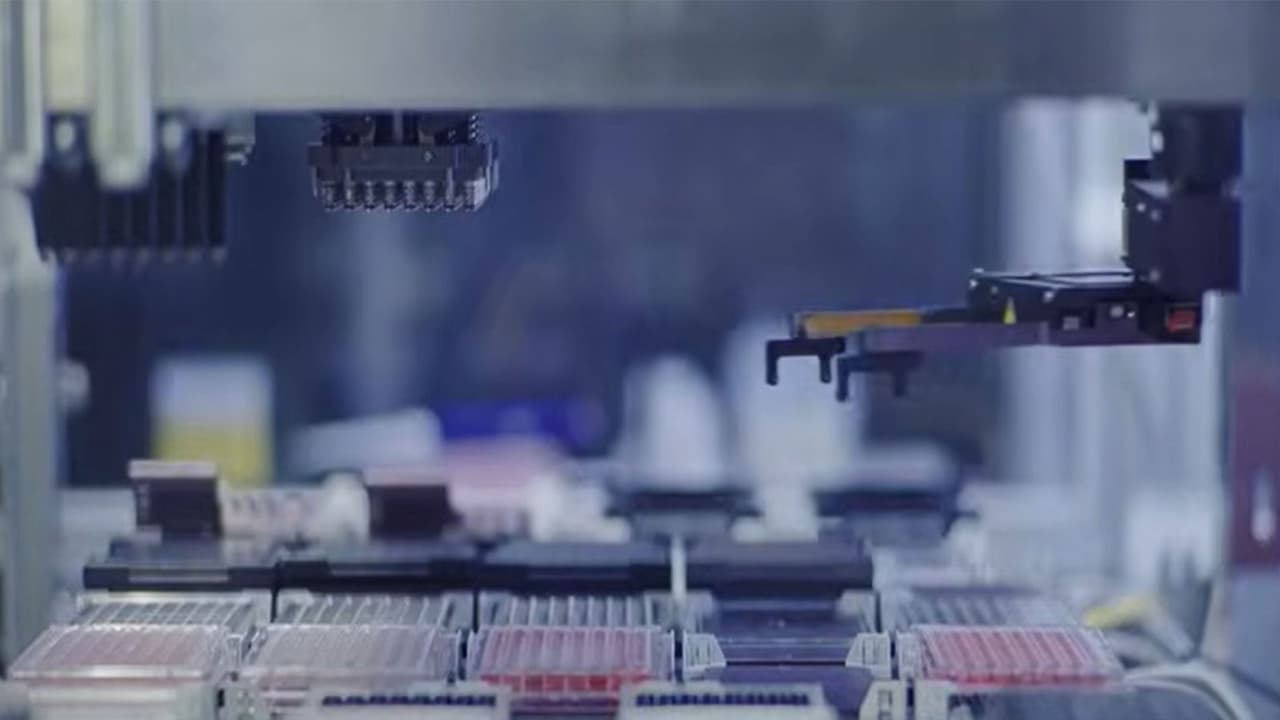
The standard allows agents to coordinate instruments including — microscopes, liquid handlers and robotic arms — simultaneously and perform complex tasks, ranging from routine drug discovery experiments to laser calibration for quantum computers. MHS is compatible with any device with a programmable interface and is model-agnostic, allowing AI agents to access it through standard protocols such as the Model Context Protocol.
“We’re sharing an early version of MHS with partners across science, robotics, electronics, and manufacturing so we can collaborate to build safety evaluations and develop best practices for AI systems operating physical equipment, ahead of making the standard open source.” Anthropic said.
Streamlining Research and Manufacturing
The development of MHS started as a partnership between Anthropic and HHMI Janelia Research Campus. As per Anthropic, setting up and integrating hardware in laboratories and manufacturing facilities can take weeks or even months, as most devices do not communicate with one another and require custom integrations. MHS can reduce this process to hours or minutes, while enabling researchers and engineers to run autonomous, round-the-clock experiments and workflows.
AI agents can reason through individual steps, adjust parameters in real time and, in some cases, resolve hardware errors without human intervention. Across its early projects, Anthropic found that MHS reduced device integration time, enabled faster iteration across different experimental settings, and supported live machine operations and real-time fault detection, as per the release.
Early Findings and Future Potential
It is worth noting, following its testing of MHS, Anthropic found that Claude interacts with experiments and hardware in an exploratory manner, similar to how a scientist would.
“We are only just beginning to see what people can do with frontier models and MHS, but our hope is that the standard can be of use to researchers, engineers, and other practitioners in speeding up the process of discovery and experimentation in any domain that uses devices with a programmable interface,” it said.
A Focus on Safety and Collaboration
Anthropic is developing additional safety measures to address potential misuse of AI agents operating physical equipment and planning to publish findings from the research preview and safety guidance when it makes MHS open source.
“We will also use the research preview to build additional safety evaluations with our launch partners and strengthen protections for the use of AI in the physical world. We are developing a physical safety roadmap to further bolster our safeguards policy and enforcement coverage against the risk of misuse. When we open-source MHS, we will release findings from the research preview as part of our guidance for deploying the standard safely,” it said, adding, “We’re inviting stakeholders across industries to join the waitlist for our research preview of MHS,”it said. (ANI)
(Except for the headline, this story has not been edited by Asianet Newsable English staff and is published from a syndicated feed.)