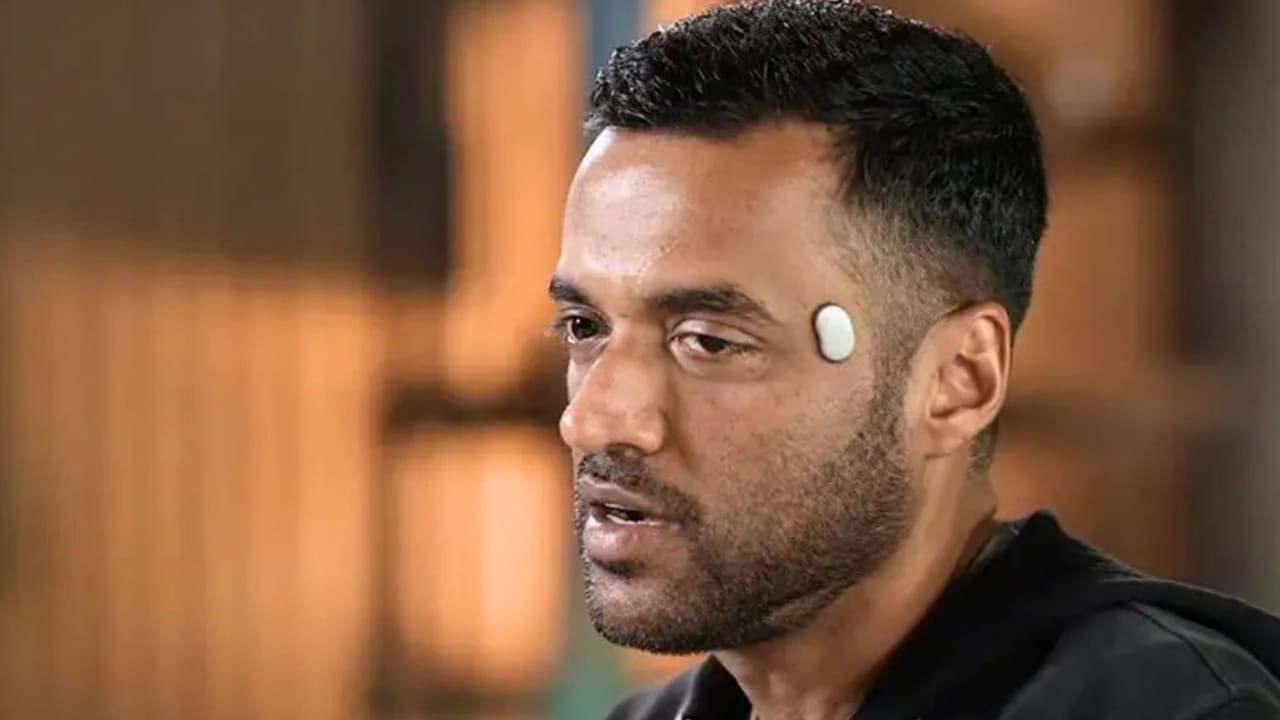
Deepinder Goyal has announced that his health-tech venture, Temple, is acquiring London-based longevity medicine practice Longevous. Its founders, Dr Robert Mohr and Dr Avi Roy, will join Temple as Chief Medical Officer and Head of Science. The acquisition comes as Temple prepares to launch its experimental wearable.
Deepinder Goyal’s health-tech venture, Temple, has acquired London-based longevity medicine practice Longevous as it prepares to launch its experimental wearable device. Announcing the development in a post on X, Goyal said the founders of Longevous, Dr Robert Mohr and Dr Avi Roy, along with their team, would join Temple full-time. Longevous will continue to operate as before, but will now function as part of Temple.
Scroll to load tweet…
The acquisition brings clinical and scientific expertise to Temple at a crucial stage, with the company moving closer to the commercial launch of its unusual health wearable.
Longevity experts join Temple leadership
Dr Robert Mohr will join Temple as its Chief Medical Officer. According to Goyal, Mohr is a board-certified physician with nearly two decades of clinical experience and later moved from emergency medicine into evidence-based longevity medicine.
Goyal said Mohr would bring clinical oversight to Temple’s experiments and health-related claims.
Meanwhile, Dr Avi Roy will become Temple’s Head of Science. Goyal described Roy as an Oxford-trained biomedical scientist with experience at the intersection of longevity science and business. Roy has also worked as a research fellow at the University of Oxford’s Centre for the Advancement of Sustainable Medical Innovation, according to Goyal’s announcement.
The two founders first met Goyal at a dinner in London, where a conversation about the small device attached to the side of his head turned into a detailed discussion about the science behind Temple.
Goyal said Mohr and Roy later began using Temple every day and spent months examining its data and the company’s scientific assumptions alongside its in-house team.
What exactly is Temple?
Temple is an experimental health and wellness wearable designed to sit on the side of the forehead, around the temple region, rather than on the wrist like a smartwatch or fitness band.
According to Temple and Goyal, the location allows the device to collect signals linked to cerebral blood flow, oxygenation, heart rate and the body’s response to activities such as exercise, sleep, recovery and meditation. Goyal has argued that the temple region may offer a cleaner signal than the wrist because of its anatomy and lower movement.
Temple is still not widely available to consumers. Goyal recently said its latest version is less than half the size of earlier prototypes and that limited pre-orders are expected soon, with shipments planned before the end of 2026. Exact dimensions and the full list of sensors have not yet been publicly disclosed.
Temple’s ‘Entropy’ claim
One of Temple’s most unusual features is a proprietary metric called “Entropy”. Goyal says it measures the body’s real-time metabolic cost, or, in his words, the amount of effort involved in keeping the body functioning.
The score is said to update every second on a scale ranging from 1 to 250. According to Goyal, lower values reflect deeper rest, while higher values are associated with intense physical effort and activity.
Temple also uses the terms Entropy Minima and Entropy Maxima to describe the body’s lowest resting level and highest level during exertion. Goyal has said that factors including sleep, stress, exercise, food, caffeine and meditation can influence the score.
Device claims still face scientific scrutiny
However, Temple’s health claims have also drawn questions from medical experts, particularly because the device and its Entropy metric are still awaiting wider independent scientific validation.
Neurologists quoted in earlier reports have questioned whether measurements taken from one external point on the head can accurately represent blood flow throughout the brain. Experts have also stressed that a consumer wearable should not be treated as a substitute for established medical tests or clinical assessment unless its claims are properly validated.
That is where the Longevous acquisition could become significant. By bringing Mohr and Roy into its leadership team, Temple appears to be strengthening its clinical and scientific capabilities as it moves towards launch.
Temple remains one of the more unusual entrants in the rapidly growing wearable technology market. Whether its bold claims can stand up to rigorous independent testing will likely determine whether the tiny device becomes a major health-tech product or remains an ambitious experiment.