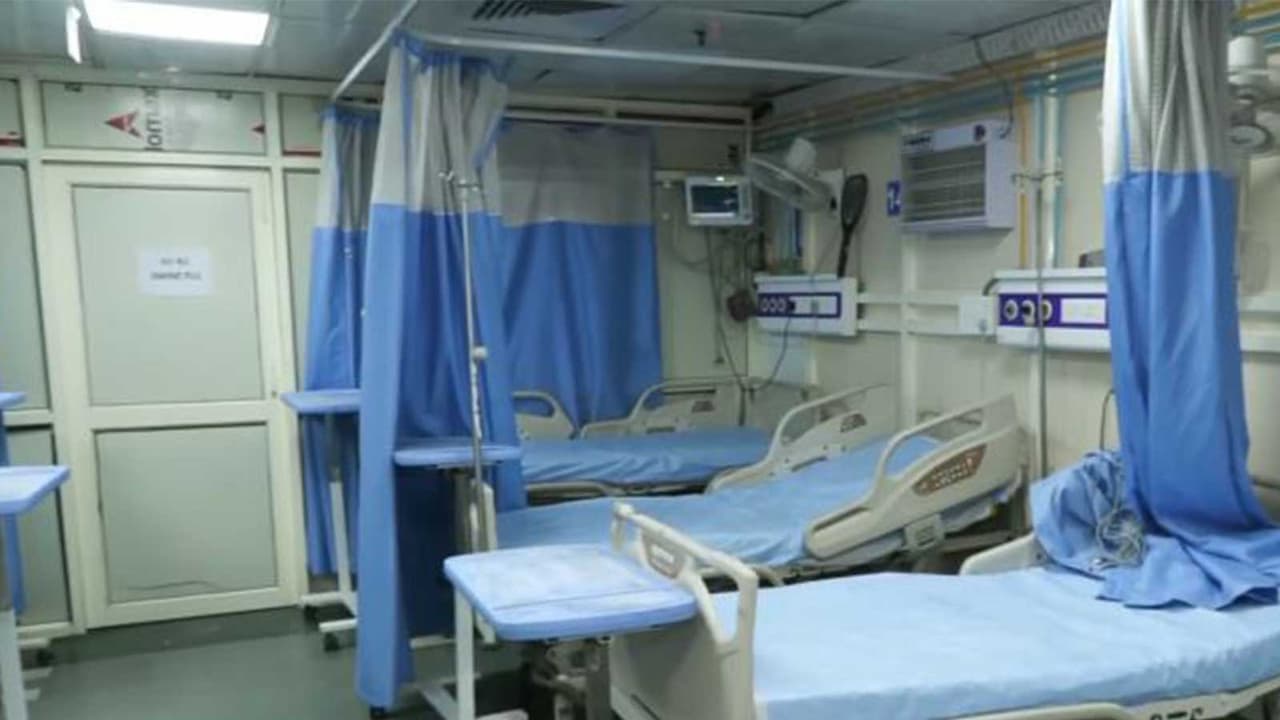
Amid rising H1N1 cases in Delhi, LNJP Hospital has set up a 7-bed isolation ward, with plans to expand to 70 beds. ICMR reports that H1N1 is the dominant respiratory pathogen circulating across India, accounting for 98% of Influenza A cases.
LNJP Hospital’s Preparations for H1N1
Amid a rise in H1N1 Influenza cases in the national capital, the Lok Nayak Jai Prakash Narayan (LNJP) Hospital has set up a dedicated isolation ward and ramped up medical infrastructure to tackle the situation. The hospital has established a specialised unit to ensure immediate treatment for patients, with provisions to scale up capacity significantly if the number of cases increases.
Speaking to ANI, Dr Satyajit Kumar, Head of Department (HOD), Accident & Emergency (A&E) at LNJP Hospital, detailed the current arrangements. “We’ve made all the preparations for swine flu. We’ve created a seven-bed ward here. Five of these beds are high-dependency beds, and two are ventilated,” Dr Kumar said. He further emphasised that the hospital has a contingency plan in place to handle a potential surge in admissions. “If the number of patients increases, we’ve created a 70-bed ward on the seventh floor, which has 10 ICU beds and 60 HDU (High Dependency Unit) beds,” he added.
National Surveillance and H1N1 Dominance
Earlier on Tuesday, Indian Council of Medical Research (ICMR) Director-General Rajiv Bahl said that the H1N1 strain of Influenza A has emerged as the overwhelmingly dominant respiratory pathogen circulating across India, accounting for nearly 98 per cent of tested Influenza A cases.
Addressing a press conference, Bahl highlighted that India has established a multi-tiered, real-time disease surveillance network across the country to track viral outbreaks. The surveillance infrastructure links state-level data through the Integrated Health Information Platform (IHIP) and National Centre for Disease Control (NCDC), layered with direct hospital-based sampling by ICMR to instantly flag rising respiratory infections, such as H1N1 influenza and trigger immediate outbreak responses.
“The first thing is: how do we know which viruses are circulating? India, particularly post-COVID, has really enhanced our ability to detect, at any point in time, in real time, what is happening in India. We conduct surveillance at multiple levels. First, through IHIP and NCDC surveillance, where reporting comes from all states on whatever is happening and what infections are occurring. So, we get to know all of that. The reports coming from their labs are also known to us. Apart from that, for every syndrome, like this respiratory virus, we have established sentinel surveillance through ICMR across 73 labs or 73 hospitals all across India. This is one layer on top of the NCDC layer,” he said.
(ANI)
(Except for the headline, this story has not been edited by Asianetnews Editorial staff and is published from a syndicated feed.)