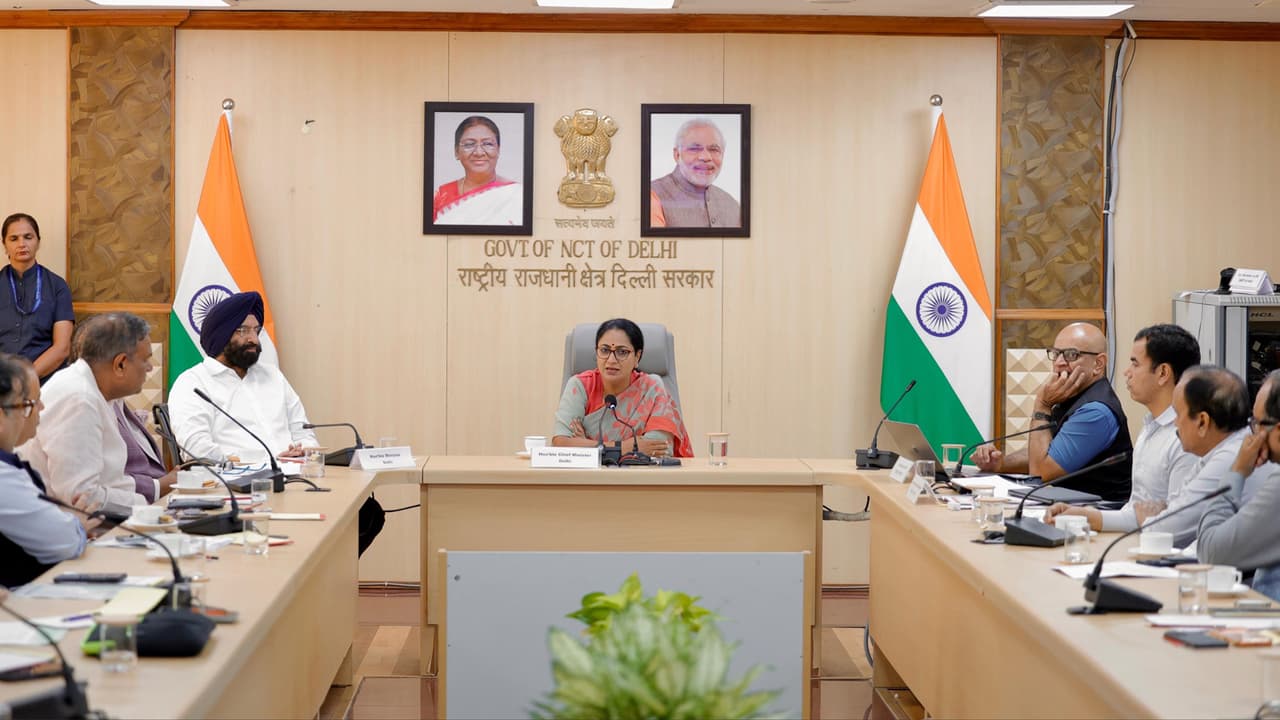
Delhi CM Rekha Gupta has met construction industry representatives over GRAP restrictions, pollution control and workers’ livelihoods as the government prepares stricter winter construction curbs and AI-based monitoring.
The debate about air pollution and construction in Delhi has gained momentum with the government weighing whether to impose stringent pollution control norms while considering the opposition from the construction industry. Rekha Gupta, the Chief Minister of Delhi, had recently met some representatives of the Construction Industry Bachao Morcha and discussed the issues arising from the restrictions of the Graded Response Action Plan (GRAP).
The government has expressed its desire to arrive at a solution which is feasible and scientific without disturbing air quality of Delhi to any extent.
Delhi GRAP: Construction Restrictions and Livelihood of Workers
In the period of pollution episodes during winters, the GRAP can place restrictions on construction activities in Delhi. While such steps will have a view to contain dust pollution, it may also affect the livelihood of workers involved in such activities who are dependent on daily wages or are working on contracts.
The industry has thus been concerned about the economic consequences of imposing construction stoppage for long periods.
Construction Activities in Delhi From December 10 to January 20
A ban on all construction activities has been imposed by the Delhi government in the period from December 10, 2026, to January 20, 2027, for 42 days. The step is being taken with an aim to reduce pollution due to dust in the winter season.
The government has also decided to increase its enforcement mechanism by adding more construction sites over 500 sq metres to be monitored with Dust Portal and AI-based camera systems. The alerts received from this system can help in issuing notice and other penalties against the violations.
Dust Portal 2.0 and AI Monitoring System
Some technology enhancements have been done to improve the Dust Portal 2.0 like GIS mapping, Live 360-degree PTZ Cameras, PM10 & PM2.5 Sensors, and AI.
The system aims to improve the monitoring of construction site pollution, trend, and hotspot identification with digital compliance measures.
Industry Demands a Pragmatic Approach
The members of the construction industry have raised their concerns over the practicability of such long bans across all projects. The lengthy shutdowns can cause delays in the completion of construction projects as well as affect costs, labor, supply chain and small business concerns that are associated with construction.
These meetings of the government with the construction sector are thus very important as it seeks methods to implement pollution norms in light of economic considerations.
Financial Help to Workers Under GRAP
It is stated on the official website of the Chief Minister that a provision for Rs 10,000 per registered worker, who faces construction ban during Stage III and Stage IV of GRAP, through DBT will also be provided.
The bigger challenge, however, is to sustain employment and minimize project delays while ensuring pollution reduction.
Pollution and Development in Delhi
The situation is that Delhi needs to develop air quality while developing its infrastructure and making other developments happen. The government strategy seems to imply that these two should not be considered incompatible.
Using technology to monitor air quality, enforcing dust control and making decisions based on existing pollution levels can be one of the strategies used.