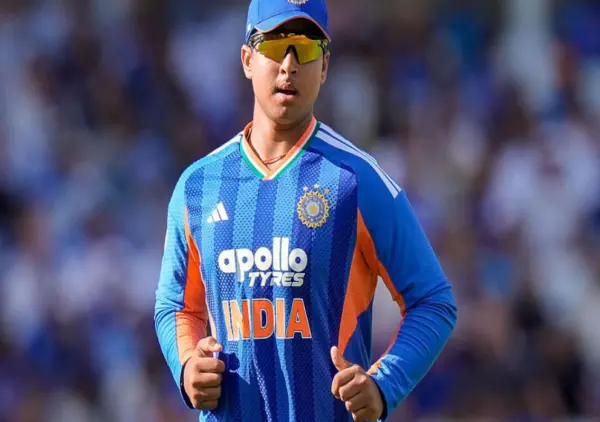
Bengaluru: The Duleep Trophy quarter-finals entered an important phase on Day 3, with Vaibhav Sooryavanshi and Ishan Kishan among the prominent names attracting attention as the domestic tournament moved towards decisive stages.
The matches provided another opportunity for several India hopefuls and established domestic players to make an impact in first-class cricket.
Sooryavanshi’s presence has been one of the major talking points of the tournament. The teenage batter has generated significant interest following his rapid rise through Indian cricket and his performances in T20 cricket. His Duleep Trophy appearance represents an important opportunity to demonstrate his ability in the longer format.
Meanwhile, Ishan Kishan remains one of the most recognisable players involved in the competition. The wicketkeeper-batter’s performance is also being closely followed as he looks to maintain his place among India’s leading domestic options.
Vaibhav Sooryavanshi remains in focus
Sooryavanshi’s participation has added considerable interest to the Duleep Trophy.
The young batter has already established a reputation as one of the most exciting prospects in Indian cricket. His aggressive approach and ability to score quickly have made him a player capable of attracting attention whenever he takes the field.
However, first-class cricket presents a different challenge.
Unlike T20 cricket, where batters have limited time to make an impact, red-ball cricket requires patience, concentration and the ability to construct an innings over a much longer period.
The Duleep Trophy therefore provides Sooryavanshi with an important opportunity to broaden his game.
The teenager will be expected to learn how to deal with long spells from bowlers, changing conditions and pressure situations while also finding ways to score consistently.
Ishan Kishan adds experience
Ishan Kishan is another major name in the quarter-finals.
The left-handed wicketkeeper-batter has considerable experience in domestic and international cricket and remains an important figure in India’s wider wicketkeeping and batting pool.
His involvement in the Duleep Trophy allows him to spend valuable time in the first-class environment.
For Kishan, strong performances in domestic cricket can help reinforce his credentials and provide selectors with evidence of his current form.
His ability to contribute with both bat and gloves also makes him an important player for his team.
Why Day 3 is important
The third day of a first-class match often represents a critical point in the contest.
By this stage, teams have a clearer understanding of the pitch, while the accumulated workload on bowlers can begin to influence the game.
Batters who remain at the crease on Day 3 can potentially turn their starts into substantial scores.
For bowlers, maintaining discipline becomes increasingly important as they attempt to create breakthroughs.
The quarter-final stage adds another layer of pressure because every session can influence which team advances.
Duleep Trophy provides a pathway
The tournament continues to serve as an important platform for Indian cricketers.
With several players competing for recognition, performances in the Duleep Trophy can influence future domestic and national selection decisions.
Young players such as Sooryavanshi can gain experience alongside established cricketers, while senior players can use the tournament to demonstrate form and match fitness.
The competition also gives selectors a chance to observe players in longer-format conditions.
The challenge of red-ball cricket
For Sooryavanshi, adapting to red-ball cricket is likely to be one of the biggest challenges of the tournament.
His attacking batting has been one of his biggest strengths in T20 cricket.
However, first-class cricket requires a broader range of skills.
A batter must know when to attack, when to defend and when to simply leave the ball alone.
The ability to bat for long periods is particularly important.
The Duleep Trophy can help Sooryavanshi develop that discipline while allowing him to retain the attacking instincts that have made him such an exciting prospect.
India’s domestic talent pool on display
The quarter-finals also underline the depth available in Indian cricket.
Several players involved in the tournament have either represented India or remain in contention for national selection.
The presence of experienced cricketers alongside emerging youngsters creates a highly competitive environment.
For young players, facing established opponents can provide lessons that are difficult to replicate at lower levels.
The tournament therefore serves not only as a competition but also as an important development platform.
Pressure increases in the knockout stage
The quarter-final stage brings greater significance to every performance.
Unlike league matches where teams may have opportunities to recover from setbacks, knockout cricket leaves little room for error.
A poor batting session or an expensive bowling spell can change the balance of a match.
Teams therefore have to manage risk carefully.
The third day is particularly important because the result of the match often begins to take shape during this period.
What fans will be watching
Sooryavanshi’s batting remains one of the biggest attractions for fans.
Supporters will be keen to see whether the youngster can reproduce his aggressive style in a first-class setting while demonstrating the patience required for longer innings.
Kishan’s performance will also be closely monitored.
The wicketkeeper-batter has the experience to influence a match significantly, whether through a major innings, a crucial partnership or his work behind the stumps.
Beyond the two headline names, several other players have the opportunity to strengthen their domestic credentials.
A crucial learning experience for Sooryavanshi
Regardless of the final outcome, the Duleep Trophy experience should be valuable for Sooryavanshi.
The youngster is still at an early stage of his senior career, and exposure to first-class cricket can help him understand the demands of the longer format.
The ability to manage fatigue, concentrate over several hours and build partnerships will be essential if he wants to become a multi-format cricketer.
The tournament also gives him an opportunity to work alongside experienced teammates and opponents.
Looking ahead
The performances during the quarter-finals could have consequences beyond the tournament.
Players who produce significant scores or important bowling spells can strengthen their cases for future domestic opportunities and higher-level selection.
For established names, consistent performances can provide momentum.
For youngsters, a strong showing can increase their visibility.
Sooryavanshi, in particular, is likely to remain under close observation because of the enormous interest surrounding his career.
Conclusion
Day 3 of the Duleep Trophy quarter-finals brought the competition deeper into its decisive phase, with Vaibhav Sooryavanshi and Ishan Kishan among the players attracting significant attention.
For Sooryavanshi, the tournament represents an important step in his development as he gains experience in first-class cricket. His transition from the fast-paced world of T20 cricket to the demands of the longer format will be closely watched.
Kishan, meanwhile, brings valuable experience and remains an important player in the domestic setup.
With the knockout stage increasing the pressure on every team, the remaining sessions will be crucial. The Duleep Trophy continues to provide a platform for India’s established stars and emerging talents to make their case, and the performances in these quarter-finals could have implications well beyond the tournament itself.