Experts raise alarms over the reconstruction of JeM’s Bahawalpur facility, damaged in India’s Operation Sindoor. They note the rebuild, likely state-backed, aims to boost morale amid leadership losses and infighting within terror groups.
Expert Analysis: A Bid to Boost Flagging Morale
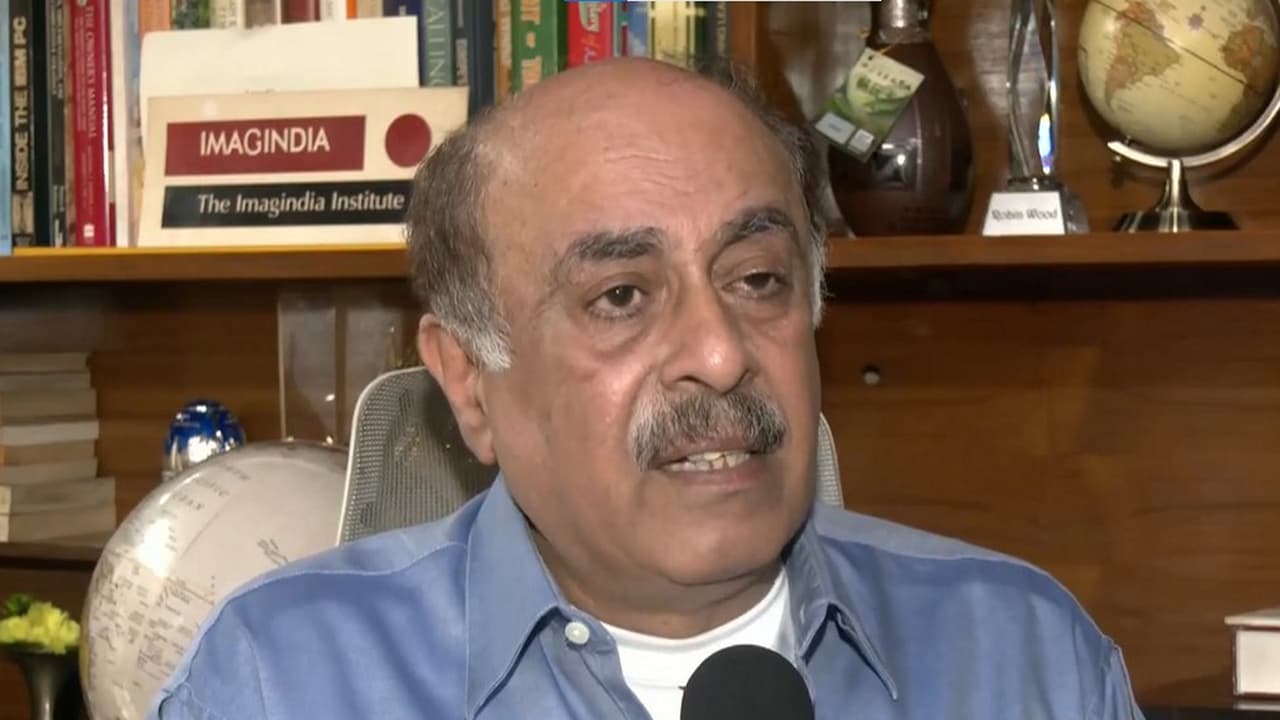
Foreign affairs experts on Sunday raised serious concerns over recent reports regarding the reconstruction of Jaish-e-Mohammed’s (JeM) central compound in Bahawalpur, which sustained major damage during India’s Operation Sindoor last year. Speaking with ANI, Foreign affairs expert Robinder Sachdev weighed in on the structural restoration of the facility and its strategic context and pointed out that regional militant groups like JeM and Lashkar-e-Taiba (LeT) are currently grappling with severe leadership attrition, internal infighting, and declining morale. Sachdev noted that multiple top commanders have been eliminated over recent years, while key figures such as Hafiz Saeed remain heavily isolated due to security fears.
“See the both the Jaish-e-Mohammed and Lashkar-e-Taiba are facing a loss of morale and also infighting. Many of their leaders, about 20 or more in the last three odd years have been killed. Unknown gunmen, rivalry amongst groups. Because remember this is this is tribal areas, feudal laws apply. So that is one, leaders have been killed many. Hafiz Saeed is living under isolation, in secret, not being able to communicate because if he communicates through phone, he is afraid that his location would be identified. So his he is not out there in the field,” he said.
According to Sachdev, the reported physical rebuilding of the Bahawalpur headquarters is largely driven by state-backed efforts to keep the organizational apparatus afloat and maintain its operational network despite heavy losses. “During Operation Sindoor India inflicted major damage on their headquarters as well as their training camps. So now when morale is down when top leaderships are being eliminated or in hiding, how to recruit new jihadis? And to keep the organization going, it is the Pakistan ISI. I would say which has stepped up to at least resurrect, recreate the headquarters so that at least the headquarters is once again up and running. So I think this is more a result of the damage which has been caused and in order to show that the organization is still standing and still wants to carry on its jihadis agenda, the infrastructure is being rebuilt,” he noted.
Impact on Regional Stability
Adding to the regional security concerns, Foreign Affairs Expert Waiel Awwad emphasised that permitting the revival of such infrastructure directly undermines bilateral normalisation and confidence-building measures. Awwad noted that allowing extremist elements to use territory against India runs counter to regional stability, particularly as Pakistan navigates mounting domestic and cross-border pressures.
“Well, I believe this the news is yet to be verified whether it is true or no. We don’t have the reaction from the Pakistani side. However, when we heard some of the clergy from Pakistan stating that there are more than 10,000 people from the Lashkar-e-Taiba are managed to get entry into India, I mean a thousands plus into India, that give you a clear indication that Jamaat-e-Islami will be more than happy to start this kind of a camp, anti-India camp,” he said.
“And I believe that’s not a good sign if the Pakistani wanted to tranquilize that relation with India and come back to the negotiating table because Pakistan is feeling the heat not only in the border area but also because of the water problem. So I believe they should take more measures to build the confidence among the two nation rather than letting any kind of extremist or fundamentalist forces to use their territory against India,” he added.
Background: Operation Sindoor and Pahalgam Attack
The central headquarters of Jaish-e-Mohammed (JeM) in Bahawalpur, Pakistan, has been reportedly reconstructed following extensive damage sustained during Operation Sindoor. The compound has reportedly undergone extensive interior and exterior restoration following the structural damage. However, there has been no confirmation from Pakistan regarding the reconstruction.
This reported reconstruction comes over a year after India launched Operation Sindoor in response to the April 22, 2025, terror attack in Pahalgam, in which 26 people were killed. The attack was carried out by Pakistan-backed terrorists who targeted civilians after asking about their religion.
Under Operation Sindoor, India targeted terror infrastructure in Pakistan and PoJK to punish the perpetrators and planners of terrorism and destroy terror camps and training facilities. Following escalation by Pakistan, India pounded its airbases, forcing it to seek a ceasefire.
All three terrorists involved in the Pahalgam terror attack were killed in ‘Operation Mahadev’ by the Army, CRPF, and J-K Police.
(Except for the headline, this story has not been edited by Asianetnews Editorial staff and is published from a syndicated feed.)