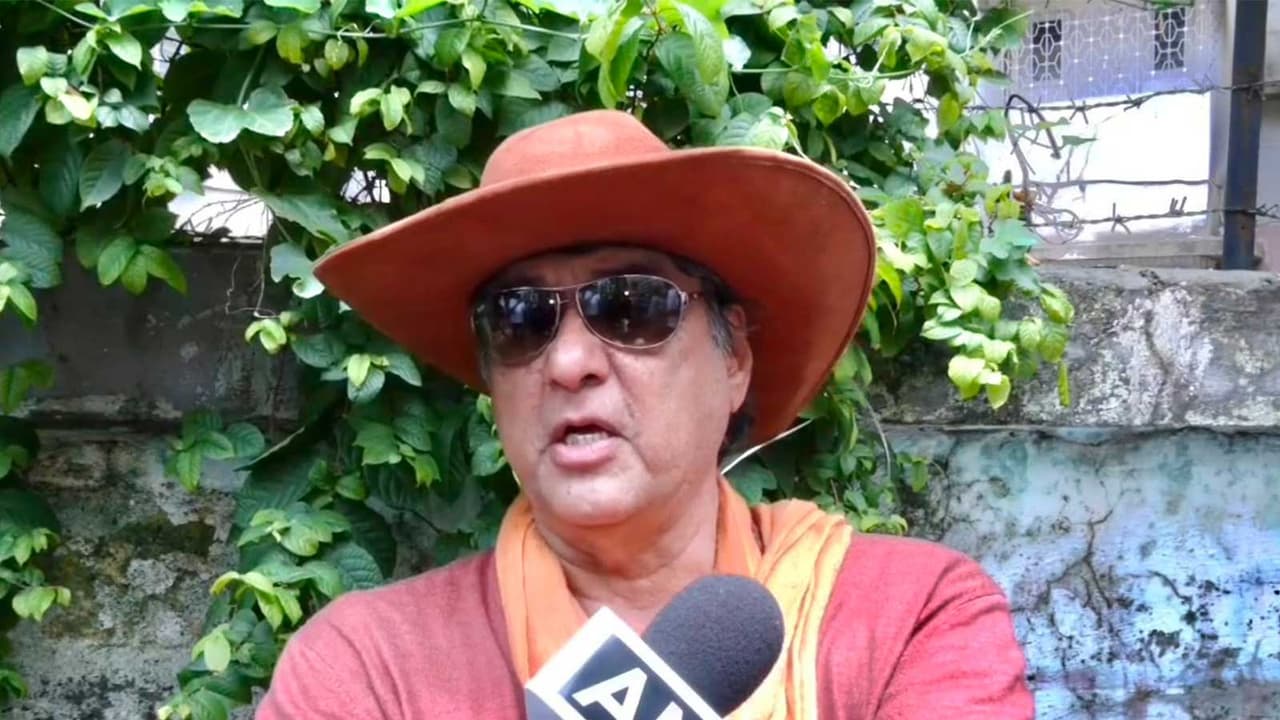
Actor Mukesh Khanna expressed his desire for ‘Vande Mataram’ to replace ‘Jana Gana Mana’ as India’s National Anthem, arguing the latter was written during British rule. He also commented on political opposition and student issues.
Actor Mukesh Khanna on Saturday said that he wants ‘Vande Mataram’ to become India’s National Anthem, calling it a song that reflects the feeling of bowing before the motherland.
Khanna questions ‘Jana Gana Mana’, praises ‘Vande Mataram’
Speaking to ANI about the ongoing row around the national song, Khanna said, “Vande Mataram bhi ek aisa issue hai jo kha-ma-kha tool diya gaya usko… meri baaton ko viral kar diya gaya hai. (Vande Mataram has become an issue that has been unnecessarily blown out of proportion… my statements have been made viral.”)
He said he had earlier expressed his views on ‘Jana Gana Mana’, claiming that it was written during the British era when India was under colonial rule.
“Jana Gana Mana, the National Anthem, cannot be the National Anthem of my country. It was sung at a time when George V was present, or during that era when the British Empire ruled, and we were slaves,” Khanna said.
Questioning the interpretation of the word ‘Adhinayak’, he said, “Adhinayak kaun hota hai? Adhinayak Jai Hai, Bharat Bhagya Vidhata, matlab aap humare Bharat ke bhagya vidhata hai (you are the one who determines India’s destiny)”.
Khanna said that if the song was interpreted as referring to Bharat Mata or the national flag, then they could not be called the “dispensers of the country’s destiny” as they are symbols of the nation.
He said Vande Mataram carries a different sentiment as it expresses respect towards the motherland.
“‘Vande Mataram’ gaana jo hai, jisme hum ‘Mataram’ jhuk ke kehte hai ki ‘Hey Maa, hum tumhari vandana karte hai’ (O Mother, we worship and salute you),” he said, adding, “Main chahta hoon ki yeh humare desh ka National Anthem ban jaye.”
Criticism of Political Discourse and Colonial Legacy
Khanna also spoke about India’s colonial past and said that although the British left the country, the influence of English continued.”Angrez chale gaye hai lekin angrezi chhod kar gaye hai,” he said.
He further criticised political disputes over national issues, saying leaders often spend years fighting against each other instead of focusing on development.
Speaking about opposition parties, Khanna said, “Our opposition party opposes only for the sake of opposing,” adding that political parties should think about the country’s interests.
On Student Issues and Parliament Disruptions
Khanna also raised the issue of NEET-related protests and criticised those who, according to him, politicise student issues instead of focusing on solving problems.
“The paper was leaked; catch the one who leaked the paper if your intention is real,” he said.
Khanna further criticised disruptions in Parliament, saying MPs should be held accountable if they prevent legislative work.
‘Don’t View National Songs Through Religious Lens’
On criticism around Vande Mataram and religious sentiments, Khanna reacted to comments suggesting that only parts of the song should be sung by some communities.
“What childish talk,” he said, adding that national songs should not be viewed through a religious lens.
Khanna also spoke about respecting India’s traditions and culture, saying people should value the country’s heritage and history.
During the interaction, he also addressed several other issues, including youth protests, social media trends and public discourse, while saying that young people should respect elders and understand their responsibilities.
“Gen Z ko bahut kuch seekhna padega, badon ki izzat karo, apne aap ko sab kuch mat samjho,” he said.
Mukesh Khanna is best known for playing Bhishma Pitamaha in the 1988 TV show ‘Mahabharat’, produced by B R Chopra and directed by Ravi Chopra.
BJP Condemns Congress Stance on Vande Mataram
The BJP has strongly condemned the Congress Working Committee’s decision to re-adopt its 1937 resolution restricting the singing of ‘Vande Mataram’ at Congress programmes to its first two stanzas.
In its resolution today, the BJP said it considers ‘Vande Mataram’ as India’s National Song, an expression of reverence for Bharat Mata, a mantra of the freedom struggle and an enduring symbol of India’s national consciousness.
The party said it would oppose the Congress decision and protect the “honour, dignity and legacy” of the full six-stanza National Song.
It also said it would reaffirm the 1950 Constituent Assembly declaration and the law passed by Parliament in 2026 granting statutory protection to the National Song at par with ‘Jana Gana Mana’.
The BJP resolution said the party would oppose any attempt to make ‘Vande Mataram’ subservient to communal pressure, appeasement or vote-bank politics, asserting that the Congress Working Committee’s decision cannot override the Constitution or Parliament’s law.
The party also announced a nationwide awareness campaign, including a special drive among youth, to highlight the history, meaning and national importance of ‘Vande Mataram’ and its connection with India’s freedom struggle.
(Except for the headline, this story has not been edited by Asianet Newsable English staff and is published from a syndicated feed.)