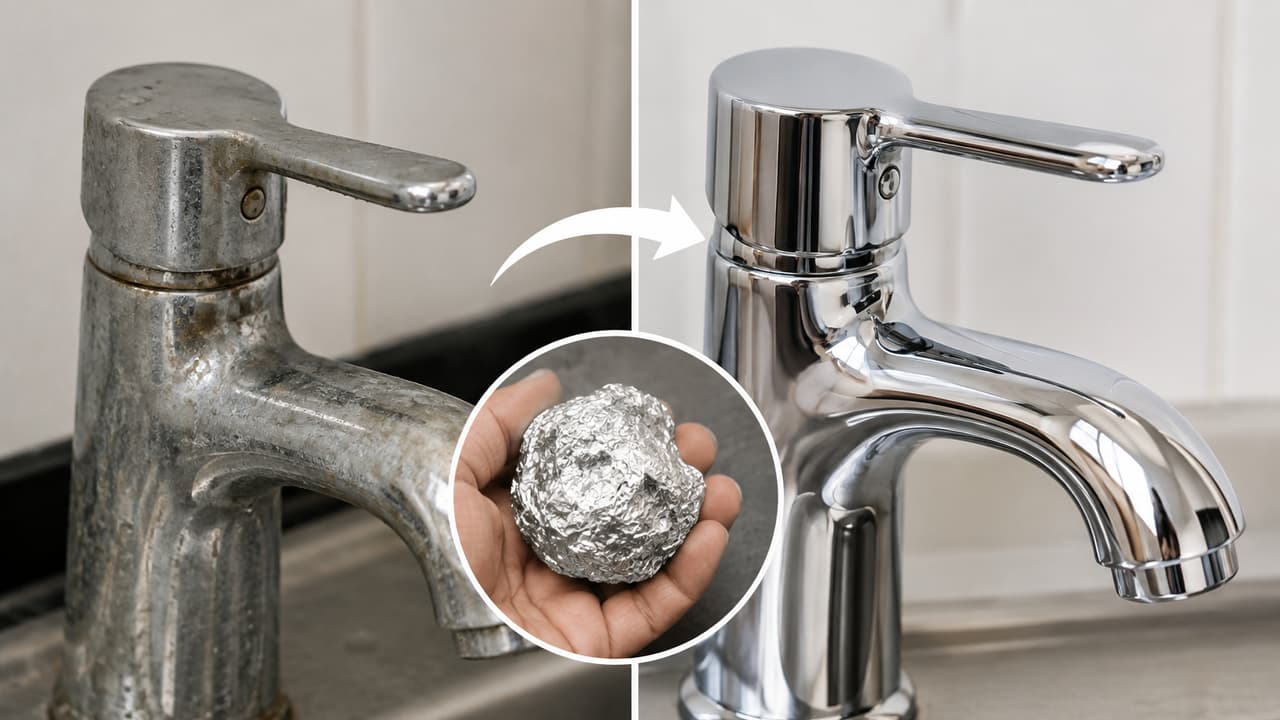
Dull, stained kitchen and bathroom taps can regain their shine with a simple aluminium foil trick. This method effectively tackles hard water spots, mineral build-up, and light rust on chrome and stainless steel, leveraging the foil’s gentle abrasive and electrochemical properties.
Ugly water spots, mineral build-up, light rust. These mar kitchen and bathroom taps. They resist cleaning, leaving fixtures dull. But a simple, cheap trick uses common household aluminium foil. It promises to bring back that sparkle.
This widely shared, tested method works. Aluminium’s properties tackle those tough marks. No harsh chemicals needed. It’s a powerful, gentle way to keep your home looking good.
How the Foil Trick Works: A Simple, Step-by-Step Guide
This process is simple. Anyone can restore their fixtures’ shine. Take a small piece of aluminium foil. Crumple it into a ball—golf ball or lemon size works. This crumpled shape is key. It creates abrasive edges for cleaning.
Next, dampen the foil with plain water. Fighting stubborn limescale? Add white vinegar. The acid dissolves mineral deposits. Now, gently rub the damp foil ball on stained chrome or stainless steel. Use light to moderate pressure. Work in circular motions. The foil starts its cleaning magic.
Targeting Stubborn Stains: The Science Behind the Shine
Stubborn stains? Conventional cleaners often fail. This method restores lustre to your kitchen and bathroom taps. Aluminium foil cleans water spots, mineral film, and light rust. These ruin chrome and stainless steel.
How does it work? A dual-action process. It combines mechanical abrasion with electrochemical reactions. When you rub the moist, crumpled foil, its fine texture acts. It’s a mild abrasive, lifting mineral deposits and water marks. It won’t damage tough chrome finishes.
But for rust stains—a game-changer. A powerful electrochemical reaction kicks in. Aluminium is more reactive than iron. It acts as a sacrificial metal. Water helps. Aluminium loses electrons. Iron oxide, or rust, gains them. This converts rust to a more stable, non-corrosive state. Then you wipe it away. Simple scrubbing cannot do this.
Got stubborn limescale? Add white vinegar. Its acetic acid breaks down calcium carbonate. This chemical action, with the foil’s mechanical and electrochemical power, provides a comprehensive solution for even the toughest build-ups.
Important Considerations for Different Tap Finishes
This foil trick restores shine. But be careful. You can cause damage. It works best on traditional chrome and stainless steel—they handle light abrasion and chemical interaction.
Delicate finishes are a different story. Matte, brushed, painted, or powder-coated—avoid them. These surfaces have specific textures or applied coatings. Foil can scratch them, alter them, or even remove them. Matte looks textured; foil polishes it away. Brushed has a grain; foil mars it. Painted or powder-coated fixtures rely on a protective and decorative outer layer. That layer is vulnerable to mechanical abrasion.
Always test first. Pick a small, hidden spot. This simple step confirms if it’s safe. Then clean the entire tap.
Done scrubbing? Rinse the tap. Use clean water. Wash away debris, foil residue. Then, grab a soft microfiber cloth. Wipe the fixture dry. This stops new water spots. It also boosts that restored shine. Your taps will sparkle.