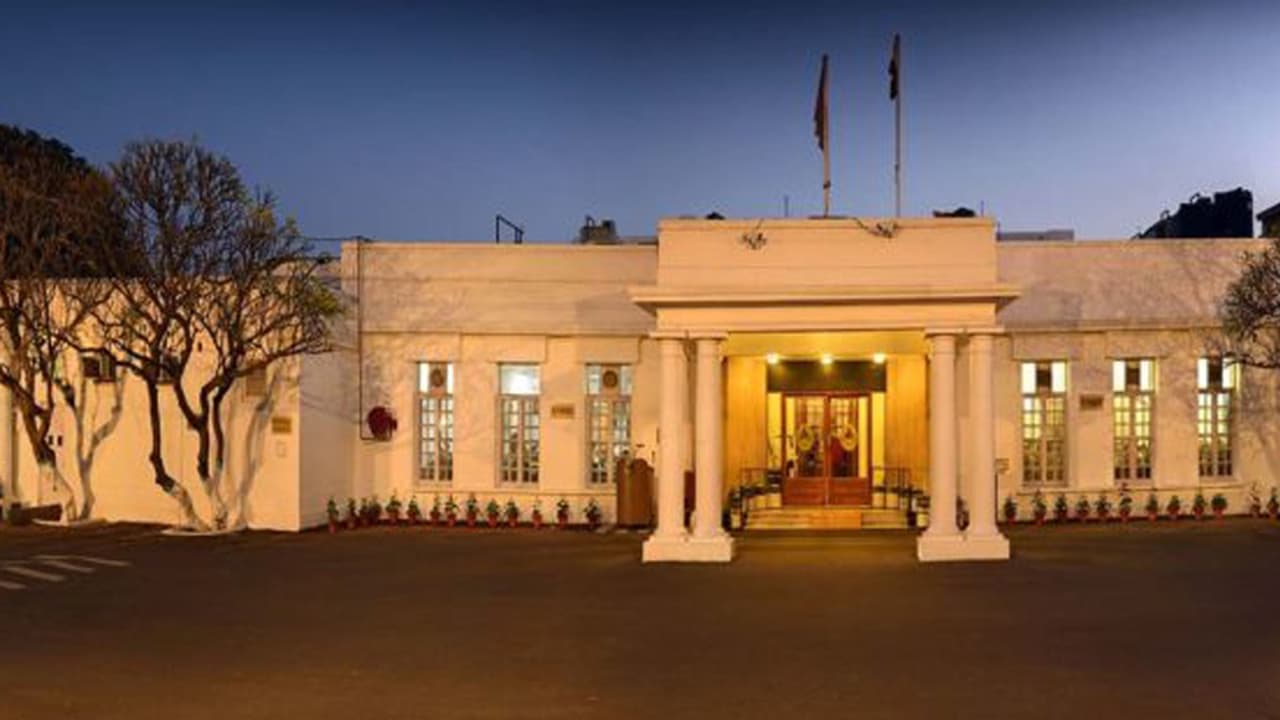
Who Designed It?
The club was given a perpetual lease on 27.3 acres of property on Safdarjung Road when the capital changed. British architect Robert T. Russell built the main structure in the early 1930s. Connaught Place and the Commander-in-Chief’s home (later renamed Teen Murti House, PM Nehru’s official residence) are two more enormous Delhi icons that Russell is renowned for building.
How Club Got Its Swimming Pool?
Both the Gymkhana Club and the Viceregal House (now Rashtrapati Bhavan), which was still under construction, lacked a swimming pool in the early 1930s. The Viceroy’s wife, Lady Willingdon, enjoyed swimming but became weary of having to wait on sluggish government contractors or utilise the private pools of rich residents. She personally donated ₹21,000 to the club to expedite development since she was eager to have her own area. The building still has an inscription honouring the “Lady Willingdon Swimming Bath.”
One Of The Oldest Library
The club’s library is just as ancient as the organization. It began with a little collection of 500 volumes in the early 1930s. With over 35,000 volumes and more than a thousand new books added to its shelves annually, it has developed into a vast haven for bibliophiles throughout the years.
The Union Ministry of Housing and Urban Affairs issued an emergency lease termination and re-entry order on May 22, 2026, requiring the club to turn over the whole property to the government by June 5, 2026. The Center claimed that the prime land parcel is situated in a highly sensitive, strategic area and is vital to support public security initiatives integrated with adjacent government lands, establish governance facilities, and strengthen national defence infrastructure, citing urgent public purpose and national interest.