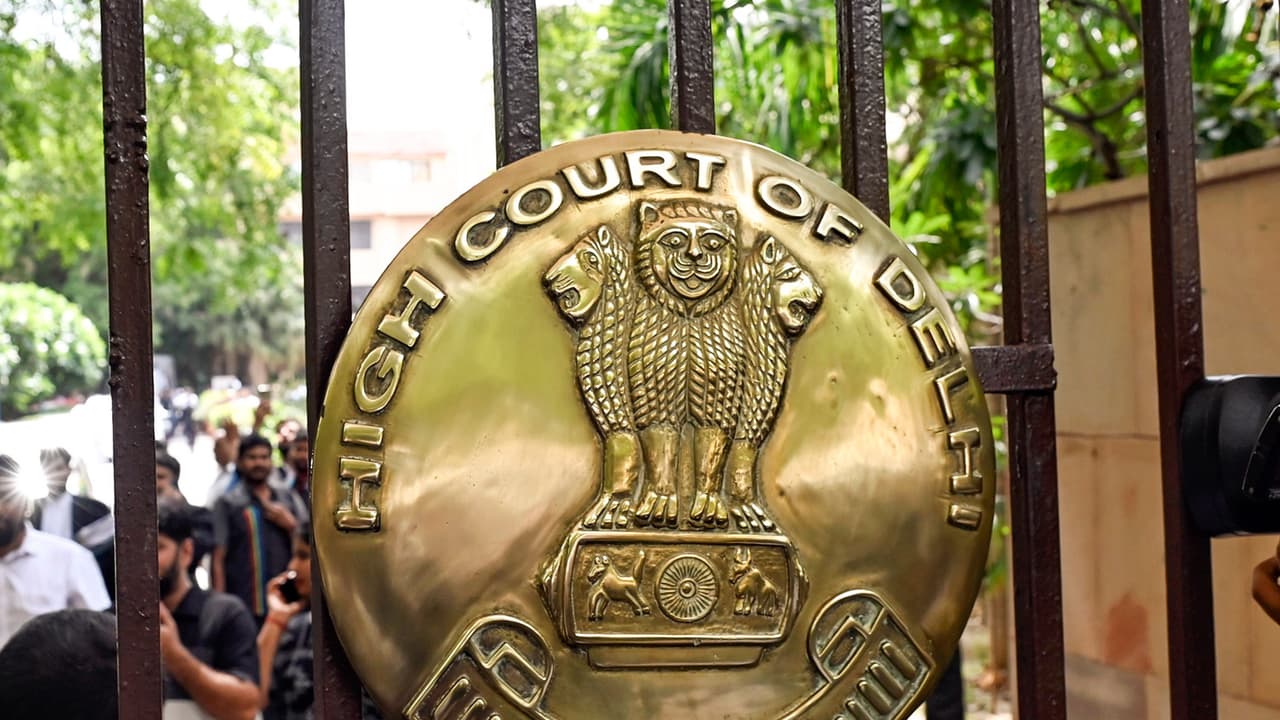
The Delhi HC’s Division Bench modified an order that stalled JNU’s PG admission process, allowing it to continue with its ‘deprivation points’ policy. All admissions will be subject to the final outcome of the writ petition pending before a single judge.
Delhi HC allows JNU to continue admissions
The Delhi High Court’s Division Bench on Tuesday modified an interim order that had stalled Jawaharlal Nehru University’s postgraduate admission process, allowing the varsity to continue admissions under its “deprivation points” policy.
A Bench comprising Chief Justice Devendra Kumar Upadhyaya and Justice Tejas Karia directed that admissions made by JNU under the policy will remain subject to the final outcome of the writ petition pending before the single judge. The Division Bench also requested the single judge to expedite the proceedings and decide the petition at the earliest.
The court said JNU can proceed with admissions in accordance with its 2026-27 e-Prospectus, including the provision relating to deprivation points, which is under challenge. The Bench noted that the practice of awarding deprivation points has been in existence since 1974 and that the interim order passed last week had brought the entire admission process to a halt.
The court also took note of the admission timeline, observing that JNU issued its e-Prospectus on April 3, 2026, the admission process began in May, and the first round of counselling concluded on June 25. Classes for students admitted to postgraduate courses had already commenced on July 30.
The Deprivation Points Dispute
The dispute concerns Section V of JNU’s e-Prospectus, under which candidates can receive up to 12 deprivation points. Each point is equivalent to three marks and is awarded based on factors including the geographical location of a candidate’s previous schooling.
The single judge, Justice Jasmeet Singh, had on August 14 directed JNU not to finalise admissions based on deprivation points until the next hearing. The court had prima facie observed that the mechanism appeared to alter the marks secured by candidates in the CUET examination and could affect the sanctity of a competitive entrance test.
Arguments Before the Division Bench
Before the Division Bench, JNU submitted that the deprivation-point system has been followed since 1974, with amendments from time to time, and had been approved by the university’s Academic Council. JNU also argued that several admissions had already been completed and classes had commenced, while the single judge’s order had effectively halted the admission process.
The petitioner, an aspiring postgraduate student, opposed the modification and submitted that the deprivation-point system undermines the CUET scores obtained by candidates.
The Division Bench also raised questions regarding the petitioner’s locus and the timing of the challenge, noting that the petition was filed on July 1, while it was first taken up by the single judge on August 14. The Bench observed that the petitioner would have to establish a prima facie case against the challenged provision and indicated that the issues raised would be examined by the single judge. Accordingly, the Division Bench modified the earlier interim direction and permitted JNU to proceed with the admission process, making all admissions subject to the outcome of the pending writ petition. (ANI)
(Except for the headline, this story has not been edited by Asianetnews Editorial staff and is published from a syndicated feed.)