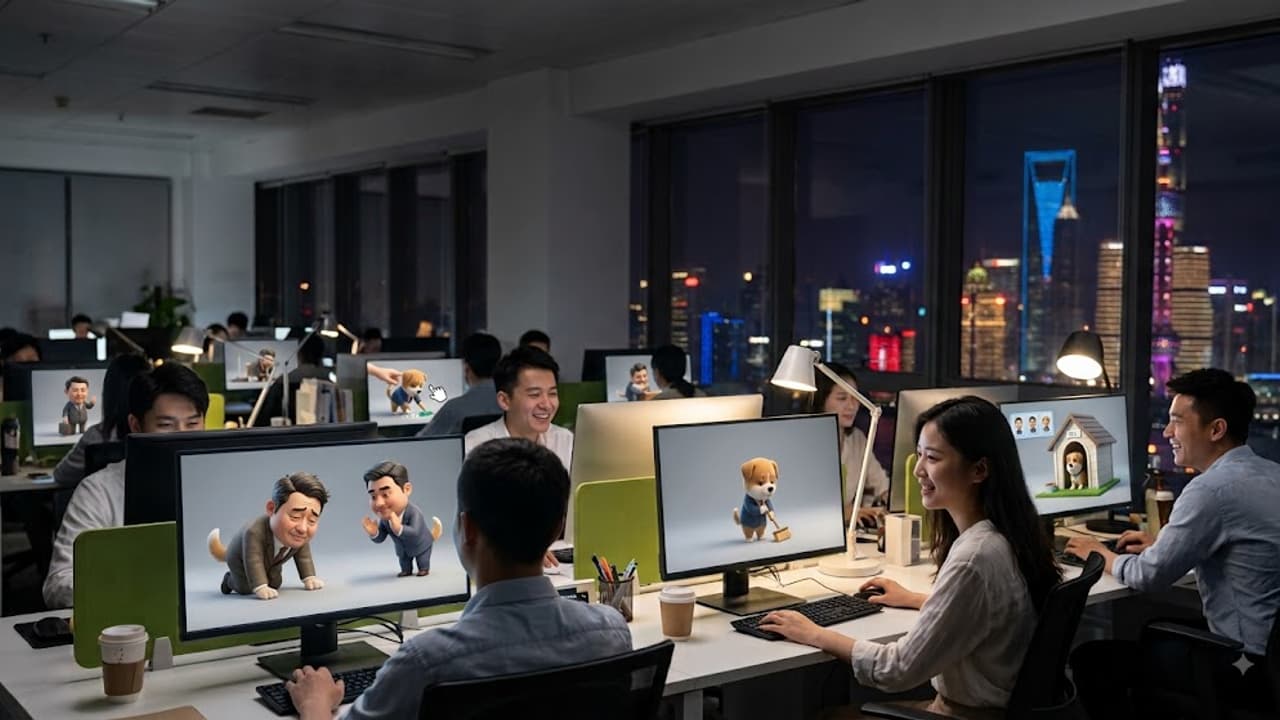
Chinese workers are increasingly turning their toxic bosses into customisable AI desktop pets as a form of digital revenge, providing an outlet for workplace frustration. Users program these virtual managers to perform submissive acts, though experts warn of potential legal risks including the violation of portrait rights.
Workplace frustration? Chinese employees found a new outlet. They are turning their managers into AI desktop pets, a unique form of “digital revenge.” This growing trend offers a digital escape for workers fed up with toxic environments and demanding bosses.
Across China, these virtual companions gain popularity. Users customise both their appearance and responses. The AI pets perform various submissive actions. It’s a satirical retribution for frustrated employees.
Customised Retribution Through AI
As per The South China Morning Post, AI technology lets workers create highly personalised digital figures. Users upload images. They input prompts into AI applications. Soon, pets resembling disliked individuals take shape.
“I was wrong.” That’s what these virtual managers can declare, crawling across the screen. They also kowtow, slap themselves, or serve tea. An internet user, Jiuyuechushi, famously created an Elon Musk-modelled AI pet. It showed how easily bosses transform. Another user, “Miss Reese Loves to Dream,” shared a tutorial. She turned a disliked person into a virtual pet, programmed to apologise.
Workers choose these specific submissive actions personally. They mirror perceived slights or workplace power imbalances. Instructing an AI pet to kowtow or slap itself reverses power dynamics. It’s a cathartic response to perceived arrogance or unfair treatment. An AI manager serving tea represents a desire for acknowledgement or respect. Programming them to apologise addresses a longing for accountability — often missing in real life. These programmed gestures become a vehicle for airing workplace grievances.
9.9 yuan, that’s the starting price for customisation services. For those less familiar with the technology, services cost anywhere from this (approximately US$1.5) to several hundred yuan.
The Psychological Release of Digital Defiance
This isn’t just digital pranks. It’s a key psychological outlet for employees in demanding corporate cultures. Customising an AI pet to kowtow or apologise offers a sense of agency and control. Real professional lives often lack this. Direct confrontation with superiors risks careers. These virtual managers provide a safe, anonymous space. Employees express frustrations without fear of repercussion.
Legal Warnings and Future Implications
Legal experts have warned. Despite the therapeutic relief, this digital defiance carries risks. Turning real people into AI desktop pets, without consent and for derogatory purposes, infringes on their portrait rights. This brings legal trouble.