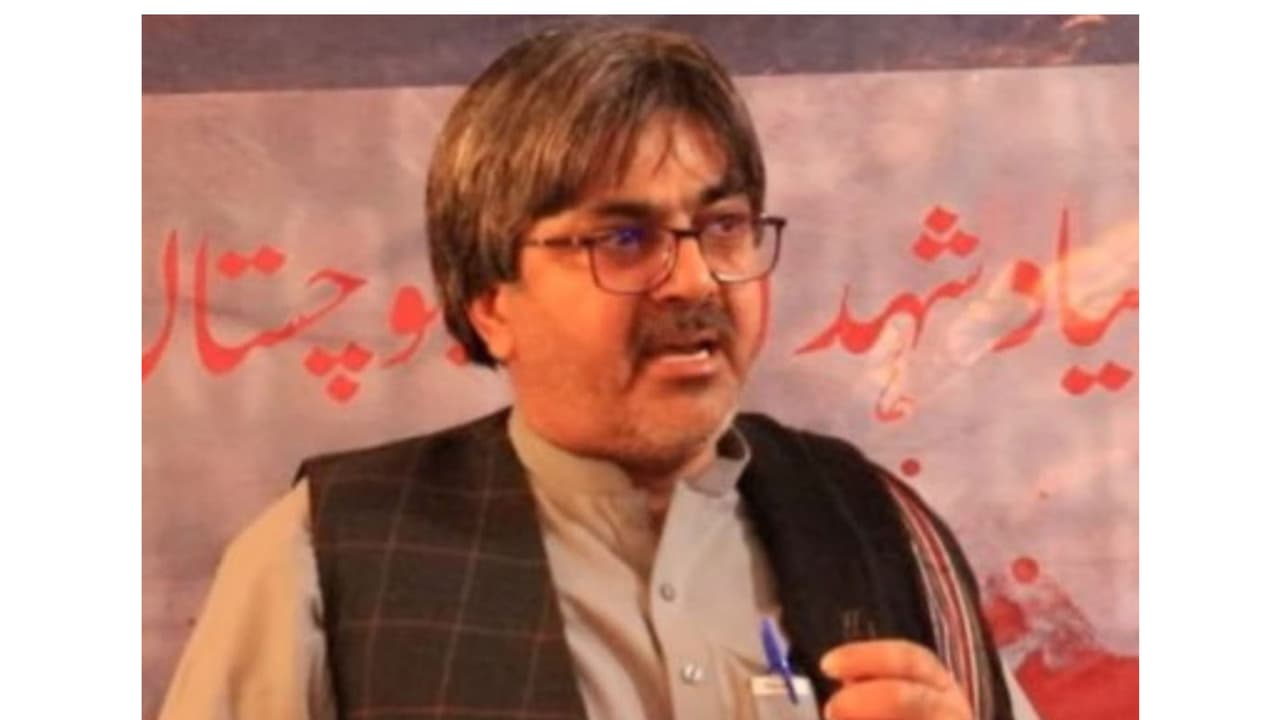
The Baloch National Movement marked Pakistan’s Independence Day as a ‘black day’. Secretary General Dil Murad Baloch said states and borders can change, citing Pakistan’s 1971 breakup, and asserted Balochistan’s distinct historical identity.
‘Pakistan is Not an Eternal Political Reality’
Dil Murad Baloch, Secretary General of the Baloch National Movement, said in a statement shared on social media platform X that the day should be viewed as a reminder that states and political borders can change over time. “14 August is undoubtedly a black day for the Baloch nation,” Baloch said, arguing that the emergence and eventual collapse of states demonstrates that no political order is permanent.
He questioned the commonly used phrase “creation of Pakistan”, saying that nations have leaders rather than “creators”. He also argued that Pakistan is not an eternal political reality and pointed to the breakup of the country in 1971, when Bangladesh became independent. “This very Islamic fortress broke apart just twenty-four years after its formation,” he said, referring to Pakistan’s division and the emergence of Bangladesh.
Baloch compared the development of modern states with the decline of major empires, including the British Empire and the Soviet Union. He said the changing international political map demonstrated that powerful states could not necessarily preserve existing borders indefinitely. “States can maintain borders through sheer force, but they cannot forever extinguish a nation’s distinct historical identity and its desire for freedom,” he said.
Struggle for an Independent Balochistan
Turning to Balochistan, Baloch rejected the description of the region as a permanent administrative part of Pakistan. He argued that Balochistan possessed a distinct national, historical and political identity predating Pakistan’s establishment in 1947.
He further claimed that Balochistan’s political status changed following the incorporation of the region into Pakistan in 1948, which he described as the result of an imbalance of power. “Our national struggle continues with the firm belief” that an independent Balochistan can eventually emerge as a sovereign state, he said.
Baloch concluded by saying that 14 August should remind Baloch people that “states can be formed, states can break apart, borders can change,” while expressing confidence that Pakistan would not be able to suppress Baloch aspirations for self-determination indefinitely. (ANI)
(Except for the headline, this story has not been edited by Asianetnews Editorial staff and is published from a syndicated feed.)