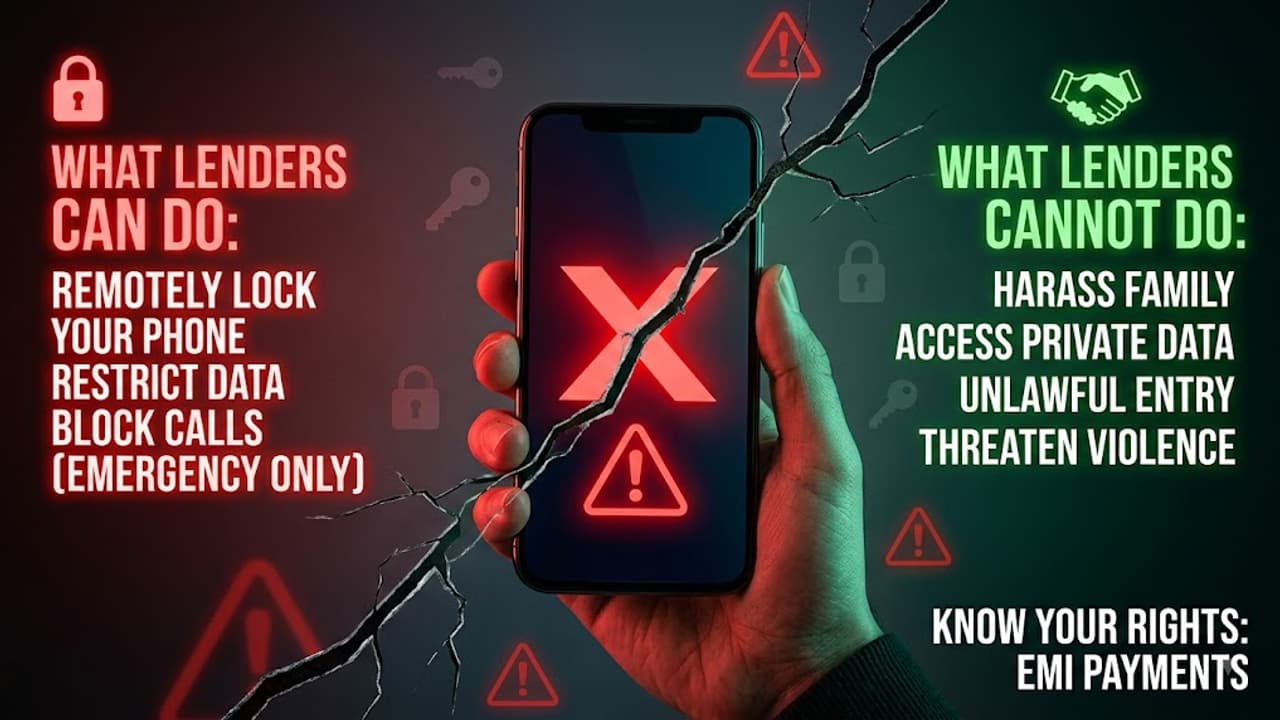
A missed EMI should not be ignored.
The first step is to check the loan agreement and understand the overdue amount, applicable charges and the consequences of continued non-payment. If the problem is temporary, contacting the lender early may help prevent the account from moving further into recovery.
For a device purchased through EMI financing, borrowers should specifically check whether the agreement contains a clause allowing technology-based restrictions.
It is also sensible to keep payment receipts, bank statements and correspondence with the lender. These documents can become important if there is a dispute over whether a payment was received or when a device should have been unlocked.
If a recovery agent contacts you, verify their identity and authority. Keep records of calls, messages and visits if you believe the lender or its agent has crossed the line into harassment.
The EMI still has to be paid
The RBI’s new rules should not be misunderstood as protection from repayment.
They regulate how lenders can recover money; they do not cancel the borrower’s obligation to repay the loan.
If you buy a Rs 70,000 smartphone through financing, missing an EMI does not make the outstanding debt disappear. Interest, applicable charges and other consequences under the loan agreement may still apply.
The key change is that recovery must follow a defined process.
For borrowers, the practical lesson is simple: do not choose an EMI merely because the monthly amount looks affordable. Check the total cost of the loan, read the recovery terms and understand what happens if you miss payments.
For device financing in particular, knowing whether the agreement permits device restrictions can prevent an unpleasant surprise later.
What the new rules mean for consumers
The RBI’s framework creates a middle ground.
Lenders retain a route to recover money when a borrower genuinely defaults on a loan used to finance a device. But that route is subject to contractual conditions, notice requirements, gradual restrictions, privacy safeguards and limits on what functions can be affected.
At the same time, borrowers get stronger protection against intrusive recovery methods, misuse of personal data and harassment by recovery agents.
The most important point is perhaps the simplest: a missed EMI does not give a lender unlimited control over your phone.
From January 1, 2027, the rules make it clear that device-based recovery can be used only in tightly defined circumstances, while borrowers retain important rights over communication, privacy and essential device functions.