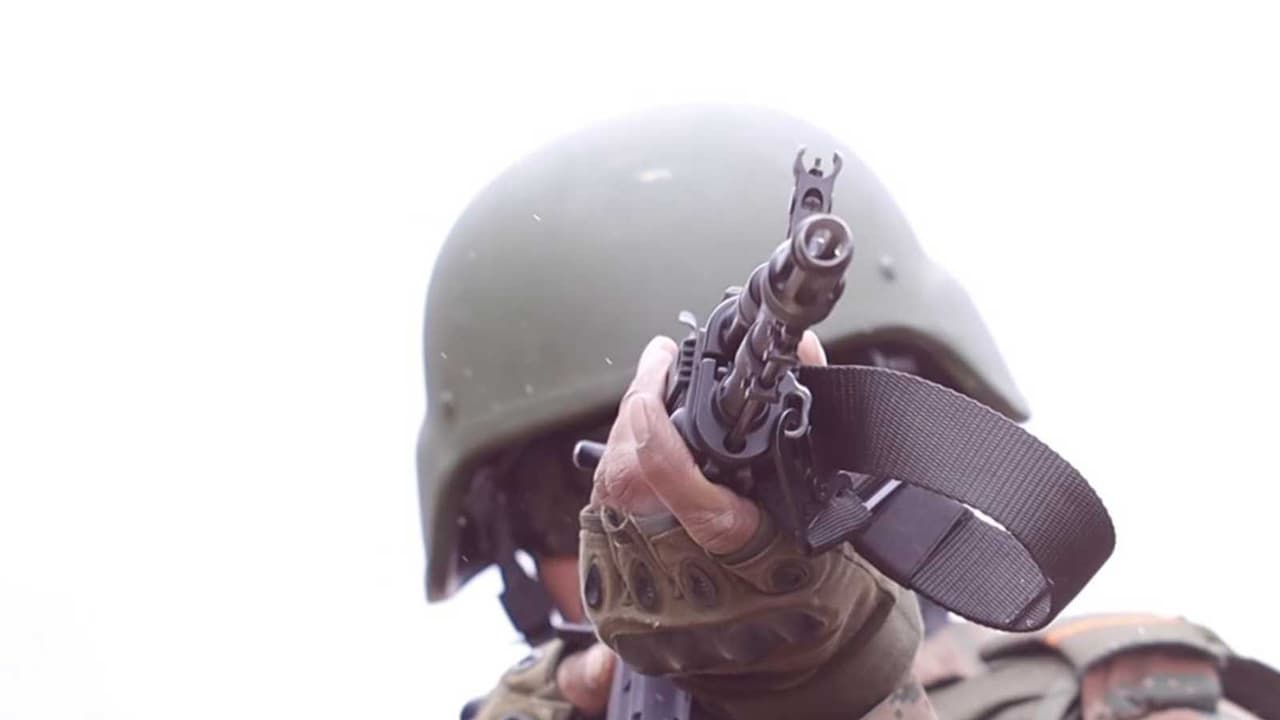
Over 79 years, India’s military has transformed from a post-colonial force to a formidable global power. This journey includes Partition, wars with Pakistan, the liberation of Goa, and a strategic shift from reactive defence to proactive deterrence.
79 years ago, at independence, Indian defence was defined by the complex transition from a colonial military to a national force, while foreign policy prioritised integrating princely states and peaceful diplomacy. Partition divided military assets between India and Pakistan in an approximate 64:36 ratio, with India receiving roughly 70% of the army, 80% of the air force, and 60% of the navy. Unlike Pakistan, India immediately established firm civilian control over its politically neutral armed forces under a democratic framework. Decision-making was structured around the Defence Committee of the Cabinet, supported by a civilian-staffed Ministry of Defence and Armed Forces Headquarters.
First Test: The Kashmir War (1947-48)
This fresh defence setup was tested by the First Kashmir War (1947-48), shifting the military from internal security to active combat against Pakistan-backed tribal invaders from Waziristan in October 1947. Maharaja Hari Singh signed the Instrument of Accession, integrating Jammu and Kashmir into India and prompting immediate military action. India demonstrated tactical excellence through the historic “first fly-in” of the 1st Sikh battalion to Srinagar on October 27, 1947. Early defence was defined by the sacrifices of Brigadier Rajendra Singh, who held off invaders for four crucial days, and Major Somnath Sharma, the first recipient of the Param Vir Chakra, whose company at Badgam saved the airfield. The Army won a decisive victory at Shalateng in November 1947, bolstered by IAF air supply and precision strafing in Uri and Jammu. In November 1948, Indian forces executed a frontal attack with light tanks at Zoji La pass, an altitude thought impassable for armour, to recapture Dras and Kargil. A three-pronged thrust cleared key regions before a UN-brokered ceasefire on January 1, 1949, and the 1949 Karachi Agreement established the Cease-fire Line (CFL).
Consolidating Sovereignty
While consolidation continued on the northern frontiers, India turned its attention a decade later to resolving lingering colonial enclaves on its coastlines. In December 1961, Operation Vijay–a 40-hour tri-service campaign–liberated Goa, Daman, and Diu, ending 450 years of Portuguese rule. Triggered by Portuguese attacks on Indian vessels near Anjidiv island, Prime Minister Nehru termed these enclaves “ugly warts on the beautiful face of India.” Indian forces bypassed demolished bridges and neutralised airfields, forcing an unconditional surrender with minimal bloodshed.
Decades of Conflict
Despite the swift success in Goa, the middle of the decade brought renewed external aggression as a changing power dynamic tested India’s resolve.
The 1965 War
Perceiving Prime Minister Lal Bahadur Shastri as vulnerable after border clashes in the Rann of Kutch, Pakistan launched Operation Gibraltar in August 1965, infiltrating 7,000 guerrillas into Kashmir. India responded on September 6 by crossing the international border to attack Lahore and Sialkot. This move blunted Operation Grand Slam, a Pakistani offensive using 90 Patton tanks to capture Akhnur and sever Kashmir’s main road link. The war featured the Battle of Chawinda, the largest tank battle since WWII, before concluding with a UN ceasefire and the January 1966 Tashkent Declaration restoring pre-war positions.
The 1971 War: Birth of Bangladesh
Although the 1965 conflict ended in a tactical deadlock, the underlying geopolitical friction soon erupted into a far larger continental crisis. In 1971, Pakistan’s brutal military crackdown during Operation Searchlight sent ten million refugees pouring into India. Securing diplomatic cover via the 1971 Indo-Soviet Treaty, India launched a swift 13-day tri-service campaign. The Army executed a rapid land invasion, the Air Force established complete air superiority, and the Navy enforced a total blockade. The war ended with the unconditional surrender of 93,000 Pakistani personnel and the birth of Bangladesh.
Mastery in the High Himalayas
Fresh from this historic triumph in 1971, India entered a period of strategic confidence; however, the humiliation in Rawalpindi soon shifted the theatre of conflict to the uncharted, icy battlefields of the far north.
Operation Meghdoot: Securing Siachen
In 1983, Indian intelligence discovered Pakistan was ordering specialised Arctic gear from a London supplier to occupy the Saltoro heights by April 17, 1984. Prime Minister Indira Gandhi authorised Operation Meghdoot on April 13, 1984. IAF Cheetah and Mi-17 helicopters airlifted 300 troops onto peaks between 18,000 and 22,000 feet, securing the 78-km Siachen Glacier four days before Pakistani troops arrived and establishing the Actual Ground Position Line (AGPL).
Operation Vijay: The Kargil Conflict (1999)
Fifteen years after securing Siachen, India’s high-altitude mastery was put to the ultimate test when adversary strategy returned to covert intrusion. In 1999, Pakistan breached the diplomatic spirit of the Lahore Declaration peace process by infiltrating regular troops disguised as mujahideen into vacated Indian posts above 5,000 metres in Kargil. India’s Operation Vijay combined daring vertical cliff assaults by infantry with IAF strikes under Operation Safed Sagar, while strictly adhering to political orders not to cross the Line of Control (LoC). Indian intelligence exposed Rawalpindi’s direct involvement by intercepting the “Kargil Tapes” between General Musharraf and his top brass, an intrusion former Pakistani Prime Minister Nawaz Sharif publicly admitted as “our fault” in May 2024.
A Paradigm Shift: Post-Kargil Reforms
Yet, as the Kargil Review Committee later noted, the conflict highlighted critical gray areas in intelligence coordination and joint planning that forced India to reassess its defense architecture. Reflecting on India’s shift from reactive crisis management post-Kargil, Air Commodore Subroto Kundu (Retd), YSM, VM, who served in the Indian Air Force for 35 years, notes, “The Kargil conflict–we were mostly responding to things as they came our way, and the responses were definitely sub-optimal. During the committee formed post-Kargil to study the lacunae exploited by the adversary, intelligence failure came across as a big gray area. Based on their recommendations, credible steps were taken including a ‘whole-of-government’ approach.”
“The post of CDS was sanctioned primarily to make sure that at the apex level, all decisions are taken in a joint manner. Similarly, other arms, the Ministry of Home Affairs, External Affairs, Commerce, Shipping, and Transport, have been given specific instructions. This whole-of-government, whole-of-team approach has been proactively visible in recent operations,” he explains.
From Reactive Defence to Proactive Deterrence
The victory in Kargil demonstrated India’s high-altitude capability, but as the new millennium dawned, state-sponsored cross-border terrorism forced a fundamental evolution in how India deterred proxy threats. Following the December 2001 terror attack on Parliament in New Delhi that left seven dead, India launched Operation Parakram, mobilising 500,000 to 800,000 troops along the border against 300,000 Pakistani troops. Tensions escalated again in May 2002 after an attack on an army camp near Jammu killed 34 people, predominantly wives and children of soldiers. This prompted plans for a “June Offensive” before intense international diplomacy led to an October 2002 mutual withdrawal.
New Challenges on Northern Frontiers
As low-intensity conflicts persisted along the western border, challenges concurrently mounted along the northern frontiers. Following the 2020 Galwan clash with China, India reoriented its 1 Corps and 17 Mountain Strike Corps northward and upgraded strategic border infrastructure, including the Nyoma airbase and the Mag La Pass. This shift along the high-altitude Northern border, demonstrated during Operation Snow Leopard in Galwan, highlighted a transformed Indian military that pairs real-time intelligence with rapid multi-service deployment.
Recalling his first-hand experience commanding the air base during the Galwan standoff, Air Cdre Kundu shares a rare operational insight into the speed and integration of the Indian response. “Because of the capabilities we have developed indigenously and with partner support–in space, cyber, real-time satellite imagery, extensive drone usage, and integrated data networks–we are now proactively aware of build-ups in the Indian Ocean Region or the Himalayan terrain,” says Air Cdre Kundu. “With mass infrastructure projects like the Atal Tunnel and Sela Tunnel, along with heavy-lift aircraft forward deployments, we maintain permanent troop levels along disputed mountain borders.”
“In Operation Snow Leopard during the Galwan conflict, we showed the world in how less an amount of time we can deploy incredible assets at altitudes of 10,000 feet and above,” he adds. “I happened to be there commanding the base, and I saw first-hand how not just our Army and Air Force, but even the Navy deployed in Pangong Tso in very limited time with all hands on deck,” he added.
“The focus has shifted from managing crisis to dictating outcomes,” explains Air Cdre Kundu, who commanded the base during the Galwan operations. “In conflicts like Kargil, we were mostly responding as things came our way, and the responses were sub-optimal. But now, because of indigenous capabilities developed alongside partner support in space and cyber domains, we are proactively aware of what is in the offing. Mass infrastructure projects like the Atal Tunnel and Sela Tunnel, combined with heavy-lift aircraft forward deployments, allow us to maintain troop levels permanently along disputed mountain borders.”
The Era of Punitive Action
Ultimately, these cumulative security challenges led India to permanently break away from its historic posture of strategic restraint. In September 2016, Special Forces conducted surgical strikes on seven terror launch pads across the LoC following the Uri attack. In 2019, the Balakot airstrikes marked the first sub-conventional use of airpower deep inside Pakistan, proving nuclear signalling would no longer deter punitive action. By May 2025, Operation Sindoor, launched after a terror attack in Pahalgam killed 26, utilised BrahMos missiles, Rafale jets, and swarm drones guided by R&AW intelligence to strike 11 bases in Pakistan, eliminating targets like Abdul Rauf Azhar while integrated air defences blunted counter-drone attacks. This dramatic shift from reactive defense to proactive deterrence has now been permanently codified into India’s modern security architecture.
A Global Military Power
Today, India has institutionalized a “One Force” doctrine through the CDS and Integrated Theatre Commands, merging military precision with non-kinetic leverage like the Indus Waters Treaty. Supported by indigenous technologies like Mission Sudarshan Chakra, India has completed its transition from defensive containment to punitive, multi-domain deterrence. Today, this combined military strength and diplomatic cohesion have reshaped how the international community views India’s global stature.
Having served on UN Peacekeeping missions in the Democratic Republic of Congo alongside forces from across the globe, Air Cdre Kundu emphasises the respect India’s combat-tested military now commands globally. “From Independence when we were a fledgling military power–an offshoot of the British Army–today we are looked upon as the fourth most powerful military in the world, with the IAF credibly ranked third,” notes Air Cdre Kundu. “We have proven ourselves as a combat-tested military across varied terrains in India and abroad. During my deployment in Congo with the UN, interacting with international forces made it clear that they hold India in high esteem.”
“Progressively, we have shown that we can rise to the occasion at very short notice–whether during war-like conditions or aid to civil power,” he concludes. Over 79 years, India transformed from a reactive post-independence military into a self-reliant power that projects hard capability and calibrated statecraft. From high-stakes tactical brilliance in 1947 to modern stand-off precision and high-altitude readiness, India ensures its sovereignty remains firmly defended. As Prime Minister Narendra Modi noted, “When the country is united, endowed with the spirit of Nation First and national interest is paramount, then strong decisions are taken and results are achieved.” (ANI)
(Except for the headline, this story has not been edited by Asianet Newsable English staff and is published from a syndicated feed.)