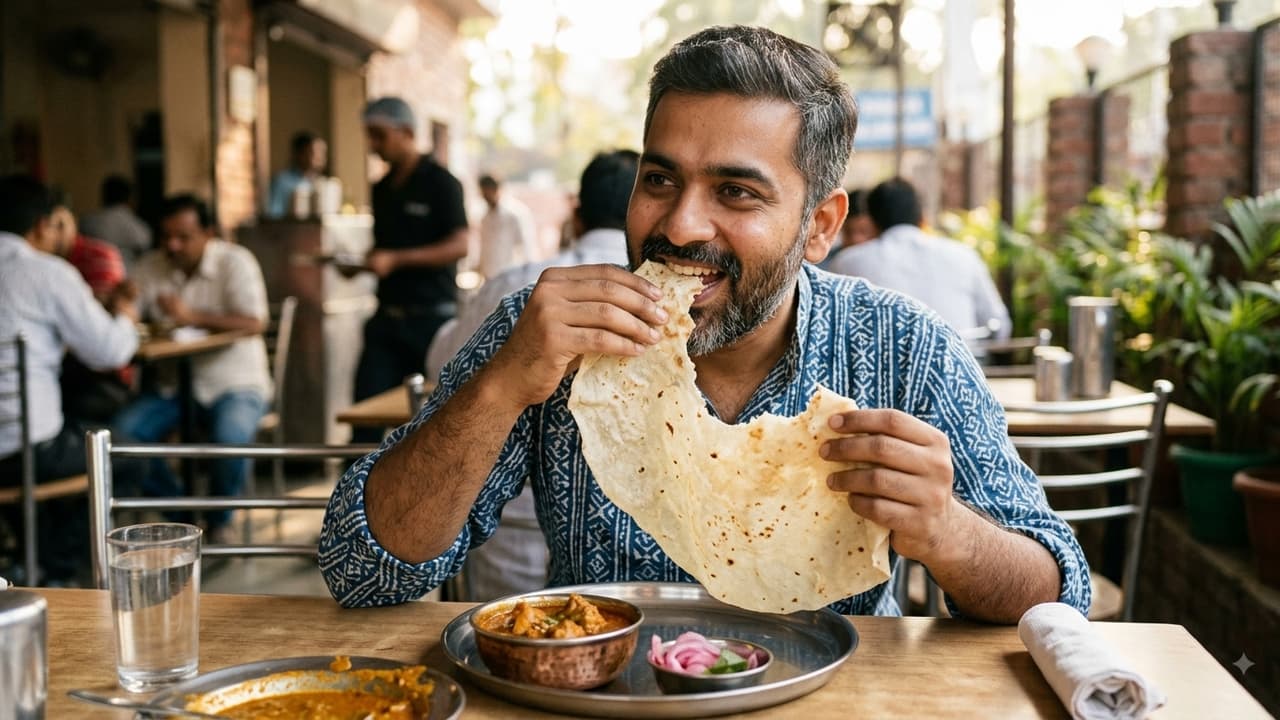
The super-thin roti that Mughal emperors used as ’tissue paper’ is now our beloved Rumali Roti. For Bengalis, no kebab or chicken dish is complete without it.
Whether it’s a wedding, a street food stall, or a fancy restaurant, one thing is a must next to your kebabs, chicken chaap, and biryani. That super-thin, soft, large round bread.
But did you know what the Mughals called this roti? ‘Tissue paper’. It was so thin that when folded, it looked just like a piece of paper. Today, that same roti rules Bengali plates as the ‘Rumali Roti’. The delicacy we can’t get enough of was literally a disposable ’tissue paper’ for the Mughals! They used it to soak up the oil and spices from their hands, and then tossed it in the dustbin. The name ‘Rumali’ itself comes from ‘rumal’ or handkerchief, because it was used like one. Researcher Salma Hussain beautifully captures this strange royal custom in her famous book, ‘The Emperor’s Table: The Art of Mughal Cuisine’.
Why was it called ’tissue paper’?
During the Mughal era, making bread for emperors and nawabs was a real art form. Master chefs would spin the dough on a hot tawa, stretching it until the roti became incredibly thin and almost see-through.
It was so delicate that you could see light through it. Foreign guests even started calling it ‘Tissue Paper Bread’. It was originally created to wrap hot kebabs.
From Rumal to Rumali Roti:
The word ‘rumal’ means handkerchief. This roti can be folded into a small square, just like a handkerchief. It’s also as thin and light as the handkerchiefs used to wipe sweat in the heat. That’s how it got the name ‘Rumali Roti’.
The Mughals usually paired it with seekh kebabs, naan, and korma. From the royal kitchens of Delhi and Lucknow, this roti eventually made its way to Bengal.
Why is the Rumali Roti so popular with Bengalis? 1. The King of Rolls: Think about Kolkata’s famous Kathi and egg rolls—many are wrapped in this roti. Because it’s so thin, it gets crispy while staying soft. 2. Less Oil: Unlike a luchi or paratha, it’s not deep-fried. It’s just seared with a little oil, making it a healthier choice. 3. Goes with Everything: From chicken kosha and mutton kosha to paneer butter masala, every curry tastes amazing with a Rumali Roti.
Today, most shops make it with maida (refined flour), but the original Mughal-style Rumali Roti was made with a mix of atta (whole wheat flour) and maida. It’s amazing how a dish once reserved for kings and emperors is now available on the street for just ₹20.