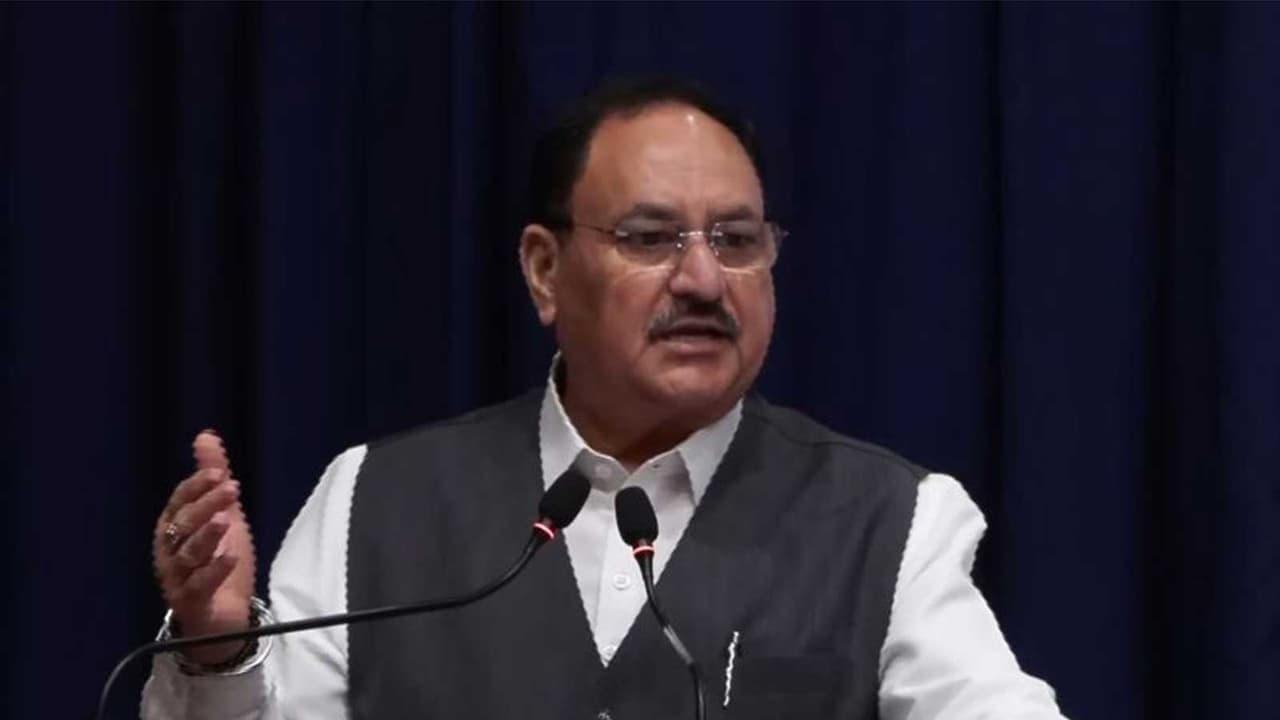
Union Health Minister JP Nadda said the govt has doubled financial support for TB patients to Rs 1,000 monthly for nutrition. He noted that free medicines and shorter, patient-friendly treatment regimens are also being provided under the campaign.
Union Health Minister J P Nadda on Tuesday said the government has doubled the financial support provided to tuberculosis (TB) patients from Rs 500 to Rs 1,000 per month to help them maintain a nutritious diet.
He also emphasised the need to sensitise Members of Parliament, Members of Legislative Assemblies and other public representatives to strengthen the campaign against TB.
Free Medication and Enhanced Financial Support
Nadda made the remarks while interacting with parliamentarians from Keralam and Karnataka on the ‘TB Mukt Bharat Abhiyaan’, highlighting the measures being taken by the government to eliminate tuberculosis and reduce its prevalence in the country.
Nadda said TB patients are provided medicines free of cost, including those undergoing treatment through private doctors. “It is not only the medicine, but we also give free medicine. Even if it’s a private doctor who is treating, the medicines are given free. So the medicine part is not only there, but we also give them Rs 1,000 per month to see to it that they take a good diet,” Nadda said.
He stated that the enhanced financial assistance is aimed at ensuring that patients are able to maintain a proper diet during their treatment.
Shorter, Patient-Friendly Treatment Regimens
The Health Minister said the government, under the leadership of Prime Minister Narendra Modi, has undertaken several measures under the TB Mukt Bharat Abhiyaan to eliminate tuberculosis and reduce its prevalence in India.
Stressing the government’s efforts to make tuberculosis (TB) treatment shorter and more patient-friendly, Union Health Minister Nadda said the treatment duration for drug-resistant TB has been reduced from 12-24 months to six months under the BPaL regimen.
He stated that the treatment for drug-sensitive TB patients is also completed within six months through fixed-dose combinations of medicines. “There are drug-resistant patients. So for them, the medicine is used to continue for 12 to 24 months. Now, it has been reduced to six months, which we call the BPaL regimen. So that regimen is what we are introducing. So the burden is becoming less, and it is also patient-friendly,” Nadda added. (ANI)
(Except for the headline, this story has not been edited by Asianet Newsable English staff and is published from a syndicated feed.)