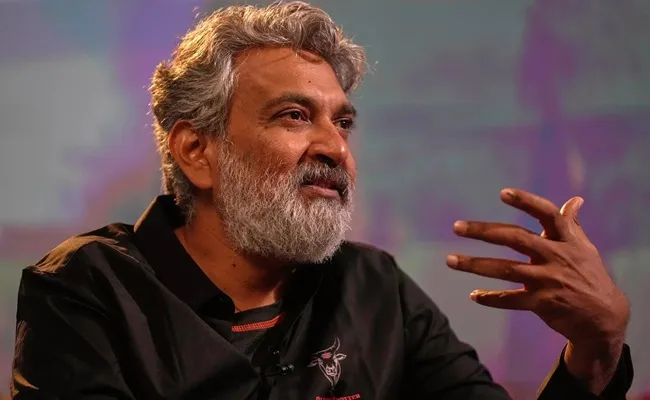
SS Rajamouli’s Varanasi is set to enter new territory for Indian cinema. The filmmaker has said that the movie is being shot entirely for IMAX, making it one of the most ambitious Indian films ever planned for the premium format.
And the timing is interesting.
Christopher Nolan’s The Odyssey gave a major boost to the IMAX experience in India. Audiences were willing to pay premium ticket prices, but the film also highlighted one big problem — India still has very few IMAX screens.
The country has only around 26 IMAX screens, which raises an obvious question: if audiences want the format, why are exhibitors not adding more screens?
PVR INOX Executive Director Sanjeev Kumar Bijli has said that IMAX is expensive to install, with each screen costing around Rs 10-11 crore. He also pointed out that one successful Hollywood film is not enough to justify such a large investment.
According to him, exhibitors need more Hindi, Tamil and Telugu filmmakers to create films that can attract audiences to IMAX regularly. Only then will cinema chains feel more confident about investing in more premium screens.
But filmmakers face the same problem from the other side.
Why spend heavily to shoot a movie for IMAX when there are not enough IMAX screens to recover that extra cost?
That is exactly where Rajamouli’s Varanasi becomes a major gamble.
Namit Malhotra, Global CEO of DNEG and producer of Ramayana, has described premium large-format experiences like IMAX as the need of the hour.
He believes it is a chicken-and-egg situation. Filmmakers need to take the risk of making more films for premium formats, while exhibitors need to take the risk of building more premium screens.
If more IMAX screens are available, filmmakers will feel confident about making bigger films. At the same time, if more Indian filmmakers create IMAX-ready content, exhibitors will have a stronger reason to invest.
Then comes the cost.
Filmmaker Shekhar Kapur has said that IMAX is currently too expensive for a normal-budget Indian film. However, he also believes new technologies, including AI-driven production tools, could eventually make premium-format filmmaking more affordable.
Shooting for IMAX is also not as simple as using a bigger camera.
The cameras can be heavier and more difficult to handle. Special rigs and trained crews may be required.
Framing also becomes more important because IMAX screens can show a much larger image. Small mistakes in focus, lighting or composition can become clearly visible on a giant screen.
Sound and production planning can also become more complicated, especially when using film-based IMAX cameras.
So, shooting for IMAX requires a different filmmaking approach from the beginning.
That is why Varanasi could become one of Rajamouli’s biggest risks.
Rajamouli has already proved with Baahubali and RRR that Indian cinema can think on a global scale. But with Varanasi, he is not just making another expensive spectacle. He is betting on how Indian audiences may want to watch big films in the future.
If the film succeeds strongly in premium formats, it could encourage cinema chains to open more IMAX screens and push other Indian filmmakers to create movies specifically for them.
But if the premium-screen market does not grow quickly enough, the additional investment may become difficult to justify.
For now, Rajamouli appears ready to take that chance.
Varanasi may not only test his ability to deliver another global blockbuster — it could also test whether India is truly ready for an IMAX-led future.