Replimune’s Tudriqev was granted accelerated approval by the FDA earlier this week, following two prior complete response letters and a 10-3 advisory committee vote in late July recommending the therapy.
- An accelerated approval, unlike a traditional approval, requires the company to conduct confirmatory trials after approval to demonstrate efficacy and provide additional proof of benefit.
- Unlike some other tumor types, melanoma accelerated approval indications have overwhelmingly either converted or remain active with confirmatory work underway.
- Replimune’s confirmatory trial is now ongoing, and complete overall survival data from it is expected in 2030.
Shares of Replimune Group (REPL) gained 8% this week after the firm received accelerated FDA approval for its drug Tudriqev in combination with nivolumab (Opdivo) to treat certain adults with unresectable advanced cutaneous melanoma.
The drug is now approved for patients who have progressed after cancer drugs called anti-PD-1 therapy, such as Keytruda or Opdivo. The decision marks the biotech’s first marketed product and follows two prior complete response letters and a 10-3 advisory committee vote in late July recommending the therapy.
However, an accelerated approval, unlike a traditional approval, requires the company to conduct confirmatory trials after approval to demonstrate efficacy and provide additional proof of benefit.
What Are Replimune’s Chances For Full Approval?
Historically, around half to two-thirds of FDA accelerated approvals convert to full approval, while 13–22% are withdrawn when confirmatory trials fail to verify benefit.
For cancer drugs specifically, one analysis published in 2024 of 2013–2017 approvals found that 63% were converted, 22% were withdrawn, and 15% were still ongoing after more than five years.
According to the FDA’s database for accelerated approvals that were withdrawn for cancer, the latest withdrawal was for Epizyme-developed Tazverik. Tazverik was granted accelerated approval in 2020 and withdrawn in June.
Other drugs to have lost accelerated approval in certain indications include Karyopharm Therapeutics’s Xpovio, Gilead Sciences’s Trodelvy, and even the blockbuster cancer drug Keytruda, manufactured by Merck.
Unlike some other tumor types, melanoma accelerated approval indications have overwhelmingly either converted or remain active with confirmatory work underway. No melanoma entries appear among the withdrawn cancer accelerated approval indications on the FDA’s public list, implying that melanoma drugs granted accelerated approval have a much better conversion track record than the overall oncology average.
Keytruda, for one, was granted accelerated approval in September 2014 for unresectable or metastatic melanoma after progression on ipilimumab and later granted full approval. Opdivo, likewise, was granted accelerated approval in 2014 and was later granted full approval.
Replimune’s Current Status
Replimune’s accelerated approval was based on the company’s IGNYTE trial, where among 91 evaluable patients, the combination delivered a 24.2% objective response rate and a median duration of response of 14.1 months. The confirmatory trial is now ongoing, and complete overall survival data are expected in 2030. An interim overall survival analysis has also been planned for the second half of 2027.
As of March 31, Replimune had $268.9 million in cash, cash equivalents, and short-term investments. Replimune expects its current capital to last into the first quarter of calendar 2027, meaning it would run out before the trials end.
Analysts Weigh In
BMO Capital raised its price target to $20 from $16 and maintained an ‘Outperform’ rating on Replimune following the approval. The firm said the regulatory win validates Replimune’s RPx platform, removes major uncertainty, and shifts focus to commercial execution and potential market-share gains in refractory melanoma.
Wedbush upgraded the stock to ‘Outperform’ from ‘Neutral’ and lifted its target to $19 from $12. Analysts called the approval a meaningful vindication of the data despite prior rejections.
Commercial Opportunity
Replimune management indicated on a call after approval that the lower labeled efficacy is unlikely to hinder adoption of its drug, given the high unmet need.
Replimune estimates about 10,000 addressable U.S. patients per year. The firm has set a list price of $450,000 for a full course of Tudriqev treatment. Analysts project that the drug could generate peak annual U.S. sales ranging from about $600 million to around $1 billion.
At full penetration of the near 10,000 patient pool, theoretical gross revenue could exceed $4 billion, but real-world uptake, discounts, duration of therapy, and competition will limit actual sales.
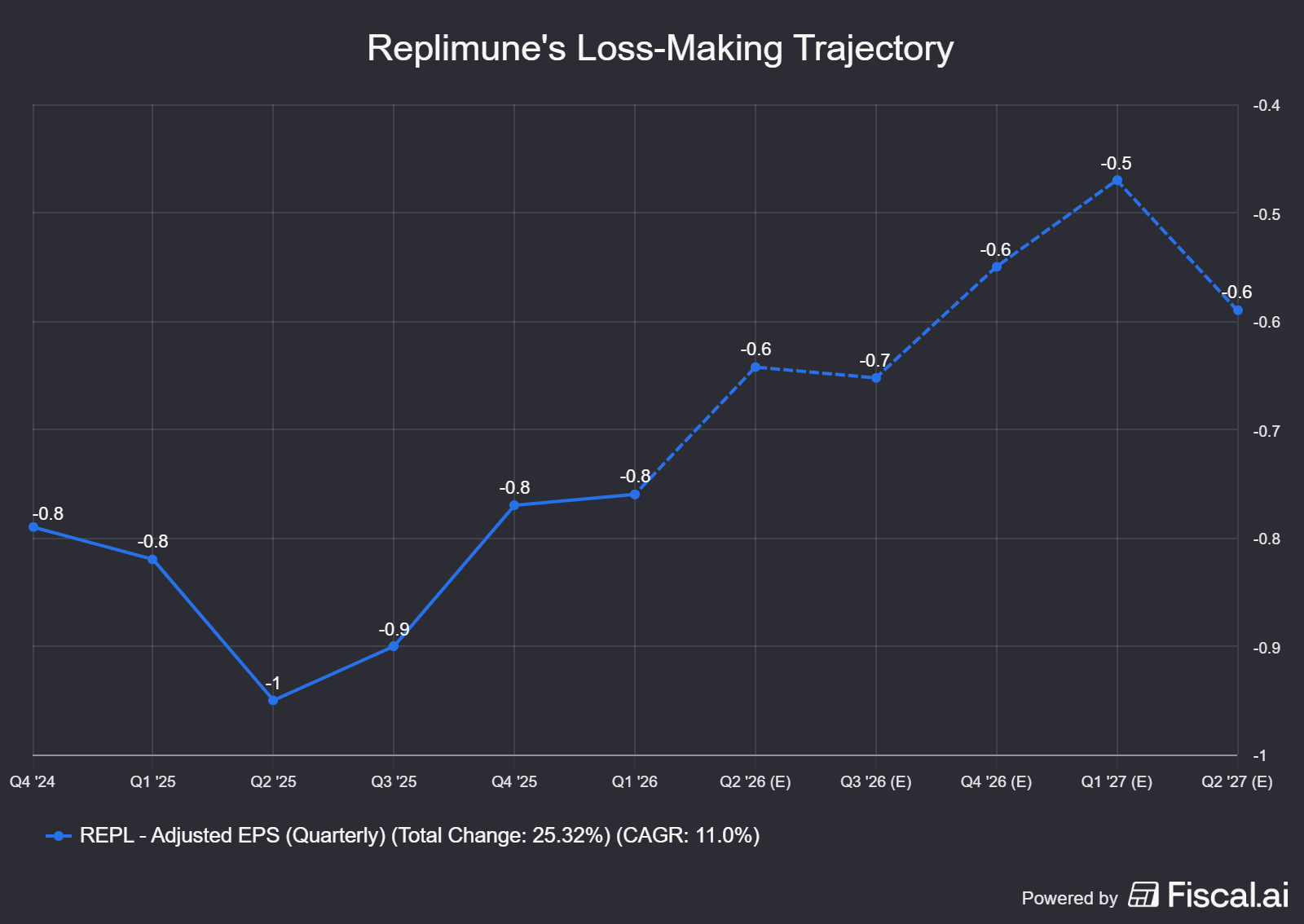
Replimune has never reported a profit, mostly because the company didn’t have a marketable product until recently.
How Did REPL Retail Traders React?
On Stocktwits, retail sentiment around REPL Stock fell from ‘bearish’ to ‘extremely bearish’ territory over the past 24 hours, while message volume stayed at ‘extremely high’ levels.
A Stocktwits user said the company has too many red flags and headwinds.
Another user pinned the stock’s 7% drop on Friday on short-sellers who lost money after the FDA approval, making risky bets that the stock would tank soon.
REPL stock has gained 24% year-to-date.
For updates and corrections, email newsroom[at]stocktwits[dot]com.