During his India visit, Myanmar President U Min Aung Hlaing assured PM Modi that his country will clamp down on Indian insurgent groups operating from its soil, a critical assurance for India’s security concerns in its Northeast region.
Myanmar on Monday assured India that it will take “everything necessary” to clamp down on Indian insurgent groups operating from within its borders, ensuring they no longer pose a threat to India’s security. The critical assurance came during high-level bilateral talks between Prime Minister Narendra Modi and visiting Myanmar President U Min Aung Hlaing at the Hyderabad House in the national capital. The Myanmar President is currently on a four-day visit to India from May 30 to June 2.
Assurance on Cross-Border Insurgency
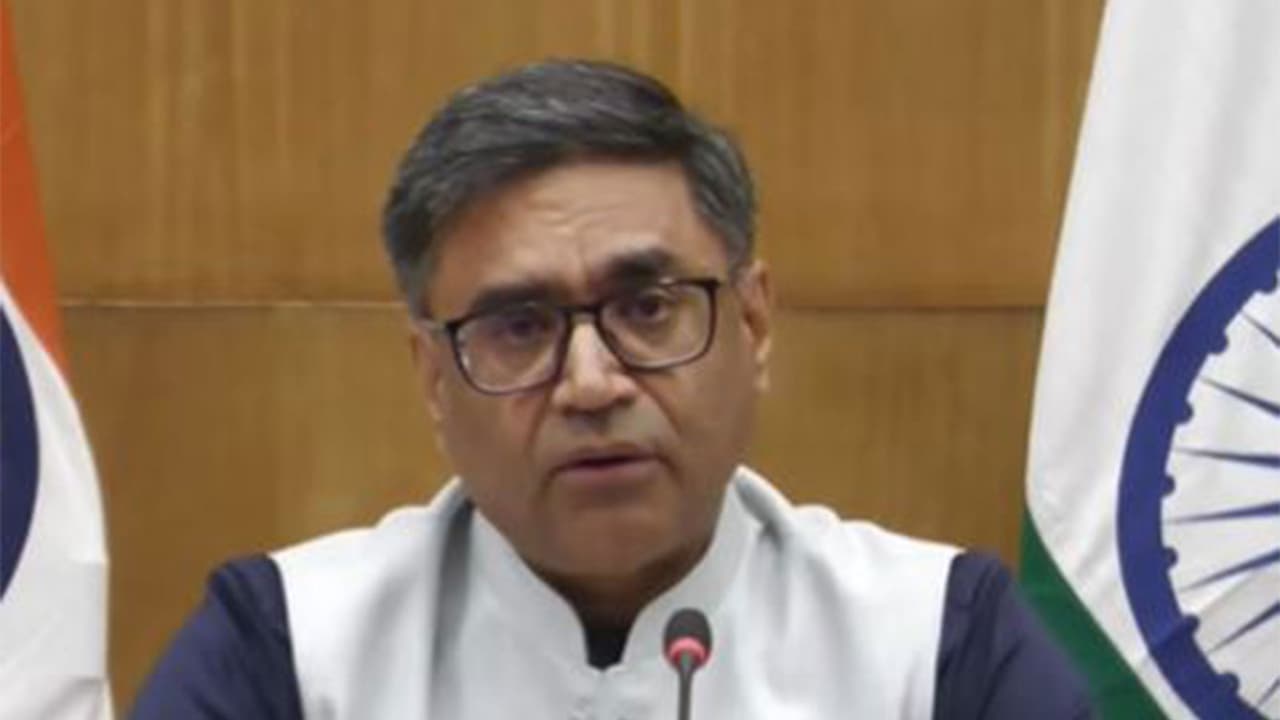
Briefing the media on the high-profile visit, Foreign Secretary Vikram Misri revealed that Prime Minister Modi directly confronted the issue of cross-border insurgent activity during his discussions with the Myanmar President. “There is the very important question of the activities of Indian insurgent groups in Myanmar close to our borders. And this is something again that the Prime Minister raised with the President,” Misri said.
“President once again reiterated his assurance that Myanmar was sensitive to these concerns and again would do everything necessary to ensure that there was action against these and these did not become a cause of threat against the security of India,” he added.
Myanmar’s Internal Security and India’s Stakes
Responding to a question on Myanmar’s internal security situation, Misri highlighted that internal security discussions covered two key aspects: ongoing fighting in peripheral regions between the Myanmar military and ethnic armed groups and the country’s efforts to bring all ethnic organisations onto a single platform to advance the peace process.
He said the peace process seeks to examine “what kinds of changes might be needed” in Myanmar’s governance structure to build “broad national consensus”.
“One aspect of internal security is the fighting that is going on in different parts of the country, especially around the peripheries, between the military and the ethnic armed groups. The other part or other aspect of internal security is obviously the effort by the Myanmar state to bring all the ethnic armed organizations and the groups onto a single platform to advance the peace process, which is essentially an effort to see how the current structure of governance or the system of government that Myanmar has, what kinds of changes might be needed in that so that something is crafted around which there is broad national consensus and then move forward on that basis,” Misri said.
The Foreign Secretary added that stability in Myanmar is a major interest for India, given the safety of people living along the 1,643-km border, the importance of connectivity to Southeast Asia, and the broader coherence of ASEAN, where Myanmar is a significant member.
“We obviously have an interest because stability and peace in Myanmar are obviously major interests for India, not just for the security of the Northeast and the safety and security of people living along the 1,643-kilometre-long border that we have with them, but also for our interests such as connectivity to Southeast Asia,” Misri said.
“And obviously, security and stability in Myanmar are also important for the coherence of ASEAN as a whole, as well, because Myanmar is an important and large country within the ASEAN framework as well. So, these security-related matters are obviously very important for us,” he added.
India Offers Support for ‘Myanmar-Led’ Process
Misri also underscored India’s long-standing position that Myanmar’s challenges must ultimately be resolved internally through a Myanmar-led and Myanmar-owned process, noting that India authorities have shared their nearly eight-decade-long experience in constitutional governance and federalism, organising workshops and seminars to support Myanmar’s learning and dialogue.
“From the outside, I don’t think anybody has any ready-made solutions to offer Myanmar. Yes, we can offer experiences; we can share experiences, and as a matter of fact, that is what India has done and been doing consistently over several years, even as Myanmar or authorities in Myanmar have sought to learn more about the system of constitutional governance or federalism as a form of governance,” he said.
“They obviously look next door at India and see an example worth following or emulating. And in this context, our embassy in Myanmar and the Ministry of External Affairs have been cooperating with authorities in Myanmar to organise workshops and seminars where there is extensive discussion on India’s nearly eight-decade-long experience of constitutional governance of federalism,” he added.
Earlier today, Prime Minister Narendra Modi met with the Myanmar President U Min Aung Hlaing as part of his four-day visit to India from May 30 to June 2 at the invitation of PM Modi.
PM Modi held wide-ranging discussions with President Aung Hlaing, aimed at further deepening India-Myanmar ties at the Hyderabad House in the national capital.
(Except for the headline, this story has not been edited by Asianet Newsable English staff and is published from a syndicated feed.)