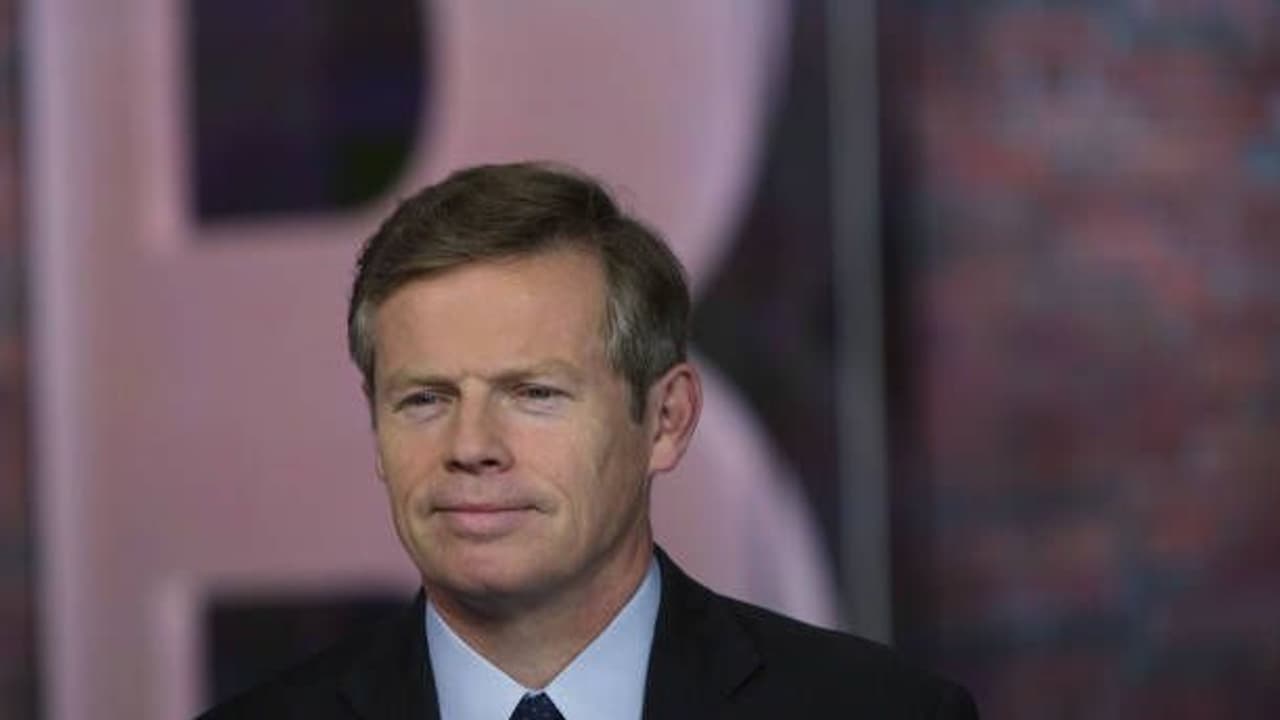
During an interview with CNBC, Kelly cited a decline of 1.3 million workers over the last year as evidence of the tight labor market conditions in the country.
- Kelly said that the reason behind wages not rising despite tight labor market conditions is that workers are just “dispirited.”
- He added that the U.S. currently has “teflon” inflation, noting that the Federal Reserve’s decision not to raise interest rates is the right one.
- BlackRock’s Chief Investment Officer of Global Fixed Income, Rick Reider, echoed similar sentiments during an interview with Bloomberg, saying that a rate hike does not “make a lot of sense” today.
JPMorgan Asset Management’s Chief Global Strategist, David Kelly, believes that the labor market in the U.S. is tight, not strong, after data from the Bureau of Labor Statistics (BLS) on Friday showed an unexpected decline in nonfarm payrolls in July.
During an interview with CNBC, Kelly cited a decline of 1.3 million workers over the last year as evidence of the tight labor market conditions in the country.
“American business [sic] can’t find workers, and American workers can’t find a raise,” he said.
Wages Are Not Rising Because Workers Are ‘Dispirited’, Says Kelly
Kelly added that wages are not rising despite tight labor market conditions because workers are just “dispirited.”
“It’s a very asymmetric relationship. Less than 6% of the private sector is in a union. Everybody else is fighting for themselves and it’s pretty hard to bash the boss’s door saying give me a raise or I quit,” he said.
The strategist added that workers in the U.S. just don’t have the confidence to ask for a raise now.
Kelly Says US Has ‘Teflon’ Inflation, Believes Fed Right In Not Raising Rates
Kelly added that the U.S. currently has “teflon” inflation, noting that the Federal Reserve’s decision not to raise interest rates is the right one.
“If you look at how slow the job growth is, it says that the natural growth rate of the economy is probably lower, which means I probably don’t believe in our R-star,” he said, referring to the natural or neutral rate of interest of the U.S. economy.
BlackRock’s Chief Investment Officer of Global Fixed Income, Rick Reider, echoed similar sentiments during an interview with Bloomberg. He said that a rate hike does not “make a lot of sense” today.
However, he cautioned that the Federal Open Market Committee’s (FOMC) setup right now leans more toward the hawkish side, and as such, their focus is on taming inflation currently.
“You still have a Fed committee that is generally hawkish. You still have a committee that is more focused on inflation than the labor reading,” he said, while adding that there is a possibility of rate cuts this year, provided that there is a deceleration in the economy.
El-Erian Says July Jobs Report Should Reduce Rate Hike Expectations
Mohamed El-Erian, Chief Economic Advisor at Allianz, said in a post on X that the weaker-than-expected July jobs report should prompt markets to dial back expectations for additional rate hikes.
El-Erian pointed to payroll growth that fell well short of forecasts, sharp downward revisions to the previous two months, and average hourly earnings growth that also missed expectations. He said those factors should be viewed positively by Wall Street because they reduce the likelihood of further monetary tightening.
“Both equities and fixed income markets should react positively to a downward shift in market expectations for Fed rate hikes due to this Jobs Report,” he said.
However, El-Erian said the report was less encouraging for the broader economy, noting that the labor force participation rate edged lower to 61.4% from 61.5%, highlighting what he described as persistent supply-side challenges in the labor market.
July Payroll Numbers Miss Expectations
According to the Bureau of Labor Statistics (BLS), nonfarm payrolls in June decreased by a seasonally adjusted 23,000. Analysts expected an addition of 83,000 payrolls during the month, according to Dow Jones data cited by MarketWatch.
The unemployment rate came in better than expectations, at 4.1%, compared to an expected 4.2%.
The weaker-than-expected jobs report also resulted in a fall in rate-hike odds. According to data from the CME FedWatch tool, the odds of a 25 basis point rate hike fell to 44.1% on Friday, from 55% a day ago and 67% a week ago.
At the time of writing, the SPDR S&P 500 ETF (SPY), which tracks the S&P 500 index, gained 0.36%; the Invesco QQQ Trust ETF (QQQ) rose 0.65%; and the SPDR Dow Jones Industrial Average ETF Trust (DIA) edged up by 0.03%. Retail sentiment on Stocktwits regarding the S&P 500 ETF was in the ‘neutral’ territory.
The iShares 20+ Year Treasury Bond ETF (TLT) was up 0.05%, while the iShares 7-10 Year Treasury Bond ETF (IEF) gained 0.15%.
For updates and corrections, email newsroom[at]stocktwits[dot]com.<