Football’s summer transfer market is in full flow. Premier League clubs can buy and sell players until September 1, with transfer fees, contract lengths and future potential driving negotiations across Europe.
At the same time, the IPL trade window is active ahead of the 2027 season, allowing franchises to exchange players, negotiate revised contracts and reshape their squads before the next auction.
The two systems, however, remain fundamentally different. IPL trades usually involve players moving on their existing contracts, sometimes through direct swaps or negotiated salary adjustments. The selling franchise does not ordinarily receive a football-style transfer fee.
But what if it did?
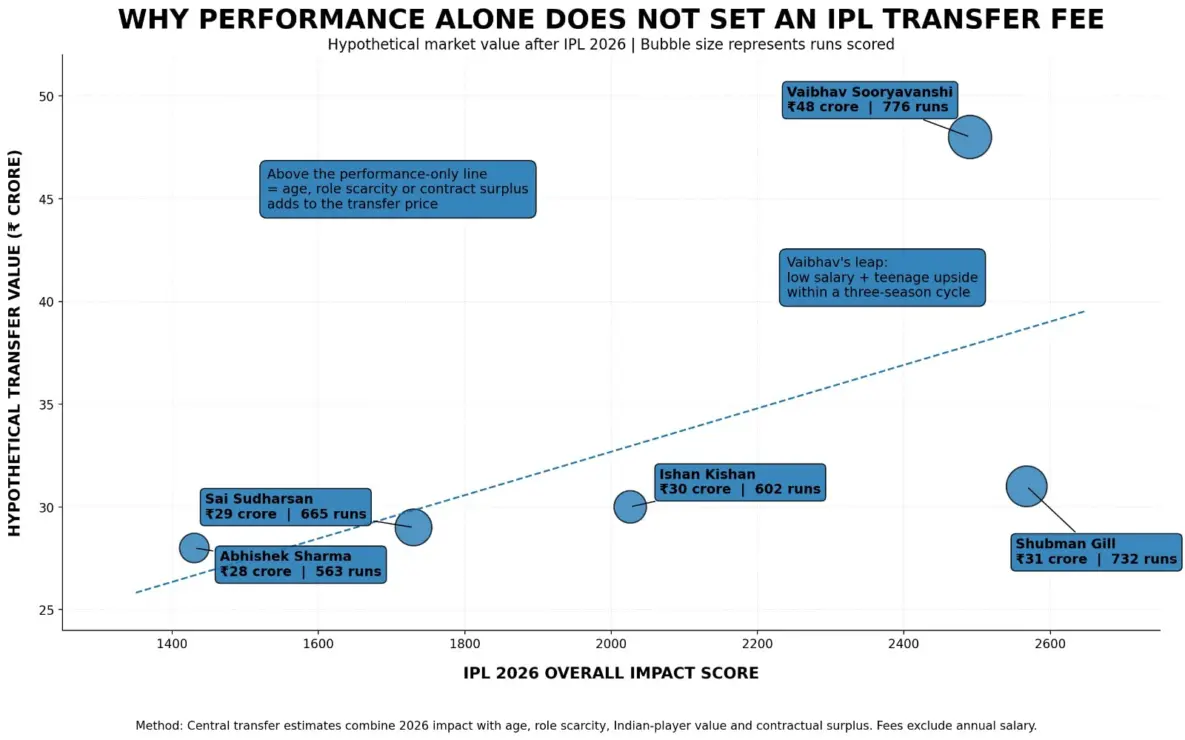
What if an IPL franchise had to pay another team for the right to acquire a contracted player, in addition to taking over his annual salary? Based strictly on their IPL 2026 performances, who would command the five highest transfer fees?
How the hypothetical IPL transfer market works
The valuation cannot simply multiply a player’s reputation, runs or wickets by an arbitrary number. It must remain anchored to IPL economics. An auction price is an annual salary paid to the player. A transfer fee would instead be a one-time payment made to the selling franchise, while the buying team would also inherit the player’s salary for the remaining contract period.
The present IPL cycle is broadly built around three seasons. Therefore, the relevant calculation is not the transfer fee in isolation but the buyer’s complete three-year financial commitment:
Transfer fee + salary across three seasons.
A player projected to receive ₹24 crore annually at an open auction has a three-year market cost of approximately ₹72 crore. A buyer acquiring him through a transfer should not normally spend substantially more than that total once his existing salary is included.
This creates an important distinction. A young player delivering elite production on a low salary can attract a larger transfer fee because the buyer inherits an extremely valuable contract. A superstar already earning close to the market ceiling may be the better player, but his transfer fee will be compressed by the cost of his existing deal.
Performance remains the foundation, but the final price also considers Indian-player scarcity, age across the next three seasons, role, captaincy, wicketkeeping, tactical flexibility and the probability of sustaining the 2026 output.
1. Vaibhav Sooryavanshi – ₹42-52 crore
Central valuation: ₹48 crore
No player created a larger difference between salary and sporting value in IPL 2026.
Vaibhav Sooryavanshi scored 776 runs at a strike rate of 238.04, clearing the ropes 72 times. He made 521 powerplay runs at 233.63 and maintained an extraordinary tempo after the field spread, striking above 230 through both sections of the middle overs.
This was not a short cameo specialist exploiting the final overs. Vaibhav was destroying attacks from the beginning of an innings and carrying that aggression through changing bowling plans and field restrictions. His age adds upside, but only within the relevant three-year window. The valuation does not assume a franchise owns his career for the next decade.
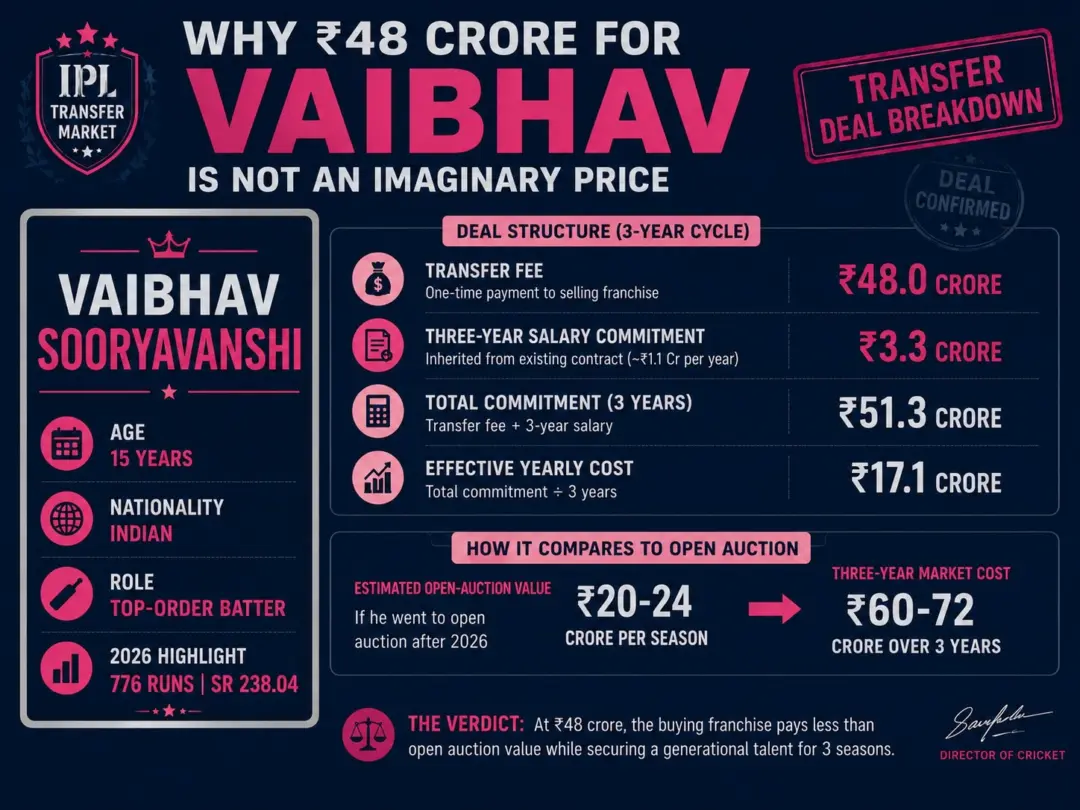
The real driver is his contract. If his post-2026 open-auction value is estimated at ₹20-24 crore annually, his three-year market cost would sit between ₹60 crore and ₹72 crore. His existing three-year salary commitment is only a fraction of that amount.
At a ₹48 crore transfer fee, the buyer’s total cost would still remain around ₹51 crore, comfortably below the amount Vaibhav could theoretically command in an open auction. That combination of historic production, Indian-player status and enormous contractual surplus makes him the clear market leader.
2. Shubman Gill – ₹28-34 crore
Central valuation: ₹31 crore
Shubmam Gill would command the highest price among established Indian superstars.
He scored 732 runs at 163.03 and produced the highest overall impact rating of the season. His value was strengthened by consistency across phases: he scored rapidly in the powerplay, accelerated through the middle overs and remained effective when required to finish an innings.
Gill also provides something few elite batters can offer simultaneously: guaranteed top-order quality, captaincy and the ability to become the long-term identity of a franchise. His transfer fee remains below Vaibhav’s because Gill’s existing salary is already closer to his true auction value. The buying side would be paying for three seasons of a proven prime-age captain, but it would not inherit the same dramatic contractual discount.
A fee of approximately ₹31 crore would place his total three-year commitment close to the upper boundary of what an elite Indian player could reasonably cost in the auction market.
3. Ishan Kishan – ₹27-33 crore
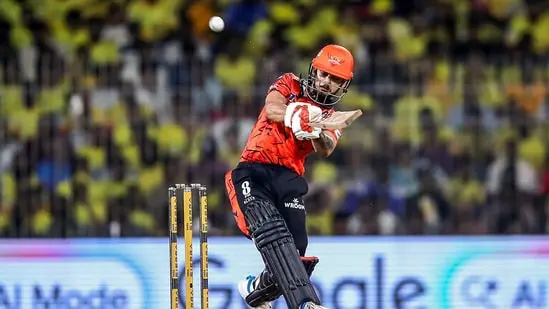
Central valuation: ₹30 crore
Ishan Kishan’s 602 runs came at a strike rate of 182.42, but his value extends considerably beyond the aggregate. He struck at nearly 180 in the powerplay, continued at 174 during the first section of the middle overs and accelerated to 200 during the second. That phase progression shows a batter capable of controlling an innings without sacrificing aggression.
He also offers wicketkeeping and leadership. A franchise acquiring Ishan could potentially fill three important positions with one Indian player: explosive top-order batter, first-choice wicketkeeper and captaincy option.
Because he does not occupy an overseas slot, his presence also creates greater freedom while selecting bowlers and all-rounders. That structural advantage pushes his value beyond several overseas batters with comparable or even superior raw numbers.
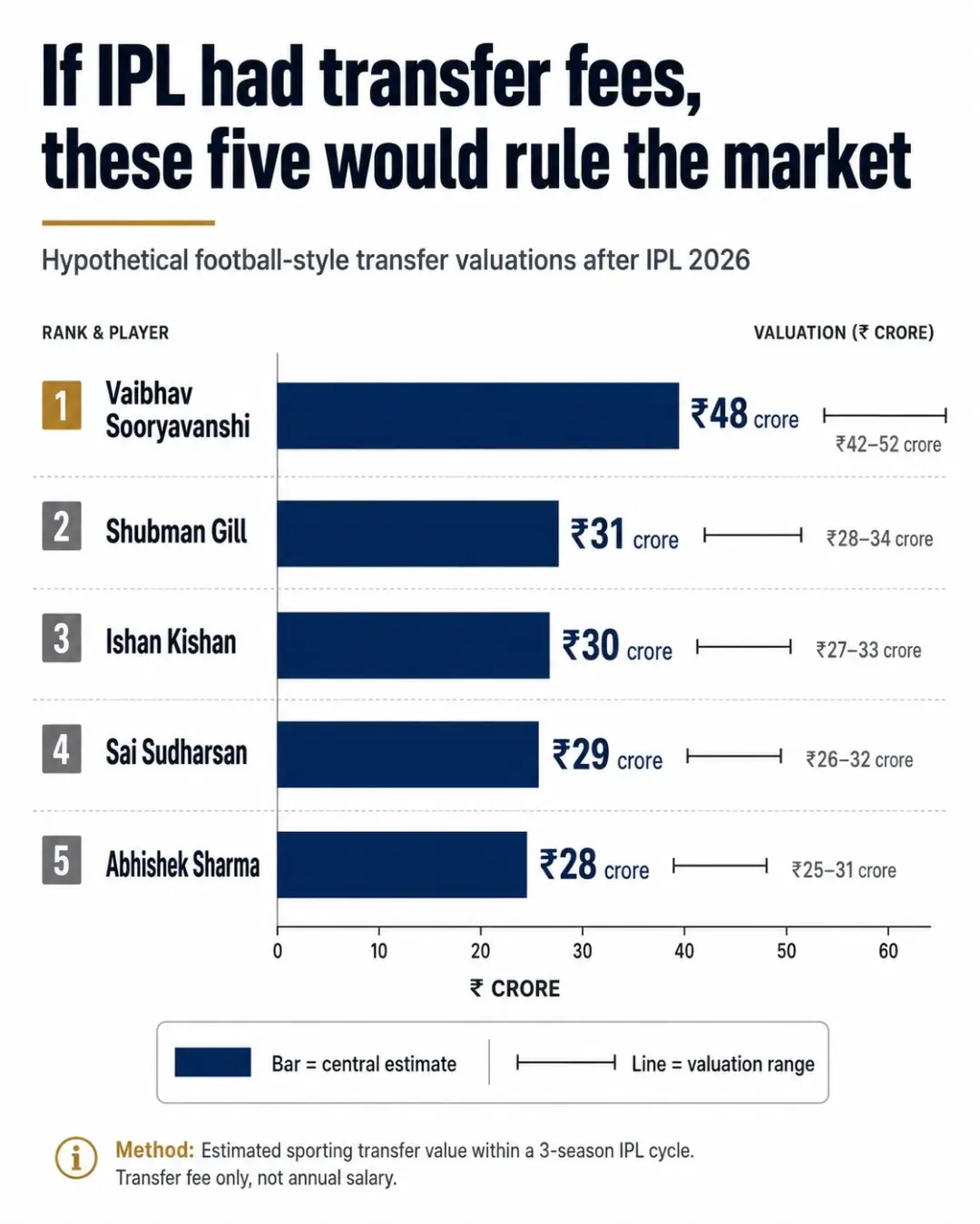
4. Sai Sudharsan – ₹26-32 crore
Central valuation: ₹29 crore
Sai Sudharsan scored 665 runs at 160.63, combining high volume with controlled acceleration. His powerplay strike rate of 143.3 was less destructive than those of Vaibhav, Abhishek Sharma or Ishan. However, his scoring rate climbed sharply once the field spread, reaching 174.5 in the first middle-overs phase and 189.3 in the second.
That profile makes him more than a conventional anchor. He can provide innings security without forcing the remaining batting order to compensate for a damagingly slow tempo.
Sai’s age, left-handedness and relatively manageable salary increase his transfer value. A buyer would be acquiring three seasons of a proven Indian top-order batter who is already producing elite volume but may not yet have reached his full scoring ceiling.
5. Abhishek Sharma – ₹25-31 crore
Central valuation: ₹28 crore
Abhishek Sharma scored 563 runs at 204.73, including 369 powerplay runs at a strike rate of 214.53. That particular skill has enormous market value. An overseas power-hitter can be found more easily than an Indian left-handed opener capable of transforming a match before the seventh over.
His total impact score was lower than those of some players outside this five, and his 2026 bowling did not provide enough value for him to be priced as a complete all-rounder. His valuation therefore rests overwhelmingly on his batting.
But it is a rare and tactically disruptive form of batting. Abhishek changes the required run rate, forces captains to abandon preferred bowling combinations, and can effectively decide contests before the middle overs begin. His existing salary is higher than that of some younger breakout players, limiting the contractual surplus available to the buyer. Even so, his Indian status, age and powerplay dominance keep him among the five costliest assets.
Methodology note
These figures are hypothetical transfer fees paid to the selling franchise, not annual player salaries. Each valuation considers IPL 2026 performance, phase-specific impact, role scarcity, Indian or overseas status, age across the next three seasons and the value of the player’s existing contract.
The estimates do not include commercial appeal, sponsorship value or fanbase impact. They are intended to represent sporting market value within a three-season IPL cycle, not permanent ownership of a player’s career.