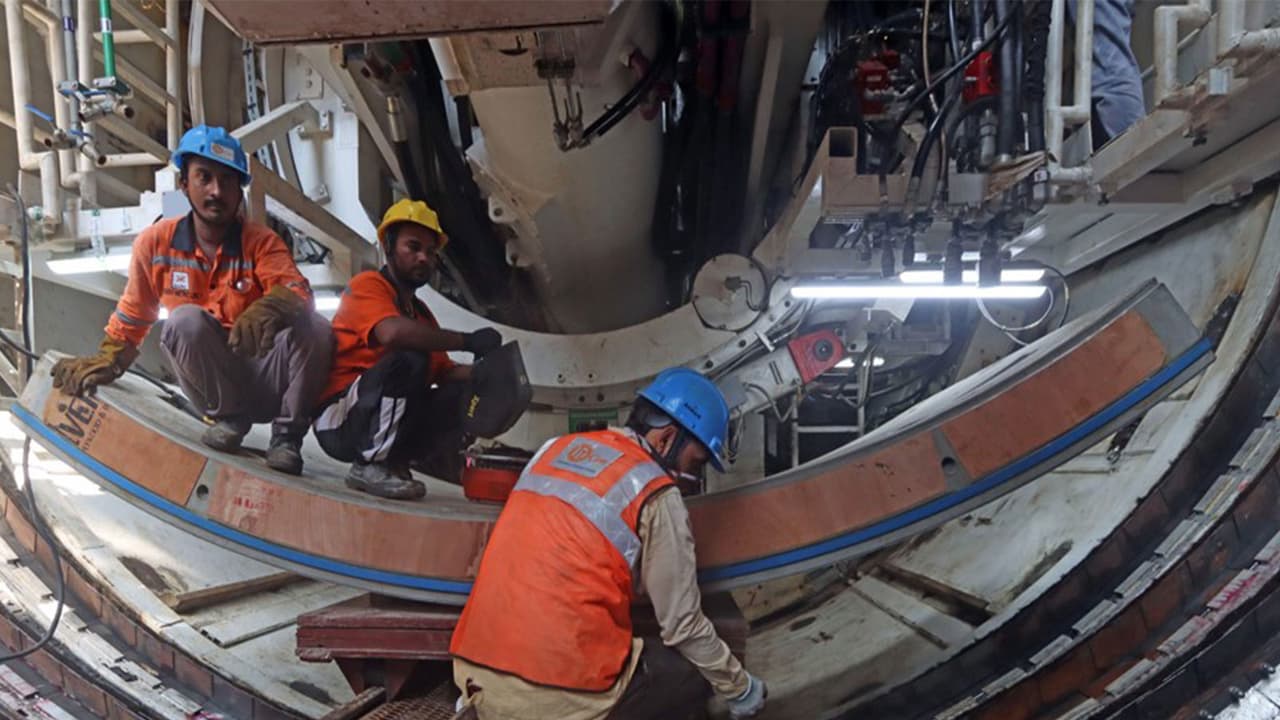
India’s manufacturing PMI rose to a three-month high of 55.0 in May from 54.7 in April, data from S&P Global showed. The growth was supported by the fastest rise in new orders and output since February, driven by strong domestic demand.
India’s manufacturing activity strengthened in May, with the Purchasing Managers’ Index (PMI) rising to 55.0 from 54.7 in April, supported by stronger growth in new orders, output and precautionary stockpiling amid continued uncertainty in the Middle East, according to data released by S&P Global.
The seasonally adjusted HSBC India Manufacturing Purchasing Managers’ Index (PMI), which measures overall manufacturing sector performance through indicators such as new orders, output, employment, supplier delivery times and stocks of purchases, stood at 55.0 in May. The reading was also higher than the flash estimate of 54.3 released earlier. According to the report, the final PMI reading signalled the strongest improvement in the health of India’s manufacturing sector in three months. It stated “HSBC India Manufacturing Purchasing Managers’ Index (PMI) ……. posted 55.0 in May, above the readings of 54.7 in April and the flash figure of 54.3. The final PMI print pointed to the best improvement in the health of the sector for three months”. The report noted that manufacturers reported the fastest rise in new orders and output since February. The growth was largely driven by stronger demand in the intermediate and capital goods segments, while consumer goods producers witnessed a relatively slower pace of expansion.
Expert Commentary on Growth Drivers
Pranjul Bhandari, Chief India Economist at HSBC, said “India’s final manufacturing PMI points to another month of possible precautionary stockpiling as the Middle East conflict remains unresolved. Output growth accelerated, while purchasing activity and stocks of finished goods rose at a faster pace. New order growth was driven by domestic demand, as export order growth moderated.”
Robust Demand and Export Performance
Survey participants attributed the improvement to robust demand conditions, ongoing infrastructure projects and gains from new business opportunities. The report showed that domestic demand remained the primary driver of growth. Although export orders continued to rise at a slower pace, international demand remained healthy. Manufacturers reported export gains from markets across Asia, Europe, Kenya, Nigeria and the Middle East.
Input Cost Pressures
On the cost front, the report highlighted that the ongoing conflict in the Middle East continued to exert pressure on manufacturing input costs. Companies reported higher spending on energy, fuel, raw materials and transportation during the month. According to the survey, input cost inflation remained elevated, with only April recording a stronger increase in input prices over the last 45 months. Purchasing prices rose at the second-fastest pace since April 2022, while the increase in output prices remained below the average recorded over the past year.
Despite the pressure on input costs, manufacturing firms continued to expand production and benefit from strong domestic demand, helping the sector maintain solid growth momentum in May. (ANI)
(Except for the headline, this story has not been edited by Asianet Newsable English staff and is published from a syndicated feed.)