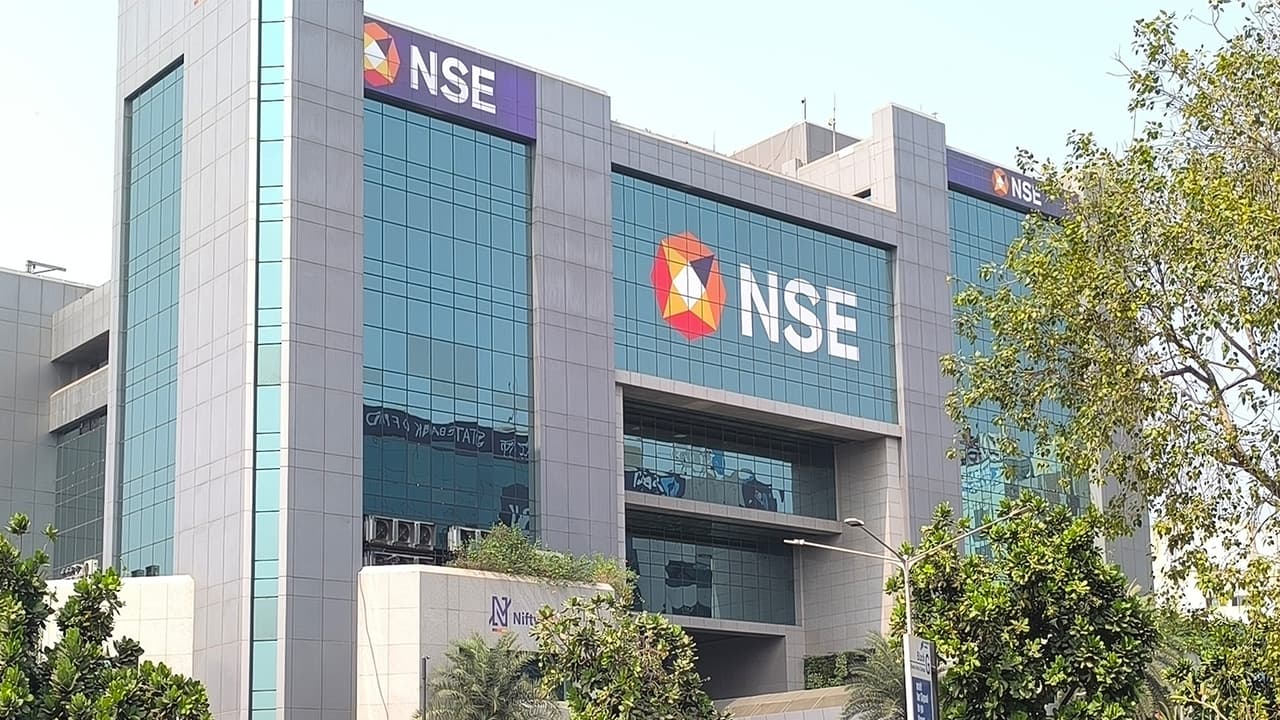
NSE clarified the divergence between spot and futures prices for Nifty/Bank Nifty was due to the new Closing Auction Session (CAS) mechanism. It assured it was not an anomaly and was implemented under SEBI guidance for better price discovery.
NSE Clarifies New Closing Price Framework
Mumbai, (Maharashtra) [India] August 4 (ANI): The National Stock Exchange (NSE) on Tuesday clarified the unusual divergence witnessed on Monday between the spot and futures values of the Nifty and Bank Nifty indices, saying it was a result of the implementation of the new Closing Auction Session (CAS) mechanism for derivative-eligible stocks and did not indicate any market anomaly.
The clarification came after market participants flagged the gap between spot and futures prices during the final minutes of trading following the rollout of the new closing price discovery framework on August 3. The exchange said the CAS was introduced under the guidance of the Securities and Exchange Board of India (SEBI) to strengthen transparency and price discovery in the cash market.
In a press release, the NSE said, “Closing Auction Session was implemented under the guidance of SEBI as it promotes transparency and fair and robust price discovery.”
Under the revised framework, effective August 3, the closing prices of stocks that have derivative contracts are determined through the Closing Auction Session instead of the earlier volume-weighted average price (VWAP) mechanism used during the last 30 minutes of continuous trading. The CAS runs from 3:15 pm to 3:35 pm, while trading in the equity derivatives segment continues until 3:40 pm.
Explaining the Spot-Futures Divergence
Explaining the behaviour of benchmark indices during the transition period, the exchange said the index graph displayed during the auction session should be interpreted carefully because there is no continuous order matching between 3:15 pm and 3:30 pm.
The NSE said, “There is no sudden change in the Index at 3:30 pm, but the order collection, cancellation and matching follows a process and as there is no continuous order matching between 3:15 pm and 3:30 pm, the index value is constant as it is based on traded values.” It added that indicative values based on equilibrium prices are displayed alongside the quotes on the exchange website during the auction period.
The exchange further explained that separate order books operate for the Closing Auction Session and the continuous trading session, resulting in different prices for individual stocks during the auction. “Both the Exchanges have separate order books for CAS session similar to the continuous trading session and hence, the prices of the individual stocks are also different. As the index is calculated based on the prices determined of the individual stocks, the index values can also be different,” the release said.
According to the exchange, the closing price during CAS is determined using an equilibrium price mechanism, under which the price at which the maximum executable volume is achieved becomes the closing price, with market orders receiving priority over limit orders.
Strong Participation on Day One
NSE also highlighted strong participation on the first day of implementation. It said 515 trading members placed orders on behalf of 56,773 unique PANs during the inaugural CAS session, compared with 403 trading members and 42,822 unique PANs in Monday’s pre-open session.
The exchange said the participation levels were encouraging for the first day and are expected to increase further as market participants become more familiar with the mechanism. (ANI)
(Except for the headline, this story has not been edited by Asianetnews Editorial staff and is published from a syndicated feed.)