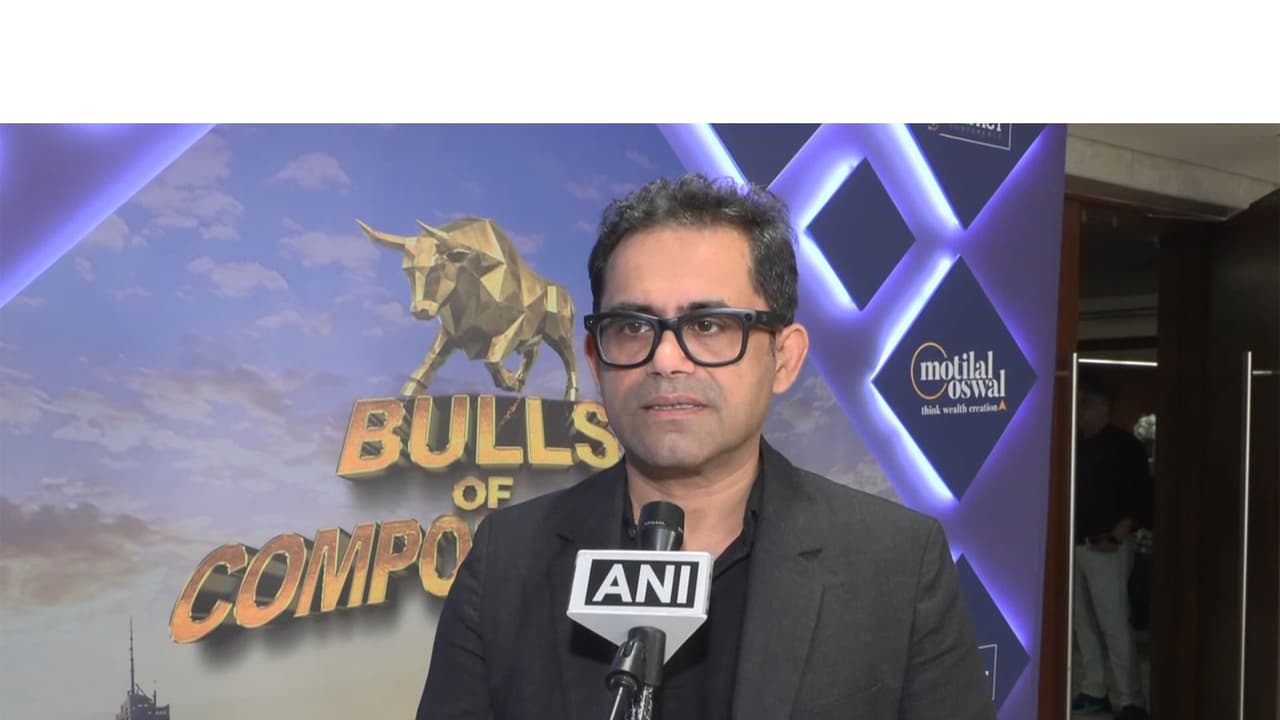
Despite foreign inflows into bonds from global index inclusion, India’s interest rates are unlikely to drop sharply soon, says Motilal Oswal’s Ashish Shanker. He cites persistent global and domestic inflationary pressures for the range-bound outlook.
India’s interest rates are unlikely to experience a sharp decline in the near term despite surging foreign inflows into government bonds following the nation’s inclusion in global bond indices, according to Ashish Shanker, Managing Director and CEO of Motilal Oswal Private Wealth.
Speaking exclusively to ANI on the sidelines of the ninth edition of the Motilal Oswal Business Impact Conference (MOBIC) 2026 in Mumbai, Ashish Shanker stated, “In India, over time rates should definitely go down as we become bigger and bigger in terms of size and scale. However, I don’t see it happening in the near term because there are inflationary pressures globally and domestically.”
Persistent global and domestic inflationary pressures–largely driven by imported price factors- will keep interest rates range-bound in the near term rather than triggering a sudden drop. While inclusion in international bond indices continues to attract stable foreign inflows into Indian government securities, it will not single-handedly cause an immediate, sharp fall in yields.
Retail Debt Strategies and Outlook
Shanker advised retail investors to target medium-term (3 to 5 years) yield-to-maturity products, high-grade corporate bonds, and G-Secs, while emphasising dynamic asset allocation funds to navigate rapidly shifting market environments.
Elaborating on the outlook for government securities and retail debt strategies, Shanker added, “As India gets included in the global index, you will see more flows coming into Indian government bonds and you will see that the Indian government bonds remain range-bound but with a downward bias. But I don’t see rates going down in a hurry. For retail investors, you should buy yield-to-maturity funds, yield-to-maturity products. I think three to five years is the sweet spot. You can add corporate bonds, you can add G-Secs and just stay at the better end of the curve in terms of rating.” (ANI)
(Except for the headline, this story has not been edited by Asianetnews Editorial staff and is published from a syndicated feed.)