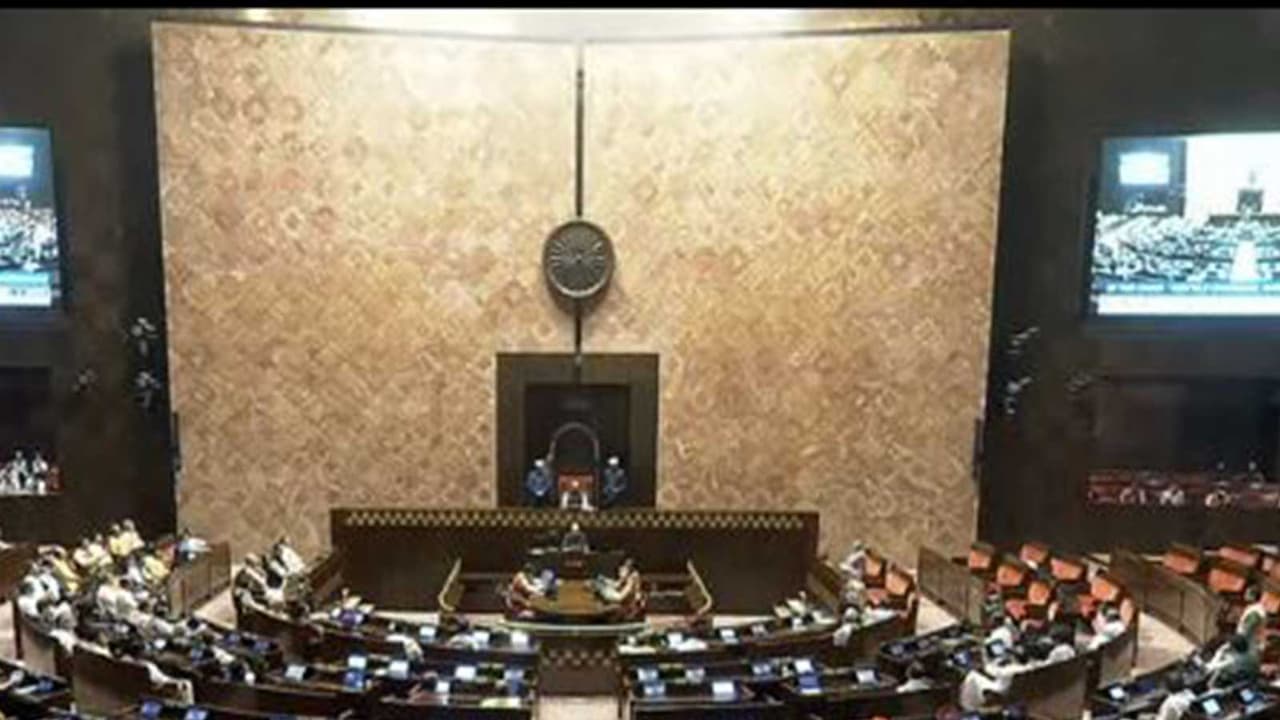
The Public Examinations (Prevention of Unfair Means) Amendment Bill, 2026 was passed in Rajya Sabha to prevent paper leaks and cheating. There are strict provisions like jail up to 10 years and fine up to Rs 10 crore. Now the bill will be sent for the President’s approval.
New Delhi [भारत]July 30 (ANI): The Public Examinations (Prevention of Unfair Means) Amendment Bill, 2026 was passed in the Rajya Sabha on Thursday. The bill proposes stricter penalties, time-bound investigations and special fast-track courts to prevent cheating and paper leaks in public examinations. The anti-paper leak bill was passed in the Lok Sabha on Wednesday, and will now be sent for the President’s assent.
In the Upper House, opposition MPs walked out before the bill was passed.
Minister enumerated the achievements of the government
Responding to the discussion in the House, Union Minister of State Jitendra Singh highlighted various measures taken by the government in the education sector, including the National Education Policy (NEP) 2020 and increase in the number of universities across the country. “This is an issue that concerns every parent in this country, every family in this country. These young children are a huge investment for the country,” Singh said.
He said that around 7.65 crore students will be affected by the measures aimed at strengthening the examination system. “We have made very serious efforts to free it from the evil of management quotas and have tried to make medical education more accessible,” he said.
Singh described NEP 2020 as a “game changer” for the education system, saying it has provided more freedom to students in choosing their educational pathways. “The biggest game changer of the education system is NEP 2020 because it has freed students from the slavery of choices made by their parents, guardians and elders,” he said.
He said this would reaffirm the government’s commitment to safeguard the welfare and interests of students and youth. He said that under the new law, the investigation will have to be completed within two months, while the trial will have to be completed within three months of the filing of the charge sheet. Singh termed the paper leak as a serious issue and said that many such incidents have been reported in different states under different state governments as well as previous central governments.
He further said that the number of universities in the country has increased from 760 to 1,293 and 400 Eklavya schools are running across the country.
Opposition called the bill a ‘cosmetic change’
Earlier today, Leader of Opposition in Rajya Sabha Mallikarjun Kharge criticized the bill, saying the government has only made “cosmetic changes” which will not be enough to prevent malpractices in public examinations. Although Congress supported the law, Kharge said it did not have provisions stringent enough to guarantee transparent and paper-leak-free examinations.
He claimed that the government was forced to take action only after students raised concerns over paper leaks, irregularities in examinations and institutional shortcomings. Kharge demanded a ‘National Youth Employment Strategy’ and a fixed annual examination calendar as reforms for the youth.
Demanding an employment strategy, he said, “Investment for youth will be meaningful only if it creates quality employment on a large scale. That is why we demand that the government present before Parliament a ‘National Youth Employment Strategy’ that clearly outlines how the investment-oriented policy and business environment in India should be shaped, and incorporates all these aspects.”
The Congress leader also demanded filling of vacancies in public sector jobs, especially seats reserved for Scheduled Castes and OBC candidates. Their demands also included a High Court-monitored investigation into police action against the protesters.
He said, “My demands are simple: First, there should be a fixed annual examination calendar in the country so that students do not face uncertainty. Second, the matter should be investigated by a high-powered committee appointed by the Supreme Court so that the truth comes out and accountability is fixed. Third, all vacant posts in the public sector and government institutions should be filled through recruitment. Fourth, law-and-order related incidents – like lathi charge, dragging women, and beating people and children – all these incidents should be stopped. The investigation should be conducted under the supervision of the High Court.”
Supporting the bill, NCP leader Praful Patel said the government and the opposition are equally concerned about the future of the students and youth of the country. He stressed the importance of providing proper guidance to the youth. While acknowledging the right to protest as part of democracy, Patel expressed concern over the language used during some of the protests.
What are the stringent provisions in the bill?
The Bill proposes to enhance the punishment for persons resorting to unfair means, including increasing the period of imprisonment to not less than five years, extendable to ten years, as against the existing provision of not less than three years, extendable to five years. There is also a proposal to increase the maximum fine from Rs 10 lakh to Rs 50 lakh.
For service providers found involved in offences, the Bill proposes to increase the maximum fine to Rs 5 crore and increase the period of debarment from conducting any public examination from four years to eight years. For organized exam-related offences, the amendment bill proposes to increase the minimum imprisonment period from five years to seven years, extendable to ten years, while the maximum fine has been increased from Rs 1 crore to Rs 10 crore.
Time bound investigation and fast-track courts
The Bill also empowers the Center to constitute a special task force to investigate paper leaks and examination-related crimes and also proposes a new section 12A that mandates completion of investigation within two months, designation of sessions courts as special fast track courts for day-to-day trial of offenses under the Act, completion of trial within three months from the date of filing of chargesheet and appointment of special public prosecutors for every special fast track court. Makes provisions.
Rajya Sabha was adjourned till 11 am on Friday, July 31. (ANI)
(Except for the headline, this story has not been edited by Asianetnews Editorial staff and is published from a syndicated feed.)