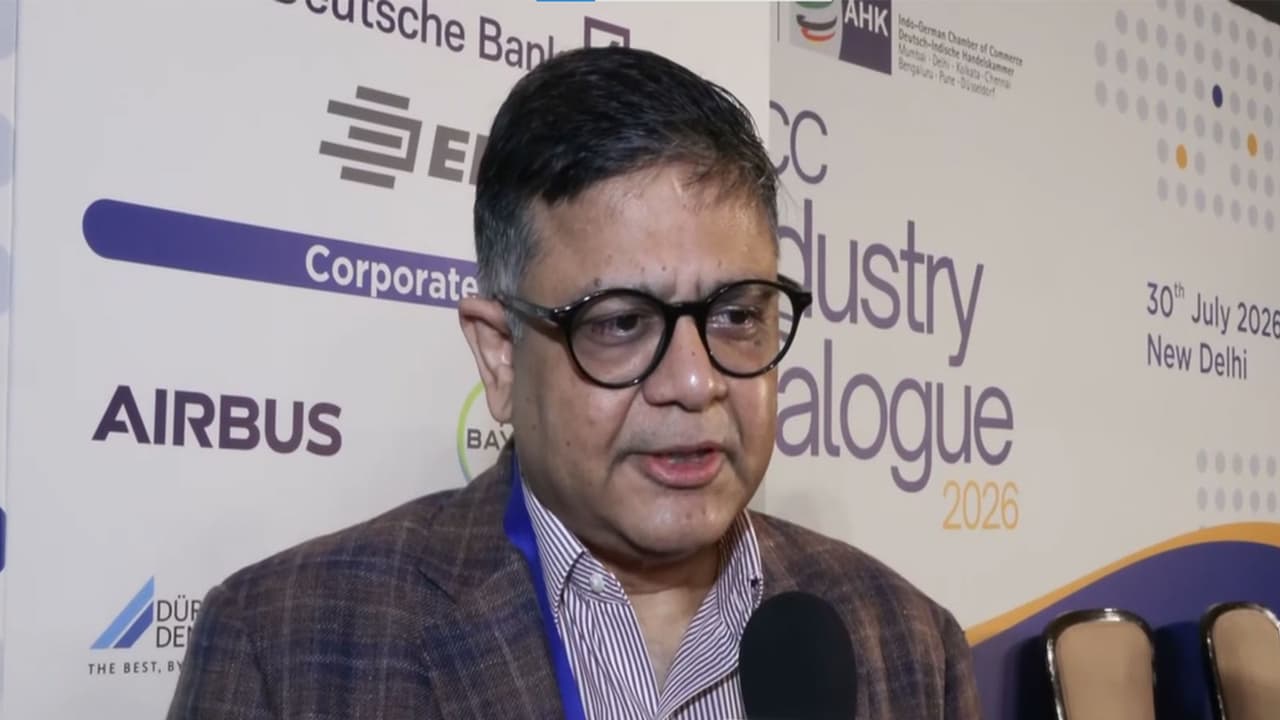
Fears that AI could disrupt India’s tech industry are unfounded, says NASSCOM VP Shivendra Singh. He states the sector is adapting and AI will create significant new business opportunities, rather than just eliminating existing business.
Concerns that artificial intelligence (AI) could disrupt India’s technology services industry are unfounded, with the sector already adapting to changing client needs and AI expected to create significant business opportunities, NASSCOM Vice President and Head of Global Trade Development Shivendra Singh told ANI on Thursday.
AI Disruption Fears ‘Unfounded’, NASSCOM Sees Opportunities
Speaking to ANI on the sidelines of an Indo-German Chamber of Commerce (IGCC) event, Singh said the technology services industry had responded strongly to the rapid emergence of AI and was well placed to benefit from the transformation. “There are a lot of stories around AI and the decline for the tech services industry… I think all this is unfounded because the industry has pivoted very strongly with the needs of the hour,” he said.
Singh said AI adoption would generate new demand for technology services companies, rather than simply eliminate existing business. “Our view is while the sequencing of AI in jobs will not be there as far as the industry is concerned from a revenue sequencing perspective, what will happen is there is going to be growth in the business, which is going to be quite high as a result of AI and we’ll be well positioned to be able to deliver, to meet client requirements,” he said.
Role of Tech Services in AI Implementation
He said enterprises would need technology services firms to help select AI models, determine deployment strategies and establish the right balance between automation and human oversight. “No one will just put a language model and hope the magic will happen. You need someone to decide which language model, how many language models, whether it’s going to be SLMs, how much of agentic you need, how much of human role you need. So this work is done by the tech services companies,” Singh said.
India-Germany Economic Cooperation
On India-Germany economic cooperation, Singh said the two countries had strong complementarities in advanced manufacturing, precision engineering, digital transformation, talent and AI. “There are very strong tailwinds favouring a stronger collaboration between Germany and India. Germany’s Industry 4.0, advanced manufacturing, precision engineering, India’s digital transformation and talent story are a very good fit to build this partnership,” he said.
Singh also highlighted NASSCOM’s role in the India-Germany AI Pact and the AI for Mittelstand initiative, aimed at supporting AI adoption among German small and medium-sized businesses. He said NASSCOM would further its engagement with German stakeholders through programmes in cities including Berlin, Munich, Hamburg and Cologne in September.
Evolving Global Capability Centre (GCC) Ecosystem
On the growing Global Capability Centre (GCC) ecosystem, Singh said India was witnessing a shift from a cost-arbitrage model towards innovation and revenue generation. GCCs contribute nearly USD 100 billion in revenue and employ around 2.3 million people, he said.
He added that growing investments in AI-native companies, data centres and digital capabilities would further accelerate the segment.
Private Sector Role in Satellite Communications
On satellite communications, Singh backed greater participation by private startups and stressed closer government-industry cooperation. “I think this is something which should be encouraged. At the end of the day, in any evolving and emerging areas of technology, the government and the private sector have to work very, very closely to ensure that India gets the kind of share that it truly deserves,” he said. (ANI)
(Except for the headline, this story has not been edited by Asianetnews Editorial staff and is published from a syndicated feed.)