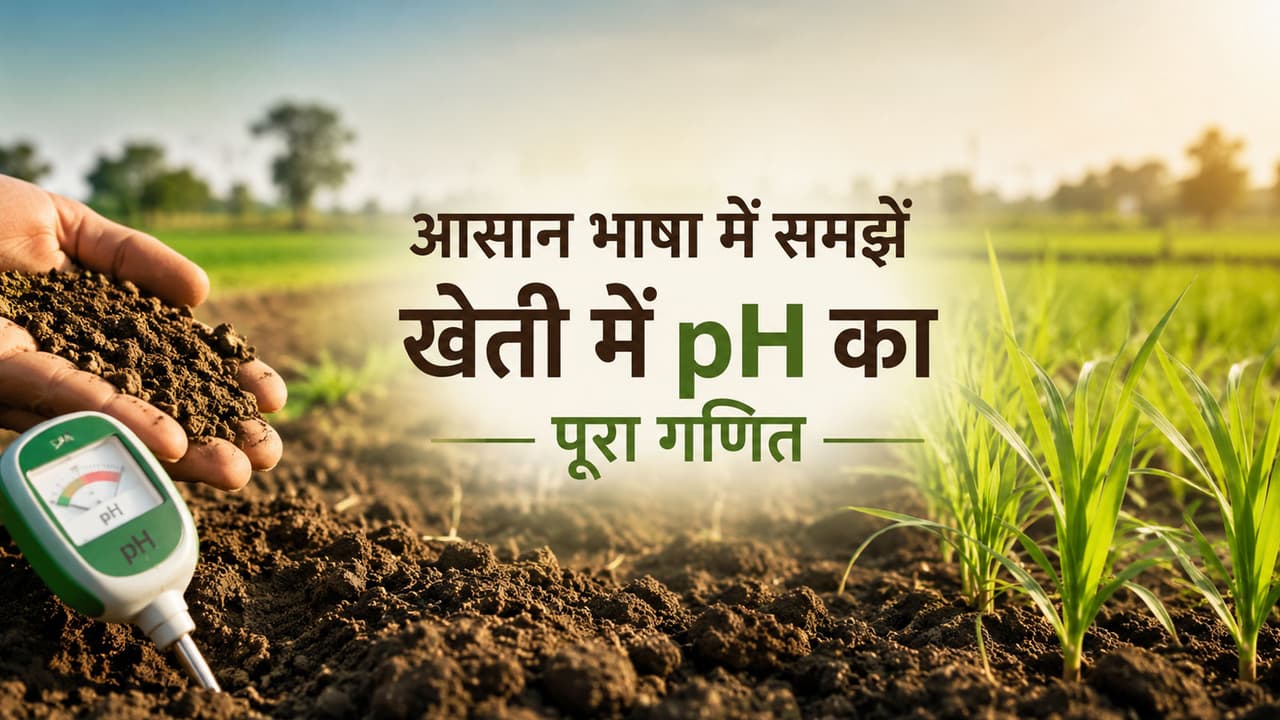
Soil pH: Soil pH plays a big role in crop yield. If the pH is not correct, the plants do not get complete nutrition even after applying fertilizer. Know what pH is, how to check it and why it is important.
Soil pH Test: Have you ever wondered why despite expensive fertilizers, excellent seeds and hard work day and night, the crop does not turn out as you want? Agriculture experts say that the answer to this ‘why’ lies in the ‘pH of your soil’. Be it farming or gardening, the whole game of bumper yield depends on the health of the soil. But what is this pH level? Is this just a scientific term, or does it really determine your crop? Let us know why every smart farmer is getting soil testing done before sowing today.
What is the pH of soil?
pH (Potential of Hydrogen) is a scale, which shows whether the soil is acidic, neutral or alkaline. The value of this scale ranges from 0 to 14. That is, pH tells us what the chemical nature of the soil is. Like there are 2 fields.
What do different levels of pH mean?
pH 7-Neutral
Less than 7- Acidic
More than 7- Alkaline
Understand the meaning of pH level in soil with example.
For example, the pH of the soil of the first field is 5.5. This means the soil is acidic. The pH of the soil of the second field is 8.2. This means the soil is alkaline. Now if the same crop is sown in both the fields, it is not necessary that the yield will be equal in both the places. Because every crop grows best at a particular pH.
How does soil pH affect crops?
The nutrients present in the soil reach the plants only when their pH is correct. If the pH becomes too low or too high, then even after adding fertilizer to the soil, the plants are not able to absorb it completely. For example, the availability of phosphorus may be reduced in very acidic soils. In very alkaline soil, micronutrients like iron, zinc and manganese are less available to the plants. Meaning, many times farmers keep adding fertilizers, but the problem is of pH.
Which crop is good at which pH?
Although the needs of each crop are different, pd/eoe crops grow best in soils with a pH of 6.0 to 7.5. That is why experts say that before starting farming, the soil must be tested once.
Wheat- About 6.5 to 7.5 pH
Rice- About 5.5 to 7.0 pH
Potato- About 5.0 to 6.5 pH
Groundnut- About 6.0 to 6.5 pH
Mustard- About 6.0 to 7.5 pH
How is soil pH measured?
- In many places, farmers’ soil is tested under the Soil Health Card Scheme.
- Krishi Vigyan Kendra (KVK)
- Agriculture University
- Private Soil Testing Lab
- digital pH meter
What to do if the pH is not correct?
If the soil is too acidic, experts recommend adding lime. If the soil is too alkaline, it can be improved with gypsum, organic fertilizers and better drainage. Apart from this, the quality of soil also improves by adopting cow dung, compost, green manure and crop rotation.
Why is pH important in home garden also?
pH is not just for farmers. If you grow roses, tomatoes, chillies, coriander or other types of plants at home, then the pH of the soil is important there too. Many times the reason for the plant drying up is not water or fertilizer, but wrong pH.
Does pH always remain the same?
No. The pH of soil can change over time. There can be many reasons behind this, like continuous same type of farming, excessive use of chemical fertilizers, heavy rains, quality of irrigation water and amount of organic matter. That is why agriculture experts recommend getting the soil tested from time to time.
2 facts related to pH
- The pH scale was developed in 1909 by Danish chemist Soren Peter Lauritz Sorensen.
- Most of the world’s crops produce best when pH is between 6.0 and 7.5.
Content Source: Indian Council of Agricultural Research (ICAR), Indian Agricultural Research Institute (IARI), Food and Agriculture Organization (FAO), Soil Health Card Scheme, Ministry of Agriculture & Farmers Welfare, National Bureau of Soil Survey & Land Use Planning (NBSS&LUP), NCERT Geography & Biology (Soils and Agriculture Chapters).