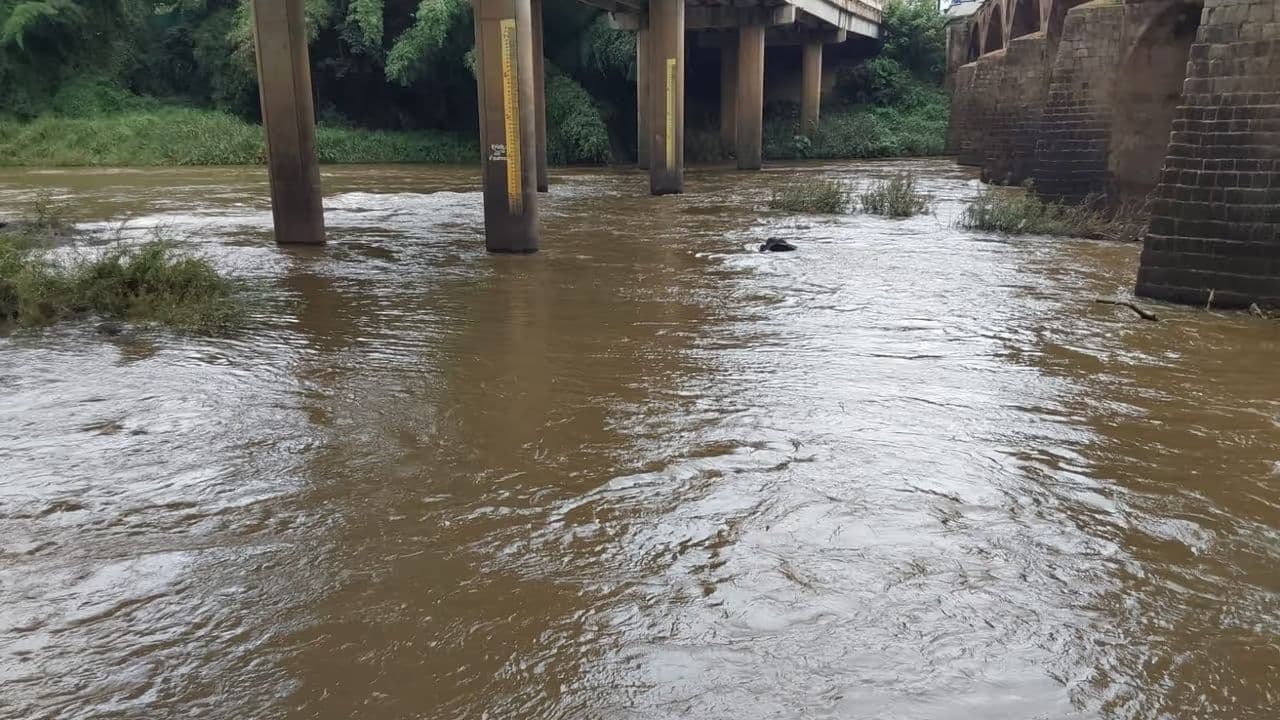
Karnataka may need to release more Cauvery water than the CWRC-ordered quantity due to losses caused by a dry riverbed before reaching the Biligundlu gauge. Experts estimate the State may have to release up to 7,000 cusecs daily amid low reservoir storage and rainfall deficit.
Karnataka may have to release significantly more Cauvery water than the quantity ordered by the Cauvery Water Regulation Committee (CWRC) due to losses caused by a dry riverbed, groundwater absorption and channel-related factors before the water reaches the Biligundlu measuring gauge on the Karnataka-Tamil Nadu border, according to a report by The Hindu.
The CWRC, after reviewing the rainfall, reservoir storage and water availability situation in the Cauvery basin, has directed Karnataka to release 3,500 cusecs of water per day to Tamil Nadu for 15 days. However, experts and officials have pointed out that Karnataka may need to release nearly 6,000 to 7,000 cusecs of water daily from the Krishna Raja Sagar (KRS) and Kabini reservoirs to ensure that the required quantity reaches the Biligundlu gauge point.
The situation has raised concerns as Karnataka continues to face rainfall shortages, reduced reservoir storage and increasing pressure to balance interstate water commitments with drinking water requirements.
Dry Riverbed May Increase Water Release Requirement
According to the report, the CWRC order requires Karnataka to maintain a flow of 3,500 cusecs per day at the Biligundlu measuring gauge, located along the interstate border.
However, experts said a substantial quantity of water released from the KRS or Kabini reservoirs could be lost before reaching the measuring point due to the dry condition of the Cauvery riverbed and banks.
The State also needs to account for groundwater absorption, channel losses, riverbed storage and other hydrological factors while releasing water.
“Since the riverbed and banks leading to Biligundlu are currently dry, a significant percentage of water released from KRS or Kabini will be lost before reaching the gauge point. Karnataka also has to consider groundwater levels and channel losses,” a hydrology expert observed.
Karnataka May Have To Release Up To 7,000 Cusecs Daily
Officials said Karnataka may have to release nearly one-and-a-half to two times the quantity ordered by the CWRC to ensure that the required flow reaches Biligundlu.
This means the State may need to release approximately 6,000 to 7,000 cusecs of water every day from the KRS and Kabini reservoirs.
According to official data as of July 28, the KRS Reservoir was releasing 1,745 cusecs of water, while its inflow stood at 2,552 cusecs. The Kabini Reservoir was releasing 300 cusecs, against an inflow of 3,594 cusecs.
Together, Karnataka was releasing around 2,045 cusecs of water to Tamil Nadu from these two reservoirs. However, officials noted that the actual quantity reaching Biligundlu could reduce due to water transmission losses.
Cauvery Basin Reservoir Storage Remains A Concern
The storage position in Karnataka’s Cauvery basin reservoirs continues to remain a concern amid the weak monsoon.
As per official data, the combined storage in the four major reservoirs of the Cauvery basin stands at around 55 per cent of their total capacity. Against the full capacity of 114.57 TMC ft, the current storage is around 63.23 TMC ft.
During the same period last year, the storage level was significantly higher at 108.68 TMC ft.
The storage level at the KRS Reservoir has emerged as a major concern, with the reservoir currently holding only 34 per cent of its total capacity.
Weak Monsoon Impacts Cauvery Water Availability
Karnataka depends heavily on the southwest monsoon, which contributes around 73 to 75 per cent of the State’s annual rainfall.
However, the State has recorded a rainfall deficit of around 35 per cent this year due to a weak monsoon.
The Kodagu region, which is the main catchment area of the Cauvery River where it originates, has also witnessed a rainfall shortage of around 45 per cent, affecting water inflows into the river system and reservoirs.
Karnataka May Present Concerns Before Cauvery Authority
Following Water Resources Minister K. Ramalinga Reddy’s statement that Karnataka may consider filing an appeal against the CWRC order before the Cauvery Water Management Authority (CWMA), experts said the State is likely to highlight the current hydrological challenges.
Karnataka may present issues including the severe rainfall deficit across the Cauvery basin, poor reservoir inflows, low storage levels, declining groundwater levels, dry riverbeds and the need to prioritise drinking water requirements.
Experts said the State could seek consideration of these factors while determining the quantum of water release to Tamil Nadu.