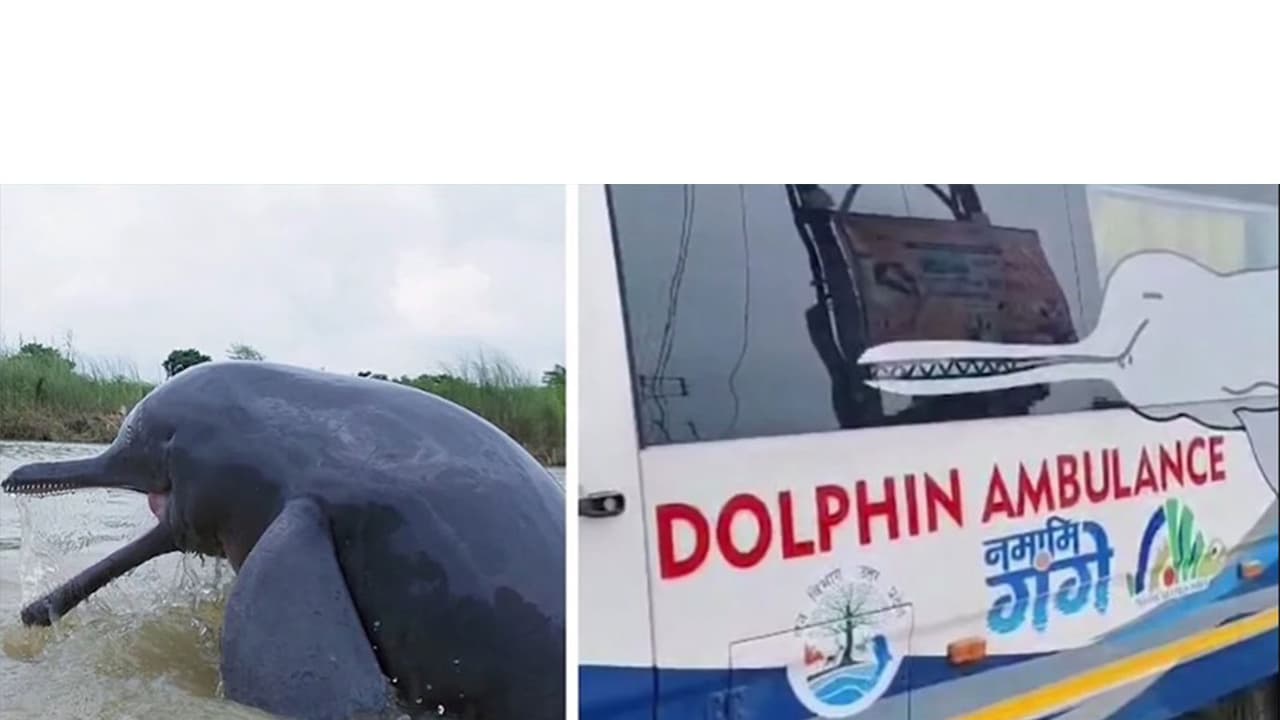
PM Modi, in his ‘Mann Ki Baat’ address, praised India’s first dolphin rescue ambulance for saving a Gangetic dolphin in UP. He also cited grassroots initiatives in Kerala, UP, and Goa as examples of social change without big resources.
Highlighting the success of the central government’s river rejuvenation initiatives, Prime Minister Narendra Modi, during his 134th “Mann Ki Baat” address on Sunday, lauded the country’s first dedicated dolphin rescue ambulance, built under the ‘Namami Gange Abhiyan’, for successfully saving a trapped Gangetic dolphin in Uttar Pradesh.
The Prime Minister drew attention to a viral video showing a meticulous, 13-hour operation to save the mammal, which had got trapped in a canal. “India’s first Ganga dolphin rescue ambulance played a huge role in this. This incident took place in Uttar Pradesh. A Gangetic dolphin was trapped in a canal there. At that time, this ambulance, built under the ‘Namami Gange Abhiyan’, reached there as a ray of hope. It was then carefully pulled out. It was examined, it was treated and then it was safely released into the Rapti River. In a way, a life returned home,” Prime Minister Modi said.
PM Lauds Dolphin Rescue Ambulance
Detailing the specialised capabilities of the rescue vehicle, the Prime Minister explained that the ambulance functions essentially as a mobile hospital, equipped with oxygen facilities, custom stretchers, and specialised rescue gear to provide immediate assistance to distressed or stranded dolphins.
“This means that if a dolphin gets injured, gets stuck in a canal, or gets cut off from the river, it can be helped immediately. When we save the Gangetic dolphin, we don’t just save a species; we save the biodiversity of the Ganga. We save the river’s entire life system and preserve a priceless natural heritage for our future generations,” PM Modi said.
Citizen-led Initiatives Driving Change
The Prime Minister also made a mention of the unique citizen-led initiatives across the country that are driving social and environmental change without relying on heavy infrastructure.
Free Swimming Lessons in Kerala
He shared an inspiring story from Kerala, where a local in Aluva has transformed a local river into a free-of-cost training ground to impart life-saving skills. “Imagine a school where children, youngsters and elders come, where there is no fees, no building… The class takes place in a river. This is a true initiative in Keralam’s Aluva, where Saji Valasseril is running a swimming club… More than 15,000 people have learned swimming here so far. He has also taught swimming to Divyang children,” Prime Minister Modi noted.
The Prime Minister emphasised that such grassroots models offer a profound perspective on social responsibility. “This gives us a life lesson that to serve society, you don’t need big resources; what is important is a good intention,” he asserted.
Manorama River Clean-up in Uttar Pradesh
Continuing his focus on regional water-centric efforts, the Prime Minister also shared the inspiring story of Akash Gupta from Uttar Pradesh’s Basti district, who spearheaded the clean-up of the Manorama River. Driven by childhood memories of a clean river that had succumbed to plastic pollution, Gupta mobilised his friends with a simple mantra: “No complaints, a fresh start.” “All they had was a net, a spade, a basket, and their greatest strength: the determination to make a difference. These young people would wade into the river, remove water hyacinth, and bring out plastic and garbage, sometimes removing up to 50-60 kilograms of garbage in a single day,” the Prime Minister noted, adding that their actions successfully amplified local awareness about cleanliness.
Resolving Water Crisis in Goa
The Prime Minister further highlighted another citizen-led water solution from Goa, where Balkrishna Aiya, a retired teacher, stepped up to resolve a severe water crisis in the Maddi-Tolap area. “The zeal for social work is as strong even today. He was deeply perturbed by the water problem in the Maddi-Tolap area and began working towards a solution. Balkrishna played a key role in laying pipelines, bringing water to many homes and providing massive relief to families who struggled daily for water,” the Prime Minister said.
(Except for the headline, this story has not been edited by Asianet Newsable English staff and is published from a syndicated feed.)