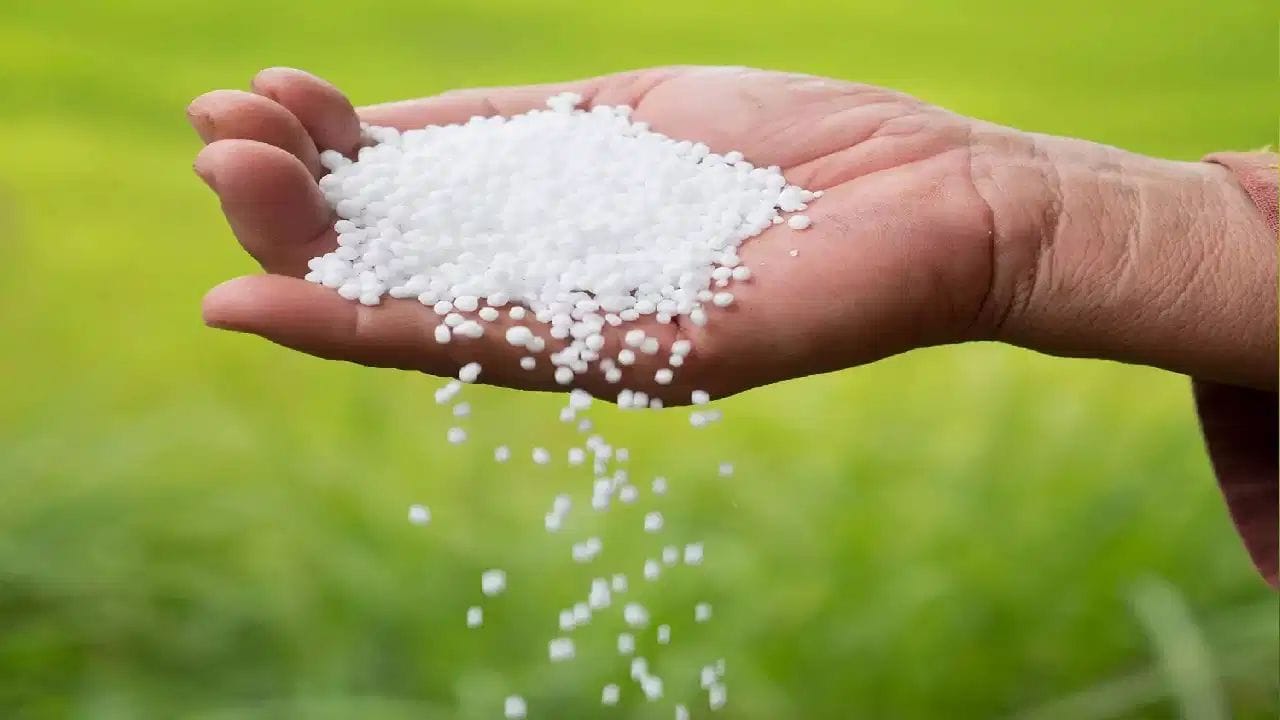
To ensure that farmers do not face shortage of fertilizers during the Kharif season in the country, the government has imported fertilizers on a large scale. According to the government, in the first quarter (April-June) of the current financial year 2026-27, India has imported 25.08 lakh tonnes of urea and 7.11 lakh tonnes of di-ammonium phosphate (DAP). The government says that this step has been taken to meet the domestic demand and to deliver fertilizers to the farmers on time.
In a written reply in the Lok Sabha, Chemicals and Fertilizers Minister J.P. Nadda said that during the April-June quarter, a total of 115.72 lakh tonnes of fertilizers were produced in the country. This includes production of 71.55 lakh tonnes of urea and 9.84 lakh tonnes of DAP. The government believes that adequate availability of fertilizers is being maintained in the country through both domestic production and imports.
How much was the import last year?
According to government data, India had imported 103.50 lakh tonnes of urea and 61.94 lakh tonnes of DAP in the entire financial year 2025-26. At the same time, the total fertilizer production of the country during the same period was 517.74 lakh tonnes. It is clear from this that in view of the increasing demand, the government is emphasizing on domestic production as well as imports.
Strategy to reduce dependence on China
The government has made it clear that new import sources are being developed continuously to avoid disruptions in the global supply chain and excessive dependence on any one country. J.P. Nadda said that the Fertilizer Department, with the help of Indian embassies abroad, has searched for alternative suppliers in many countries, so that dependence on China can be reduced.
He said that after China reduced the export of specialty fertilizers to India, Indian companies have increased the purchase of water soluble fertilizers from Belgium, Egypt, Germany, Morocco and America. Due to this, the impact of less imports from China has been reduced to a great extent.
Big agreements signed with Saudi Arabia and Russia
The government has also made long-term agreements with many countries to secure the supply of fertilizer. Indian fertilizer companies have signed agreements with Saudi Arabian companies to supply about 31 lakh tonnes of DAP every year. Apart from this, an agreement has been signed with Russian companies to import about 26.50 lakh tonnes of DAP and NPK fertilizers this year.
Not only this, to ensure availability of Muriate of Potash (MOP), agreements have also been made to import 4.80 lakh tonnes of MOP this year from Russia, Germany and Turkmenistan.
What does it mean for farmers?
Experts believe that due to timely imports, increase in domestic production and long-term supply agreements with many countries, farmers will not face shortage of fertilizers in Kharif and Rabi seasons. Also, this strategy of the government will help in maintaining the availability of fertilizers in the country even if there is any disruption in the global supply chain.