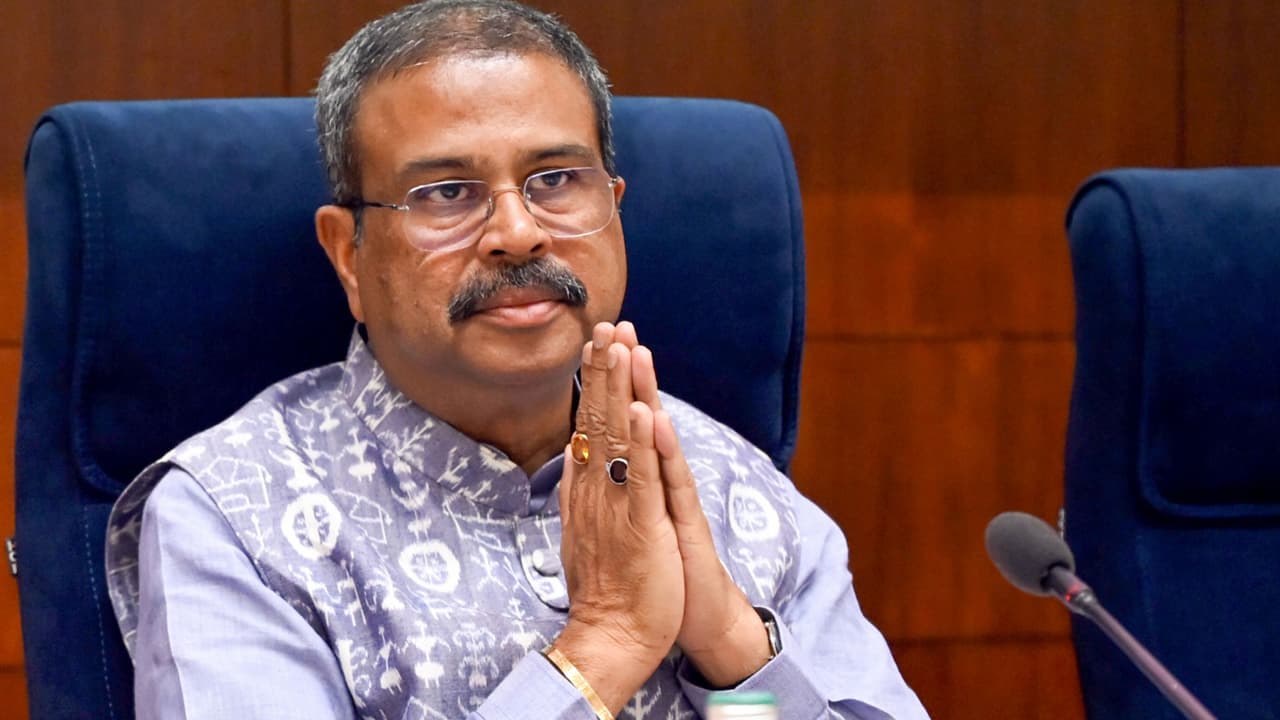
Union Education Minister Dharmendra Pradhan resigned, closing a chapter that began on 3 May with the cancellation of the NEET-UG examination and ended ten weeks later with a letter “surrendering” his office to the youth of this country.
By Vineeta Hariharan – On 25 July 2026, Union Education Minister Dharmendra Pradhan resigned, closing a chapter that began on 3 May with the cancellation of the NEET-UG examination and ended ten weeks later with a letter “surrendering” his office to the youth of this country. Between those dates lay a CBI probe, a re-examination for over twenty lakh candidates, delayed results and a relentless campaign at Jantar Mantar demanding only one thing: the minister’s head.
That demand has now been met. The question India must ask is different: is a single resignation the right measure of accountability for a crisis whose roots lie in the leak culture of 2004–2014 – and in a system Narendra Modi inherited, not designed?
The Leak Raj: 2004–2014
Let us start with facts the opposition would rather forget.
Between 2004 and 2014, India saw a wave of paper leaks and exam scams across the length and breadth of the country. The map of that period is a national charge-sheet.
•In Rajasthan, recruitment tests from RPSC School Lecturer to constable exams were repeatedly tainted by leaked papers.
•In Uttar Pradesh, PCS, B.Ed and several other competitive examinations were compromised by question-paper leaks.
•Gujarat’s Class 10 board exam faced a leak in 2004, affecting lakhs of school students.
•West Bengal, Assam, Bihar, Odisha, Andhra Pradesh, Karnataka, Maharashtra, Haryana and Punjab all appear on the 2004–14 leak map with repeated cases in school boards, PSCs and police recruitments.
•At the national level, even the All India Pre-Medical Test and the CAT for the IIMs could not escape question-paper breaches.
This was the UPA decade – the era when the exam-leak mafia entrenched itself fully: coaching cartels “guaranteeing” ranks, printers and couriers hawking papers, invigilators and middlemen treating public examinations as a money-spinner. For all ten of those years, there was no national anti-paper-leak law, no secure digital testing architecture, and no sense in Delhi that exam integrity was a matter of national priority.
The same parties that presided over this leak raj now present themselves as the guardians of students and demand that the clock start in 2024.
What Modi Sarkar Inherited – and What It Changed
When Narendra Modi became Prime Minister in 2014, he inherited not a clean, efficient exam system but a deeply compromised ecosystem whose worst abuses date squarely to 2004–2014.
The NDA government’s response was not just to change faces at the top. It set about rebuilding the state’s capacity and writing into law what had never been attempted earlier:
•Creating a centralised, technology-driven testing architecture for major national-level exams, replacing a patchwork of weak boards and commissions.
•Enacting, in 2024, a tough national anti-paper-leak law that treats organised leaks as a serious crime with jail terms and heavy financial penalties.
•Moving high-stakes exams like NEET towards secure computer-based testing, with encryption and tamper-evident logistics designed to close the vulnerabilities of the physical-trunk-and-courier model that repeatedly failed India’s youth before 2014.
NEET-UG 2026, therefore, is not being handled by the same political culture that shrugged at leaks for ten years. It is being handled by the first government that has actually begun to attack the problem at its roots.
Youth Today Stand on a Different Economic Foundation
To listen to opposition speeches, one would think India’s youth are standing on quicksand. The reality of the last twelve years under Modi Sarkar is very different.
Economy
•India’s GDP has risen from about ₹190 lakh crore in 2014 to nearly ₹390 lakh crore, taking the country from the world’s 10th-largest economy to the 4th-largest.
•Per-capita income has increased from roughly ₹86,000 to about ₹2 lakh, even as inflation has been brought under control through macro-management.
•India has become one of the largest contributors to global GDP growth, backed by foreign-exchange reserves sufficient to cover around 11 months of imports.
Jobs and Opportunity
•DPIIT-recognised startups have grown from a few hundred to around 2.2 lakh, directly creating about 23 lakh jobs and making India the world’s third-largest startup ecosystem.
•12 crore new entrepreneurs have availed collateral-free Mudra loans; 57 crore Mudra loans overall have turned self-employment and micro-enterprise into a mass movement.
•Production Linked Incentive schemes and a six-fold jump in infrastructure spending – from about ₹2 lakh crore in 2014-15 to ₹12.2 lakh crore in 2026-27 – are generating large-scale jobs in manufacturing, logistics and construction.
•Record exports nearing ₹79 lakh crore, a 6x increase in electronics production, an 8x rise in electronics exports and a 163x surge in mobile exports are helping turn India into a global manufacturing hub.
The NEET aspirant of 2026 is not walking into the jobless, fragile-five India of the early 2010s. They are stepping into a rising economic power built over twelve years of reform and investment.
Education and Health
Any honest discussion of NEET-UG 2026 must also recognise what this government has delivered in education and health – the two pillars that shape a young person’s chances.
•Higher-education enrolment has grown from about 3 crore to 4.5 crore.
•The number of universities has increased from 723 to 1,338, and colleges from 36,634 to 52,081.
•IITs have risen from 16 to 23, AIIMS from 8 to 23, and medical colleges from 842 to roughly 2,100.
•The National Education Policy 2020 is driving multidisciplinary learning, mother-tongue-based education, and innovation through 10,000 Atal Tinkering Labs.
Health and Social Security
•Ayushman Bharat has issued 43 crore Ayushman cards, covering 60 crore people with cashless treatment up to ₹5 lakh per family per year, across 36,000 empanelled hospitals.
•Over 19,000 Janaushadhi Kendras provide medicines at 50–90% discounts, generating savings of about ₹40,000 crore.
•Nearly 11 crore LPG connections under PM Ujjwala, 16 crore tap-water connections under Jal Jeevan Mission and 4 crore pucca houses under PM Awas Yojana have reduced the shocks that used to push poor students out of the system.
Youth as Partners in Nation-Building
For Narendra Modi, India’s youth are not a problem to be managed but the engine of a Viksit Bharat.
•1.6 crore youth have been trained under PM Kaushal Vikas Yojana, contributing to IT/ITeS exports worth ₹18.5 lakh crore in 2024-25.
•Rozgar Melas have already delivered 12 lakh appointment letters for central government jobs, while the PM Viksit Bharat Rozgar Yojana is designed to catalyse 3.5 crore jobs through a ₹1 lakh crore incentive scheme.
•In sports, 63,000 athletes have participated in Khelo India Games, 300 athletes are backed under TOPS, and India won 107 medals at the 2022 Asian Games.
This is not a government hiding from young people; it is a government that has bet its political future on their empowerment.
Why Resignation Politics Falls Short
Given this backdrop, what does the education minister’s resignation really achieve? It offers catharsis – one name, one signature, one headline. But it does not dismantle a single coaching cartel, courier chain or leak network that flourished in the 2004–2014 era.
The parties that presided over that leak map never passed an anti-leak law, never built a secure digital exam infrastructure, and never treated examination integrity as sacrosanct. Today, they would like the NEET story to end with one NDA minister’s exit, rather than with the deeper reforms that would permanently end the leak culture they tolerated.
The Real Pro-Youth Demand
The truly pro-student, pro-youth, pro-nation stance today is not to weaken the only government that has demonstrated the capacity for major reforms, but to demand more from it.
India’s youth should insist on:
•Complete transition to secure computer-based testing for all high-stakes exams, built on strong encryption and real-time monitoring.
•Strict regulation of the coaching industry that mushroomed in the UPA years, including financial transparency and real liability when malpractice is traced back to coaching centres.
•An independent Examination Integrity Authority, answerable to Parliament, empowered to investigate leaks suo motu and publicly track corrective action.
•Full use of India’s digital strengths – JAM trinity, Aadhaar-based authentication, AI-driven anomaly detection – to flag suspicious patterns and stop compromised exams before lakhs of students lose a year.
Modi has already shown what determined governance can deliver: 25 crore people lifted out of poverty, ₹51 lakh crore transferred cleanly through DBT, nearly ₹70 lakh crore in FDI between 2014 and 2025, and defence exports surging to ₹38,400 crore. It is entirely legitimate for India’s youth to demand that the same state capacity now be turned ruthlessly against the exam-leak mafia.
Youth empowered India for a Viksit Bharat
NEET-UG 2026 should not go down in history as the year India removed one minister. It should be remembered as the moment India decided to finally bury a leak culture born in 2004 and allowed to torment two generations of aspirants.
For a country that has moved from the “fragile five” to the world’s fourth-largest economy, from stereotype to a digital and defence powerhouse under Modi Sarkar, living with a rotten exam system is no longer an option. A government that has already delivered toilets, tap water, bank accounts, Ayushman cards, world-class infrastructure and a startup revolution can surely deliver clean, leak-free examinations too to secure the future generations to come towards prosperity and progress.
(The views expressed in this article are those of the author)